Adjuvant Capecitabine Following Concurrent Chemoradiotherapy in Locoregionally Advanced Nasopharyngeal Carcinoma: A Randomized Clinical Trial
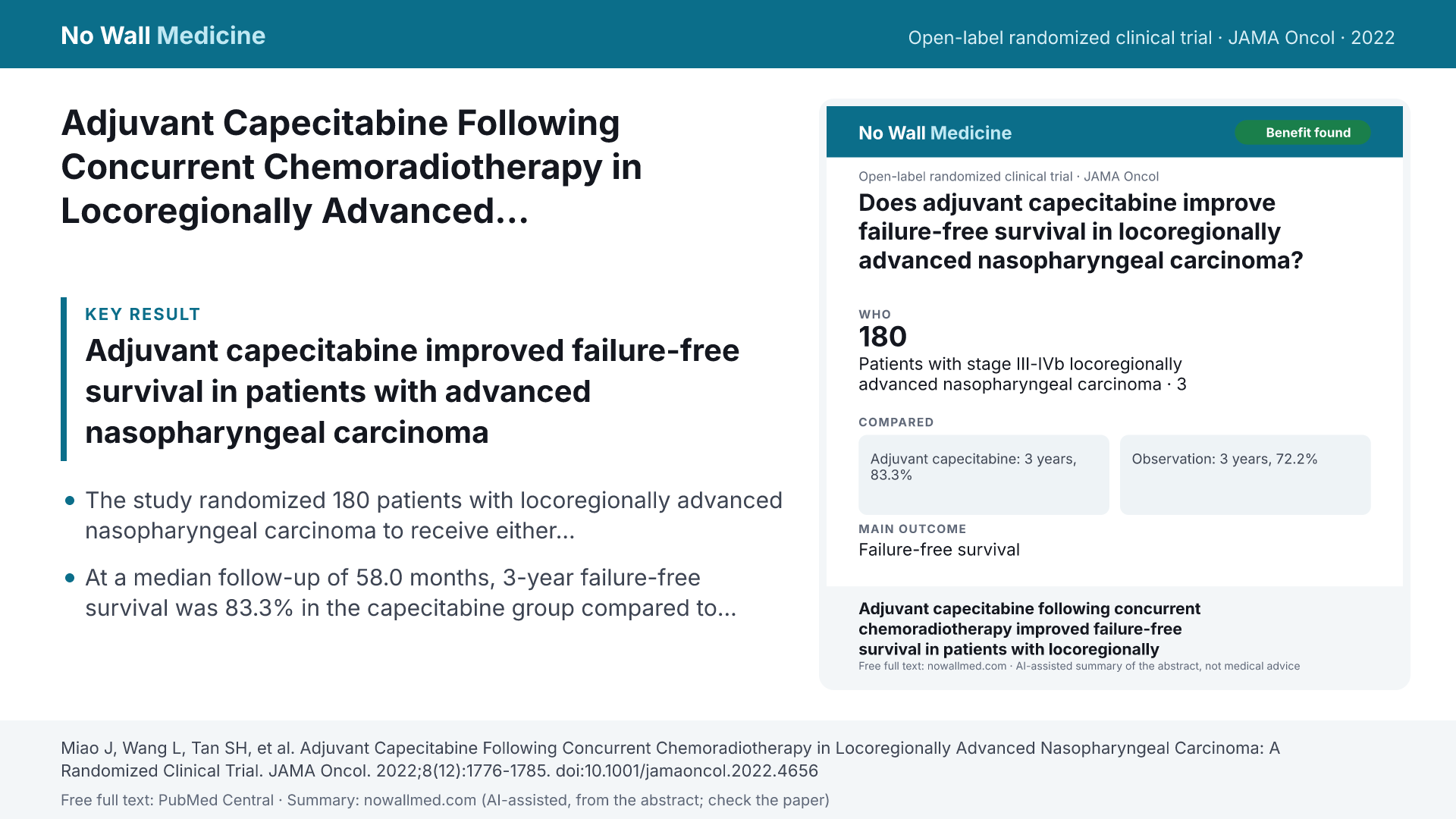
Key result: Adjuvant capecitabine improved failure-free survival in patients with advanced nasopharyngeal carcinoma
Key points
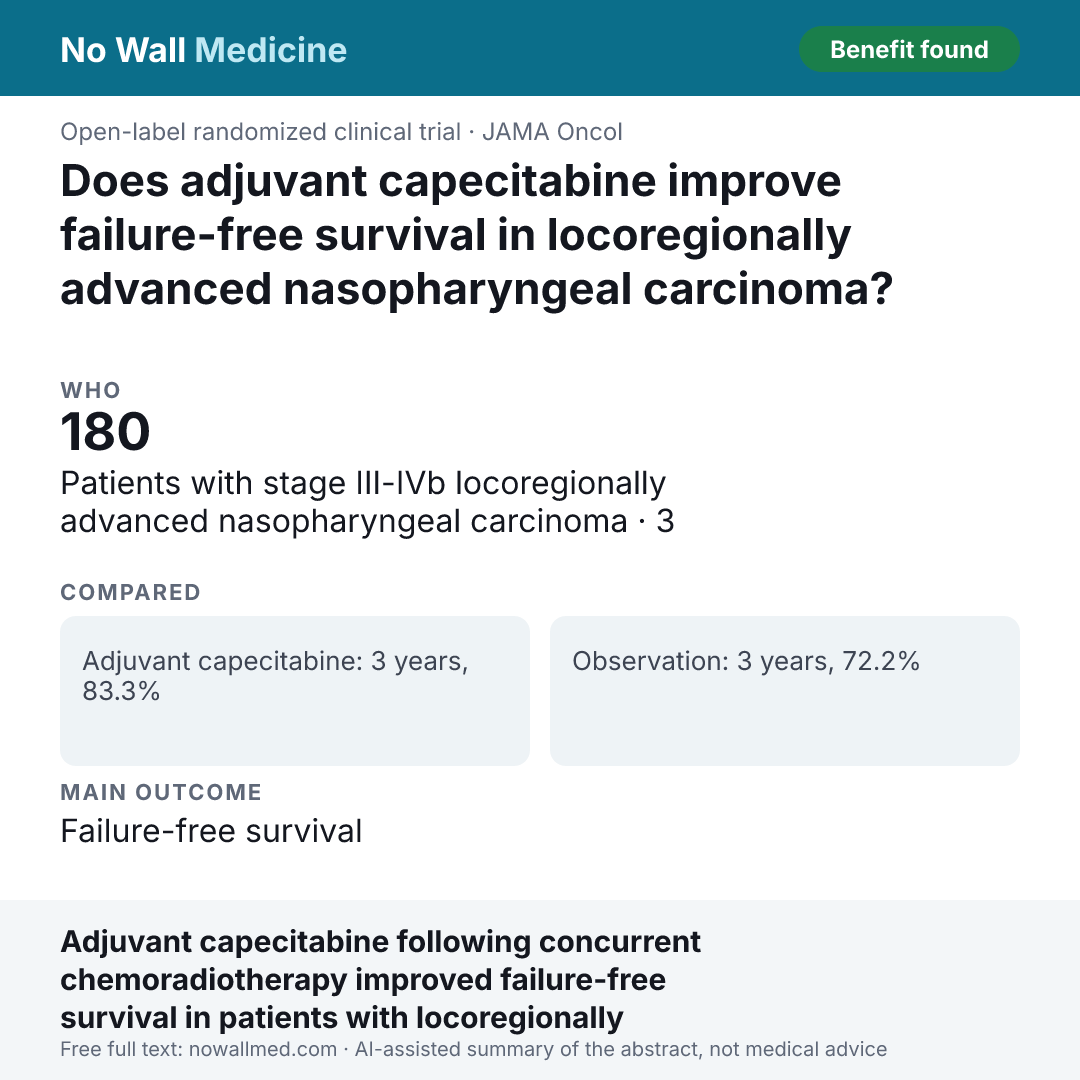
- The study randomized 180 patients with locoregionally advanced nasopharyngeal carcinoma to receive either adjuvant capecitabine or observation following concurrent chemoradiotherapy.
- At a median follow-up of 58.0 months, 3-year failure-free survival was 83.3% in the capecitabine group compared to 72.2% in the control group.
- Grade 3 treatment-related adverse events occurred in 60.0% of the capecitabine group compared to 51.1% in the control group.
Why it matters: Adjuvant platinum-based chemotherapy regimens are poorly tolerated, creating a need for effective and tolerable treatment options for patients with locoregionally advanced nasopharyngeal carcinoma.
Discussion prompts
- Would these patients look like yours? Who was left out?
- Is the main outcome one that matters to patients?
- Is the difference large enough to change what you do?
Cite: Miao J, Wang L, Tan SH, et al. Adjuvant Capecitabine Following Concurrent Chemoradiotherapy in Locoregionally Advanced Nasopharyngeal Carcinoma: A Randomized Clinical Trial. JAMA Oncol. 2022;8(12):1776-1785. doi:10.1001/jamaoncol.2022.4656
Free full text: PubMed Central · Summary and visual abstract: nowallmed.com/a/adjuvant-capecitabine-following-concurrent-chemoradiotherapy-in-co6p58/ (AI-assisted from the abstract; check the paper before relying on it).