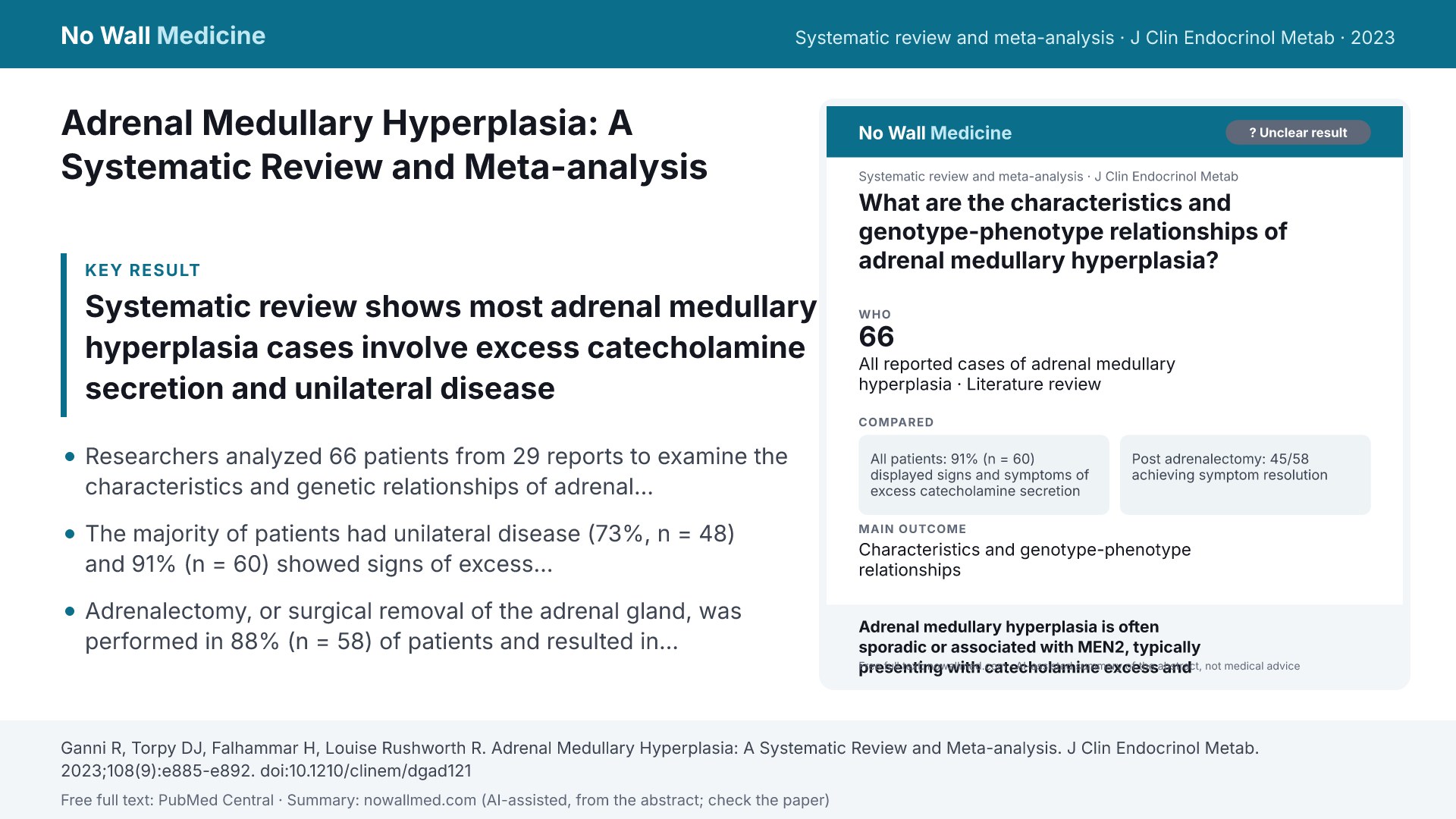
Systematic review shows most adrenal medullary hyperplasia cases involve excess catecholamine secretion and unilateral disease
Adrenal Medullary Hyperplasia: A Systematic Review and Meta-analysis
Systematic review and meta-analysisUnclear result
What are the characteristics and genotype-phenotype relationships of adrenal medullary hyperplasia?
Who
66
All reported cases of adrenal medullary hyperplasia · Literature review
Compared
All patients: 91% (n = 60) displayed signs and symptoms of excess catecholamine secretion
Post adrenalectomy: 45/58 achieving symptom resolution
Main outcome
Characteristics and genotype-phenotype relationships
Bottom line: Adrenal medullary hyperplasia is often sporadic or associated with MEN2, typically presenting with catecholamine excess and imaging abnormalities.
J Clin Endocrinol Metab · 2023-03-11Download image
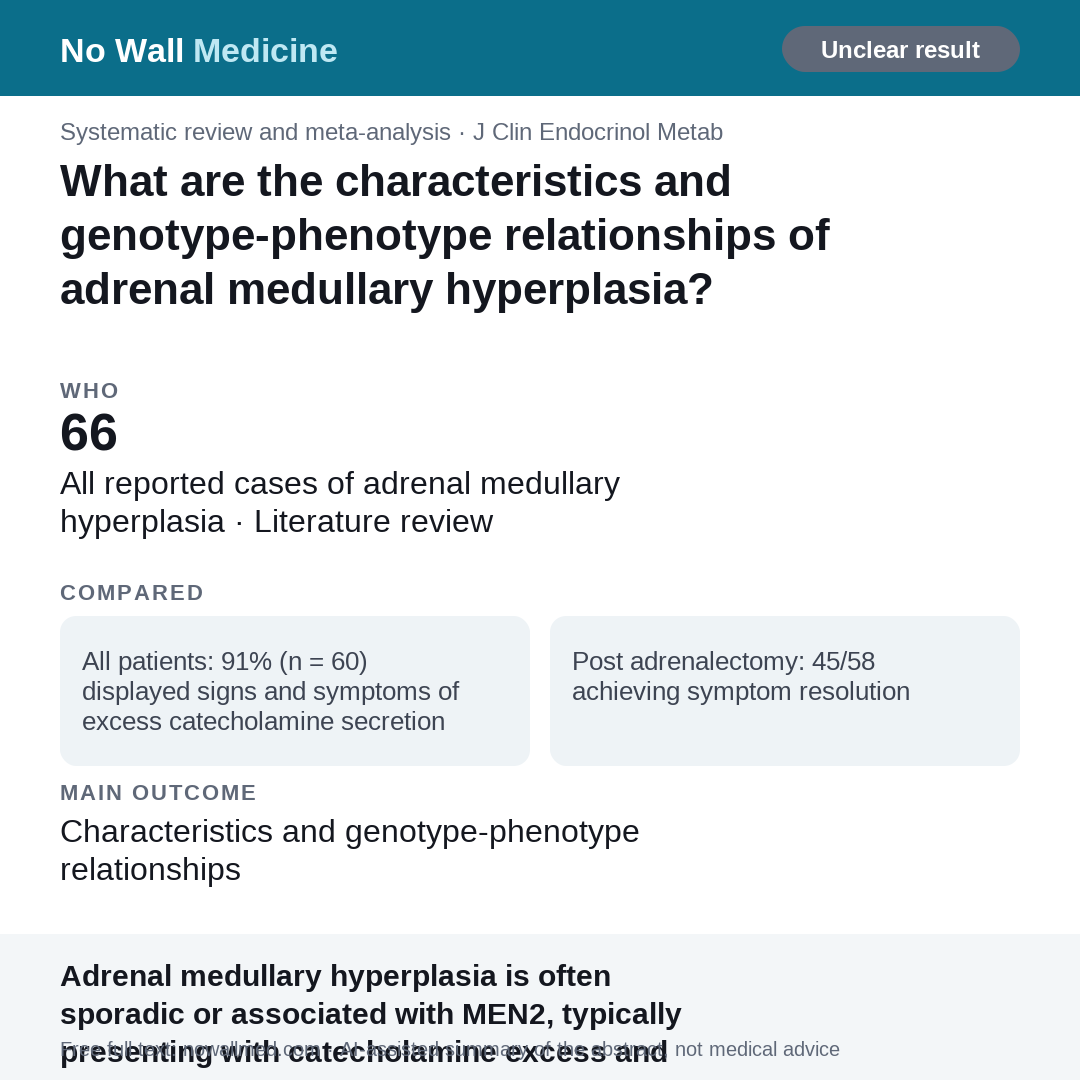
Clinical question: What are the characteristics and genotype-phenotype relationships of adrenal medullary hyperplasia?
Why it matters: The characteristics and relationship between genetic makeup and physical symptoms of adrenal medullary hyperplasia are incompletely described.
Key points
- Researchers analyzed 66 patients from 29 reports to examine the characteristics and genetic relationships of adrenal medullary hyperplasia.
- The majority of patients had unilateral disease (73%, n = 48) and 91% (n = 60) showed signs of excess catecholamine secretion, such as high blood pressure.
- Adrenalectomy, or surgical removal of the adrenal gland, was performed in 88% (n = 58) of patients and resulted in symptom resolution for 45/58 patients.
Headline and key points written with AI from the paper’s abstract, with every number checked against it. Read the paper before relying on them.
Was this summary helpful?
Subject terms
Cite this article
Ganni R, Torpy DJ, Falhammar H, Louise Rushworth R. Adrenal Medullary Hyperplasia: A Systematic Review and Meta-analysis. J Clin Endocrinol Metab. 2023. doi:10.1210/clinem/dgad121
Spotted a mistake? Suggest a correction
Top studies every Monday
The week’s key trials and guidelines in your specialties, plus any topics you follow. By email, free.
Get the weekly digest