Adrenal Medullary Hyperplasia: A Systematic Review and Meta-analysis
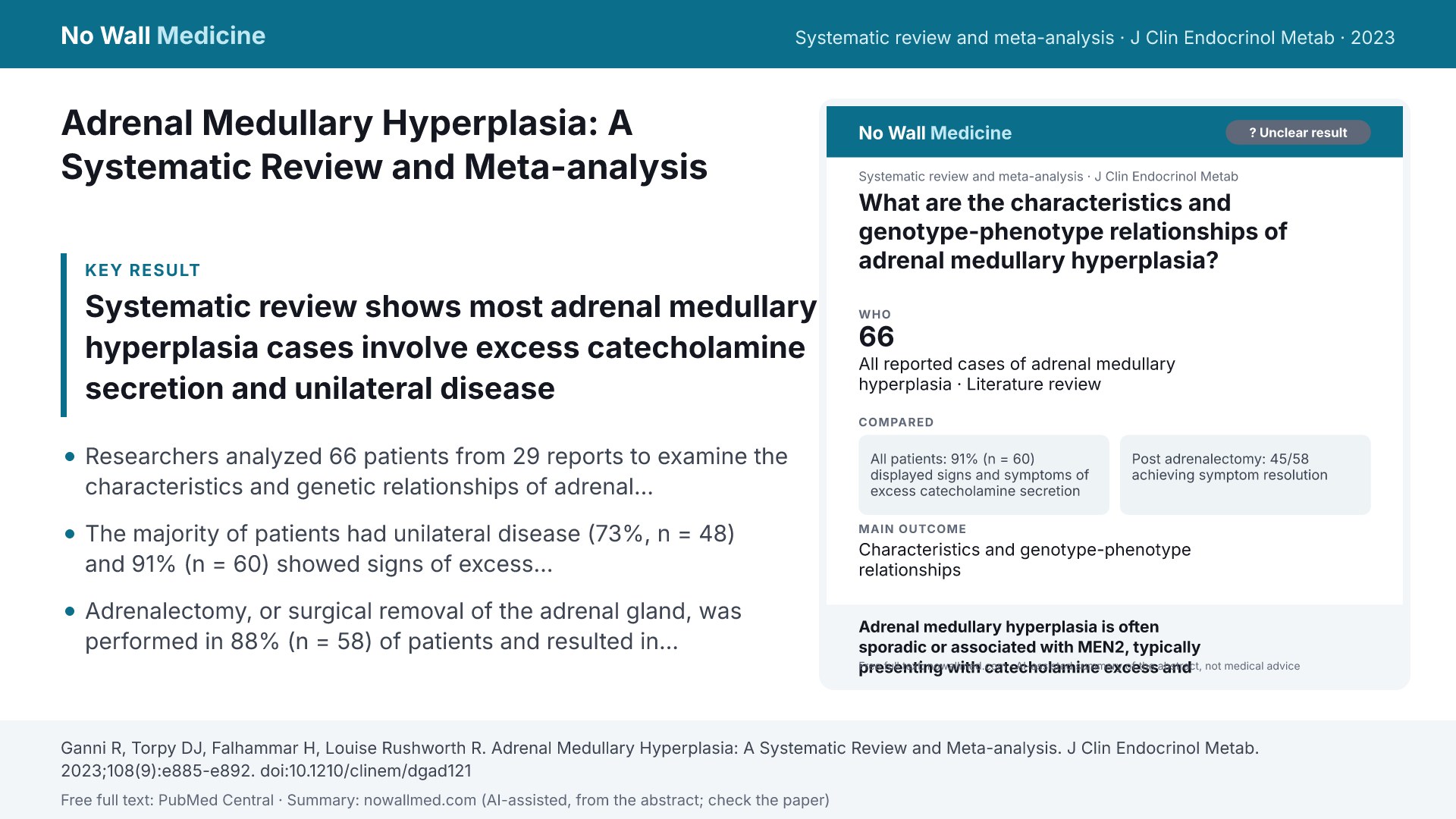
Key result: Systematic review shows most adrenal medullary hyperplasia cases involve excess catecholamine secretion and unilateral disease
Systematic review and meta-analysisUnclear result
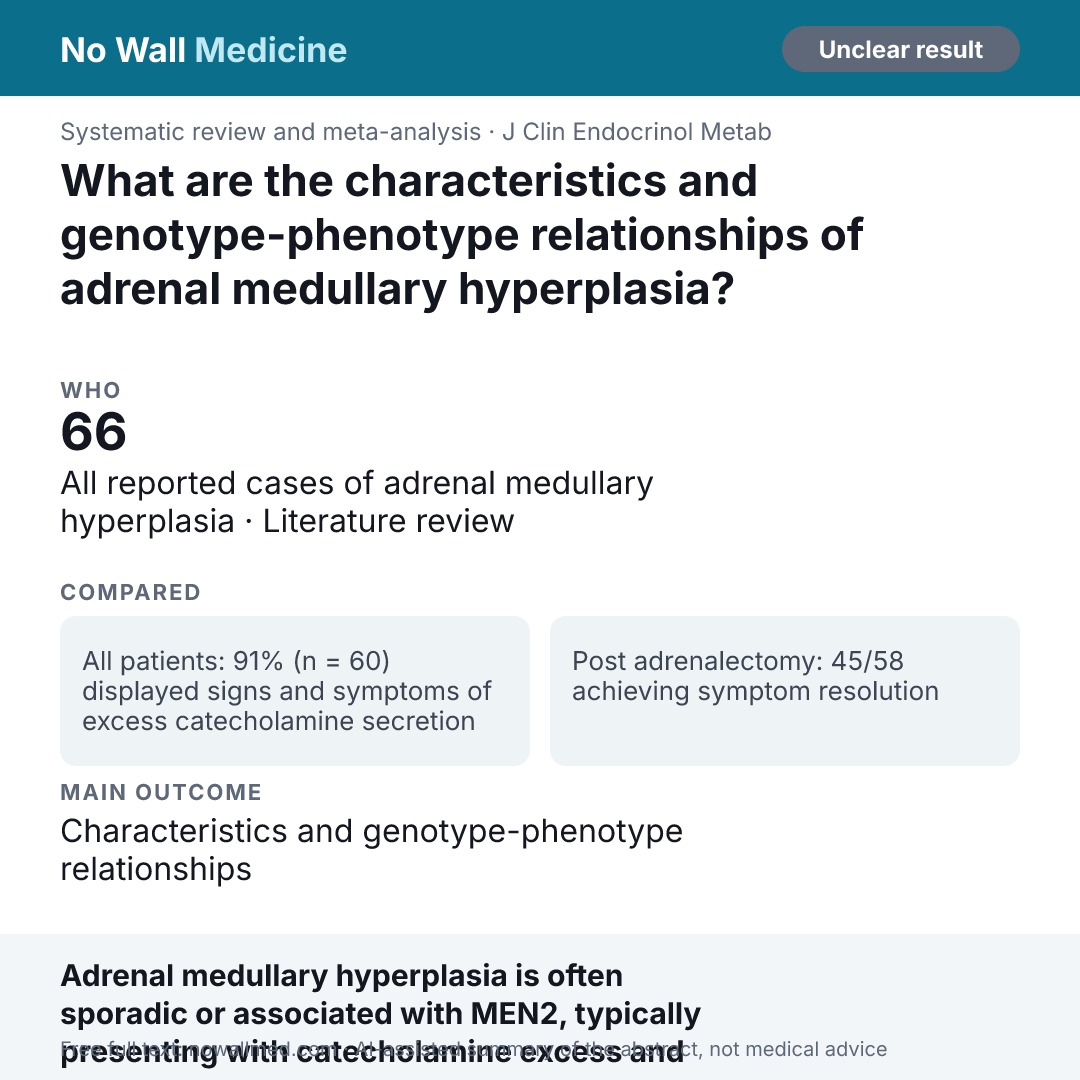
What are the characteristics and genotype-phenotype relationships of adrenal medullary hyperplasia?
Who
66
All reported cases of adrenal medullary hyperplasia · Literature review
Compared
All patients: 91% (n = 60) displayed signs and symptoms of excess catecholamine secretion
Post adrenalectomy: 45/58 achieving symptom resolution
Main outcome
Characteristics and genotype-phenotype relationships
Bottom line: Adrenal medullary hyperplasia is often sporadic or associated with MEN2, typically presenting with catecholamine excess and imaging abnormalities.
J Clin Endocrinol Metab · 2023-03-11 · Save PNG
Key points
- Researchers analyzed 66 patients from 29 reports to examine the characteristics and genetic relationships of adrenal medullary hyperplasia.
- The majority of patients had unilateral disease (73%, n = 48) and 91% (n = 60) showed signs of excess catecholamine secretion, such as high blood pressure.
- Adrenalectomy, or surgical removal of the adrenal gland, was performed in 88% (n = 58) of patients and resulted in symptom resolution for 45/58 patients.
Why it matters: The characteristics and relationship between genetic makeup and physical symptoms of adrenal medullary hyperplasia are incompletely described.
Discussion prompts
- Would these patients look like yours? Who was left out?
- Is the main outcome one that matters to patients?
- Is the difference large enough to change what you do?
Cite: Ganni R, Torpy DJ, Falhammar H, Louise Rushworth R. Adrenal Medullary Hyperplasia: A Systematic Review and Meta-analysis. J Clin Endocrinol Metab. 2023;108(9):e885-e892. doi:10.1210/clinem/dgad121
Free full text: PubMed Central · Summary and visual abstract: nowallmed.com/a/adrenal-medullary-hyperplasia-a-systematic-review-and-meta-td990m/ (AI-assisted from the abstract; check the paper before relying on it).