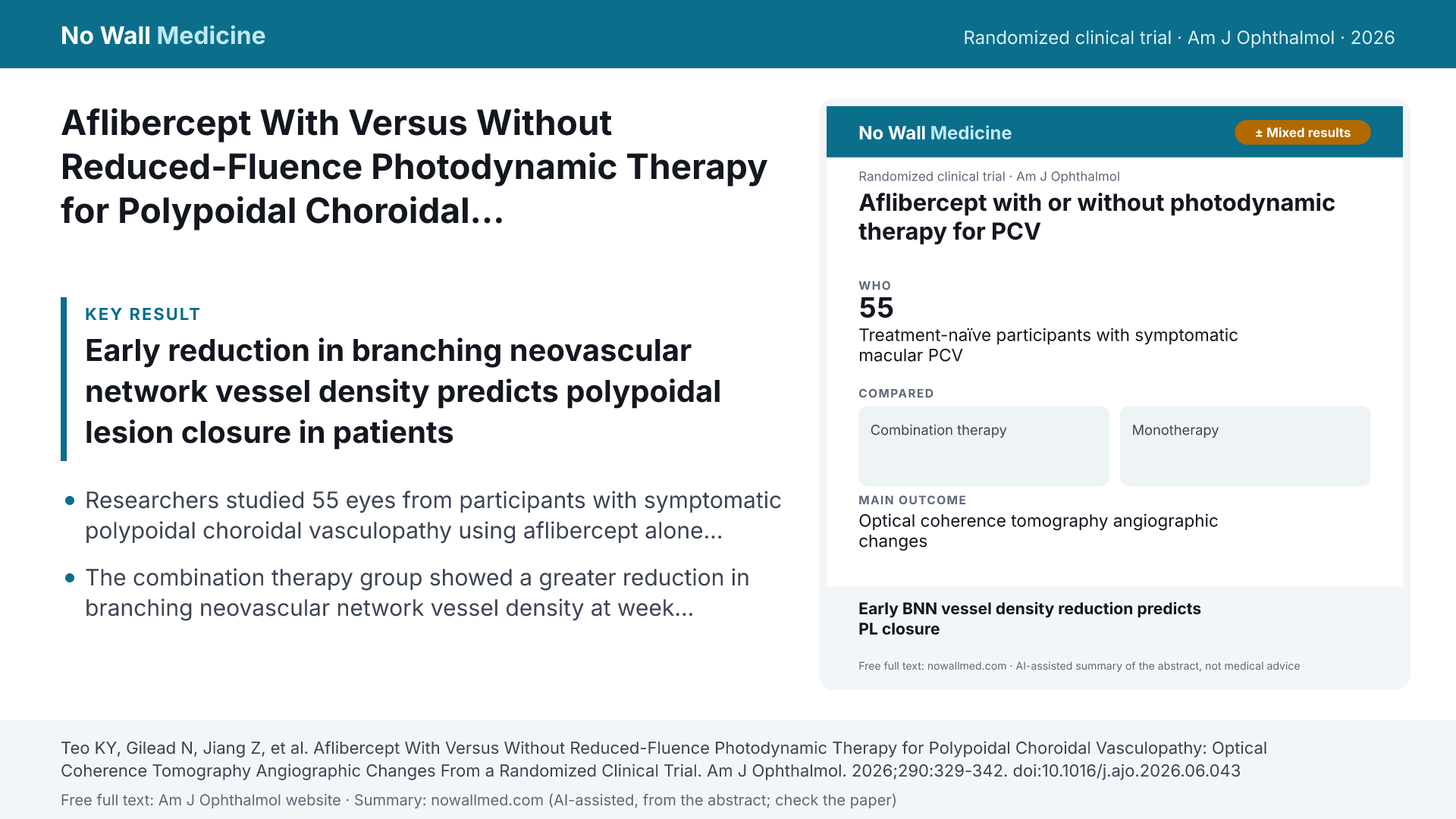
Early reduction in branching neovascular network vessel density predicts polypoidal lesion closure in patients
Aflibercept With Versus Without Reduced-Fluence Photodynamic Therapy for Polypoidal Choroidal Vasculopathy: Optical Coherence Tomography Angiographic Changes From a Randomized Clinical Trial
Randomized clinical trialMixed results
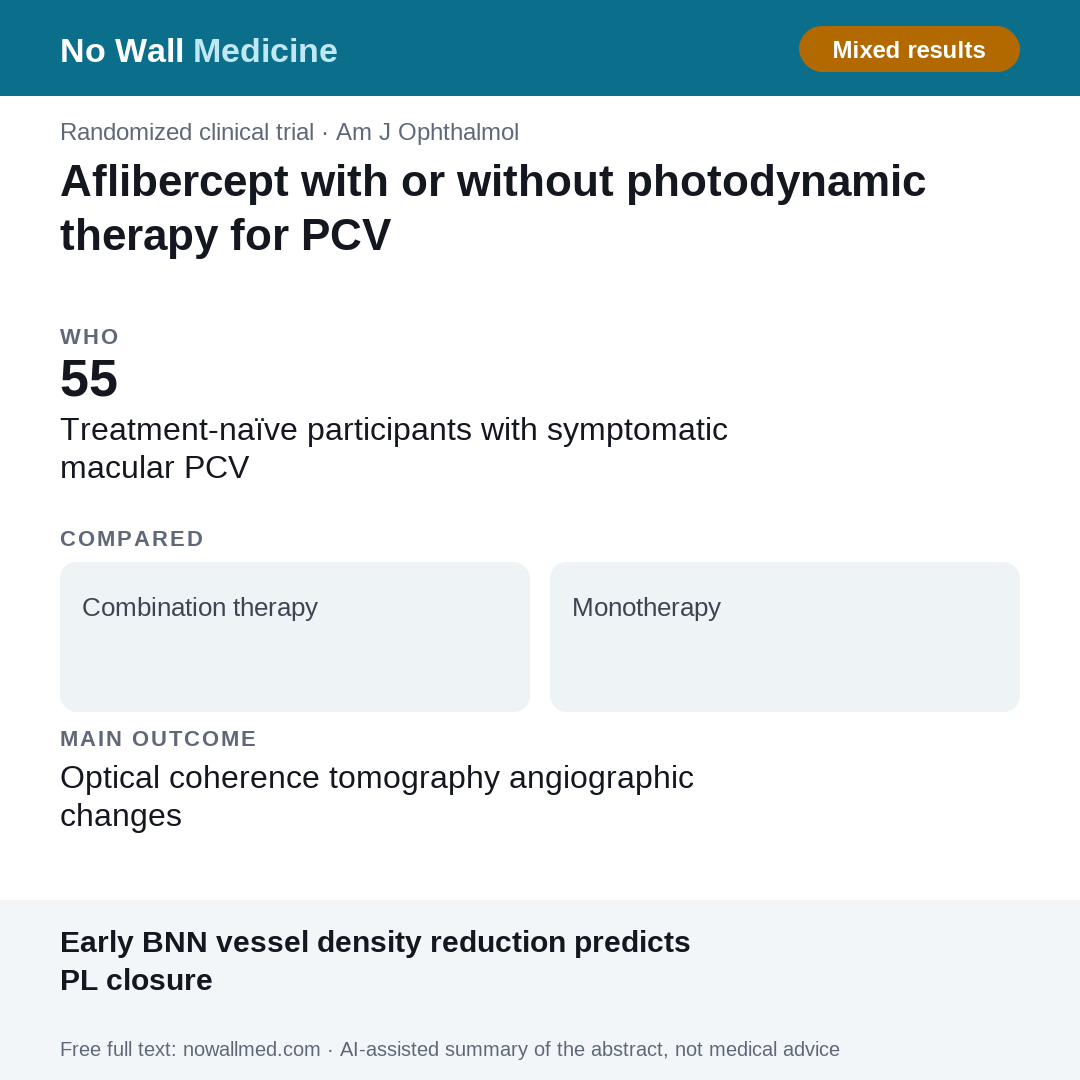
Aflibercept with or without photodynamic therapy for PCV
Who
55
Treatment-naïve participants with symptomatic macular PCV
Compared
Combination therapy
Monotherapy
Main outcome
Optical coherence tomography angiographic changes
Bottom line: Early BNN vessel density reduction predicts PL closure
Am J Ophthalmol · 2026-06-28Download image
Why it matters: Clinicians need noninvasive ways to predict how patients with polypoidal choroidal vasculopathy will respond to different treatment regimens.
Key points
- Researchers studied 55 eyes from participants with symptomatic polypoidal choroidal vasculopathy using aflibercept alone or combined with reduced-fluence photodynamic therapy.
- The combination therapy group showed a greater reduction in branching neovascular network vessel density at week 12 compared to monotherapy (-10 ± 15% vs -3 ± 12%).
- A greater reduction in branching neovascular network vessel density at week 12 was independently associated with the closure of polypoidal lesions at week 52.
Headline and key points written with AI from the paper’s abstract, with every number checked against it. Read the paper before relying on them.
Was this summary helpful?
Subject terms
Headline, design, result, key points, caveat and citation as plain text.
Cite this article
Teo KY, Gilead N, Jiang Z, et al. Aflibercept With Versus Without Reduced-Fluence Photodynamic Therapy for Polypoidal Choroidal Vasculopathy: Optical Coherence Tomography Angiographic Changes From a Randomized Clinical Trial. Am J Ophthalmol. 2026;290:329-342. doi:10.1016/j.ajo.2026.06.043
Spotted a mistake? Suggest a correction