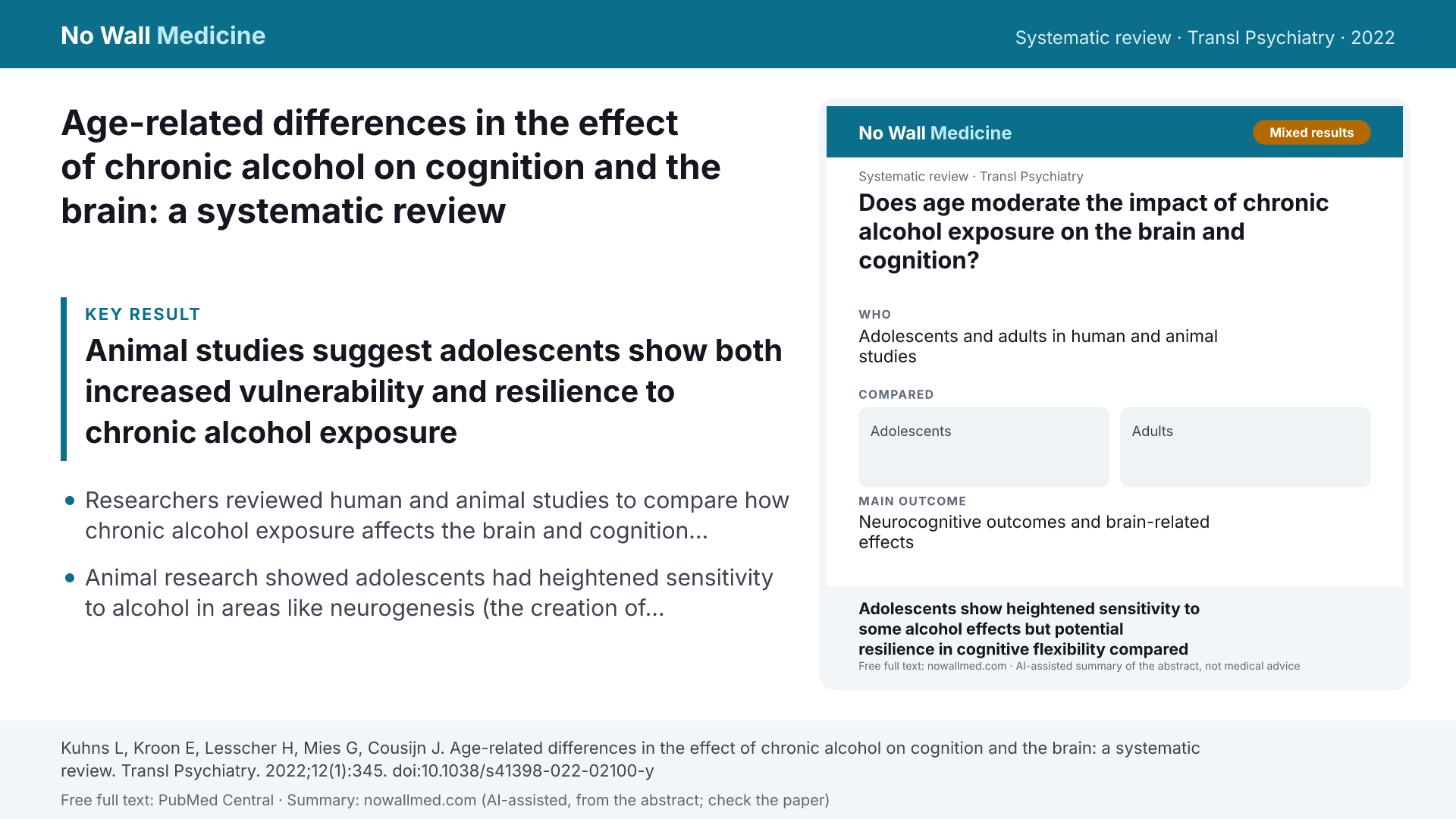
Animal studies suggest adolescents show both increased vulnerability and resilience to chronic alcohol exposure
Age-related differences in the effect of chronic alcohol on cognition and the brain: a systematic review
Systematic reviewMixed results
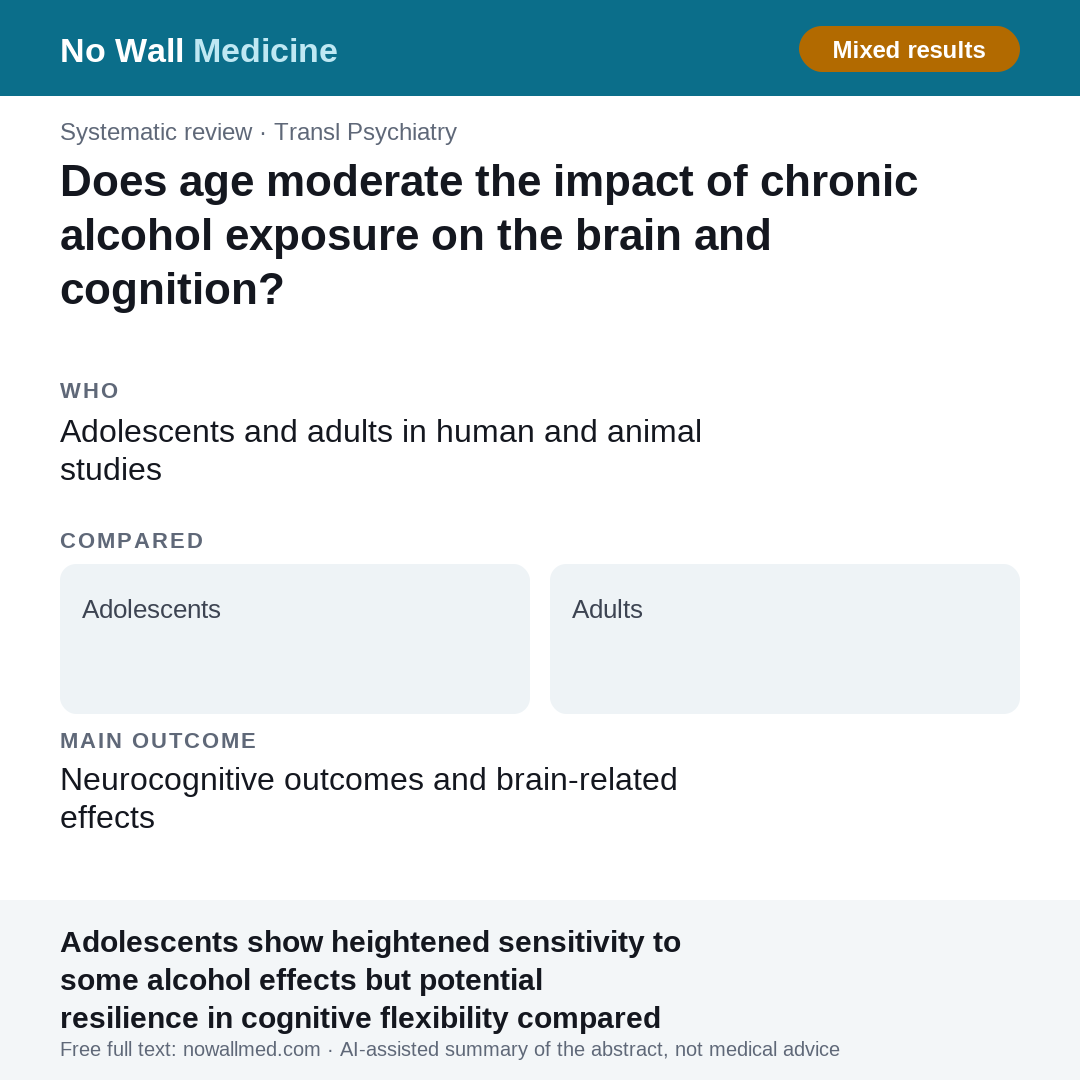
Does age moderate the impact of chronic alcohol exposure on the brain and cognition?
Who
Adolescents and adults in human and animal studies
Compared
Adolescents
Adults
Main outcome
Neurocognitive outcomes and brain-related effects
Bottom line: Adolescents show heightened sensitivity to some alcohol effects but potential resilience in cognitive flexibility compared to adults.
Limitation: Human evidence is largely missing and animal research is limited.
Transl Psychiatry · 2022-08-25Download image
Clinical question: Does age moderate the impact of chronic alcohol exposure on the brain and cognition?
Why it matters: It is unknown whether age acts as a moderating factor in how chronic alcohol exposure impacts brain function and cognitive abilities.
Key points
- Researchers reviewed human and animal studies to compare how chronic alcohol exposure affects the brain and cognition in adolescents versus adults.
- Animal research showed adolescents had heightened sensitivity to alcohol in areas like neurogenesis (the creation of new neurons) and dopaminergic transmission (chemical signaling in reward centers).
- Limited evidence in animals also suggested adolescent resilience regarding impairments in cognitive flexibility, which is the ability to switch between different tasks or thoughts.
Limitation the authors note: Human evidence comparing these age groups is largely missing and animal studies should better incorporate individual differences and environmental context.
Headline and key points written with AI from the paper’s abstract, with every number checked against it. Read the paper before relying on them.
Was this summary helpful?
Subject terms
Cite this article
Kuhns L, Kroon E, Lesscher H, Mies G, Cousijn J. Age-related differences in the effect of chronic alcohol on cognition and the brain: a systematic review. Transl Psychiatry. 2022. doi:10.1038/s41398-022-02100-y
Spotted a mistake? Suggest a correction