Repetitive exposure to diesel exhaust particles was linked to increased skin pigmentation in humans
Air pollution-induced tanning of human skin
Double-blind clinical studyHarm found
Does repetitive topical application of diesel exhaust particles increase human skin pigmentation?
Who
76
Healthy participants
Compared
Diesel exhaust particles: increased skin pigmentation
Vehicle control
Main outcome
Skin pigmentation, melanin content, and gene expression
Bottom line: Repetitive topical application of diesel exhaust particles increases skin pigmentation through an oxidative stress response.
Br J Dermatol · 2021-08-20Download image
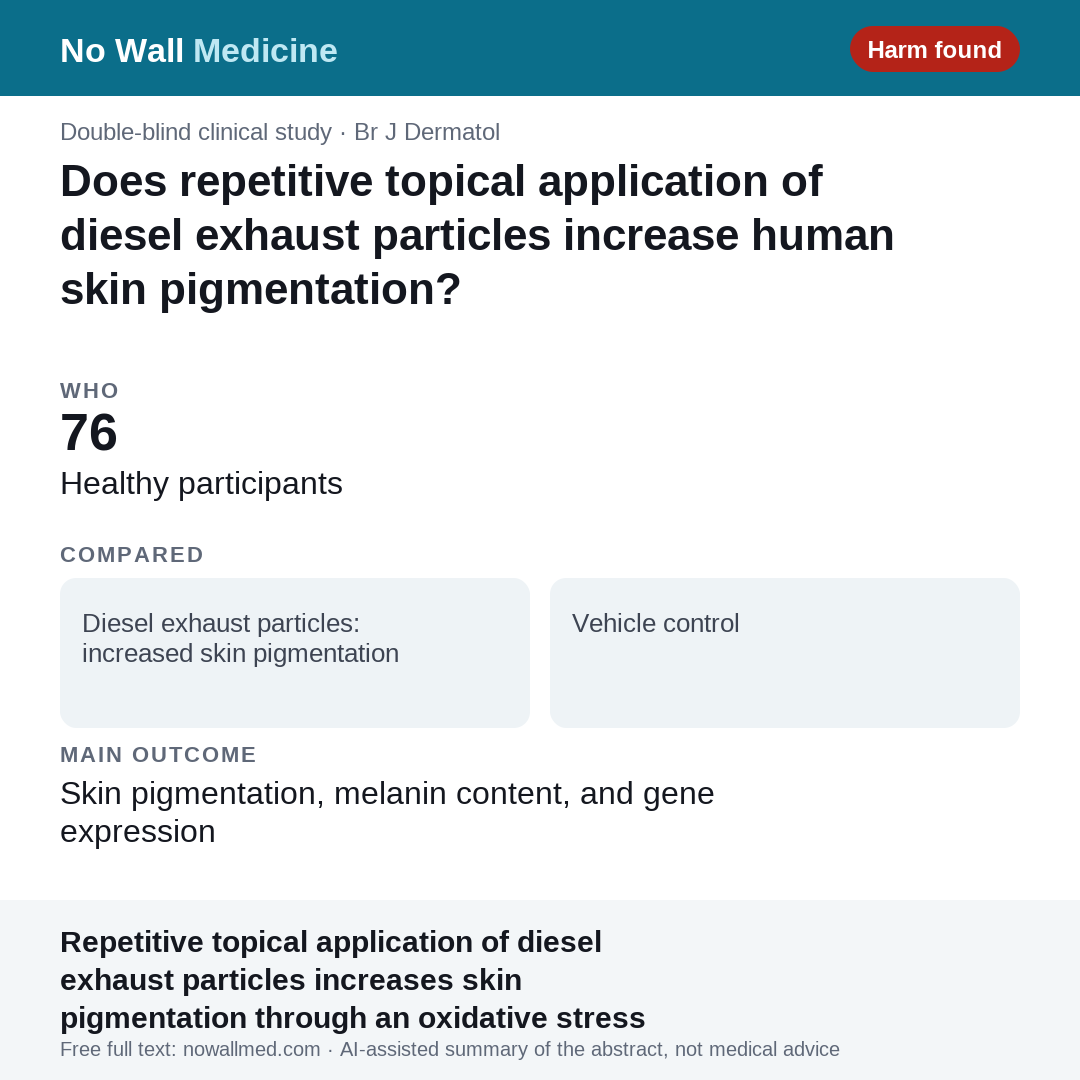
Clinical question: Does repetitive topical application of diesel exhaust particles increase human skin pigmentation?
Why it matters: Mechanistic evidence linking diesel exhaust particle exposure to changes in human skin pigmentation has been elusive.
Key points
- Researchers used an ex vivo skin model and 76 healthy human participants to measure how diesel exhaust particles, a type of traffic-related air pollution, affect skin melanin.
- Repetitive topical application of diesel exhaust particles was associated with increased skin pigmentation, higher melanin content, and increased expression of genes involved in melanin synthesis.
- The increase in pigmentation was associated with an oxidative stress response, including depleted antioxidants and enhanced oxidative DNA damage.
Headline and key points written with AI from the paper’s abstract, with every number checked against it. Read the paper before relying on them.
Was this summary helpful?
Subject terms
Cite this article
Grether-Beck S, Felsner I, Brenden H, Marini A, Jaenicke T, Aue N. Air pollution-induced tanning of human skin. Br J Dermatol. 2021. doi:10.1111/bjd.20483
Spotted a mistake? Suggest a correction
Top studies every Monday
The week’s key trials and guidelines in your specialties, plus any topics you follow. By email, free.
Get the weekly digest