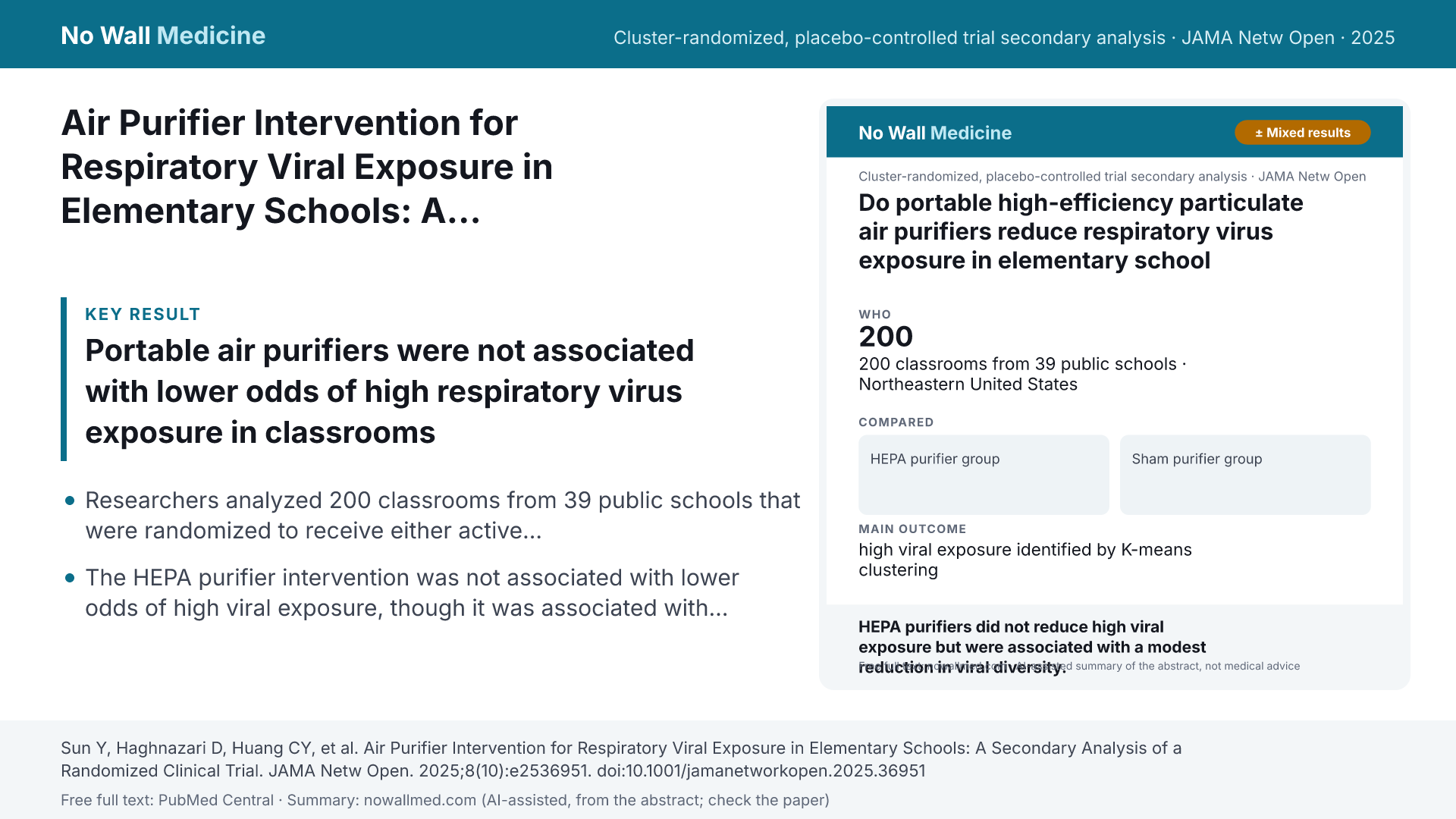
Air Purifier Intervention for Respiratory Viral Exposure in Elementary Schools: A Secondary Analysis of a Randomized Clinical Trial
Key result: Portable air purifiers were not associated with lower odds of high respiratory virus exposure in classrooms
Cluster-randomized, placebo-controlled trial secondary analysisMixed results
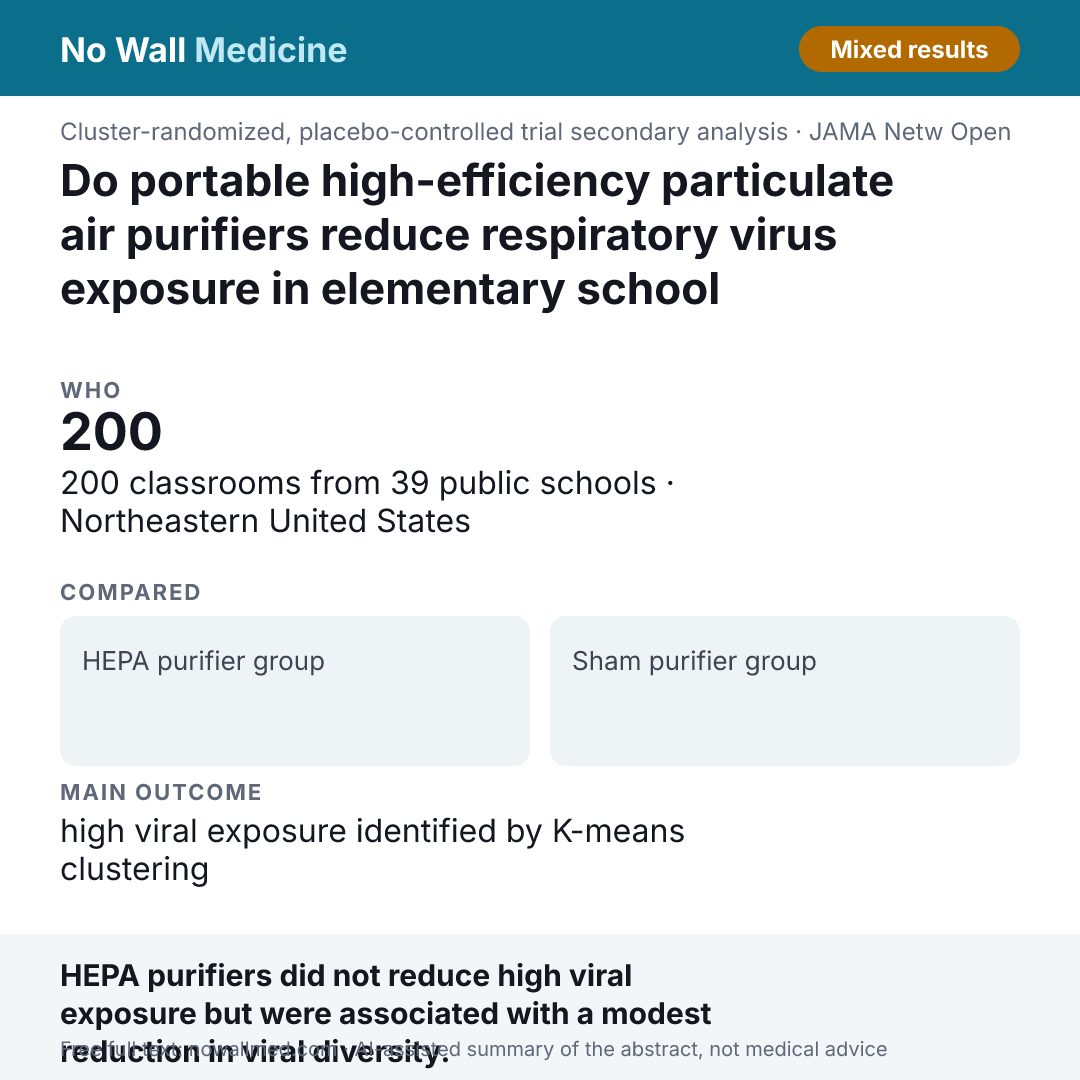
Do portable high-efficiency particulate air purifiers reduce respiratory virus exposure in elementary school classrooms?
Who
200
200 classrooms from 39 public schools · Northeastern United States
Compared
HEPA purifier group
Sham purifier group
Main outcome
high viral exposure identified by K-means clustering
Result: odds ratio 0.50 (95% CI 0.08-3.25)
Bottom line: HEPA purifiers did not reduce high viral exposure but were associated with a modest reduction in viral diversity.
JAMA Netw Open · 2025-10-01 · Save PNG
Key points
- Researchers analyzed 200 classrooms from 39 public schools that were randomized to receive either active high-efficiency particulate air (HEPA) purifiers or sham units.
- The HEPA purifier intervention was not associated with lower odds of high viral exposure, though it was associated with a modest reduction in viral diversity.
- Viruses were detected in 98.5% of the 532 bioaerosol samples collected, with rhinovirus being the most prevalent at 89.5%.
Discussion prompts
- Would these patients look like yours? Who was left out?
- Is the main outcome one that matters to patients?
- Is the difference large enough to change what you do?
Cite: Sun Y, Haghnazari D, Huang CY, et al. Air Purifier Intervention for Respiratory Viral Exposure in Elementary Schools: A Secondary Analysis of a Randomized Clinical Trial. JAMA Netw Open. 2025;8(10):e2536951. doi:10.1001/jamanetworkopen.2025.36951
Free full text: PubMed Central · Summary and visual abstract: nowallmed.com/a/air-purifier-intervention-for-respiratory-viral-exposure-in-1n8ogwl/ (AI-assisted from the abstract; check the paper before relying on it).