Stem cell transplantation showed no overall survival advantage over chemotherapy for intermediate-risk leukemia
Allogeneic Hematopoietic Cell Transplantation vs Standard Consolidation Chemotherapy in Patients With Intermediate-Risk Acute Myeloid Leukemia: A Randomized Clinical Trial
Randomized clinical trialNo clear difference
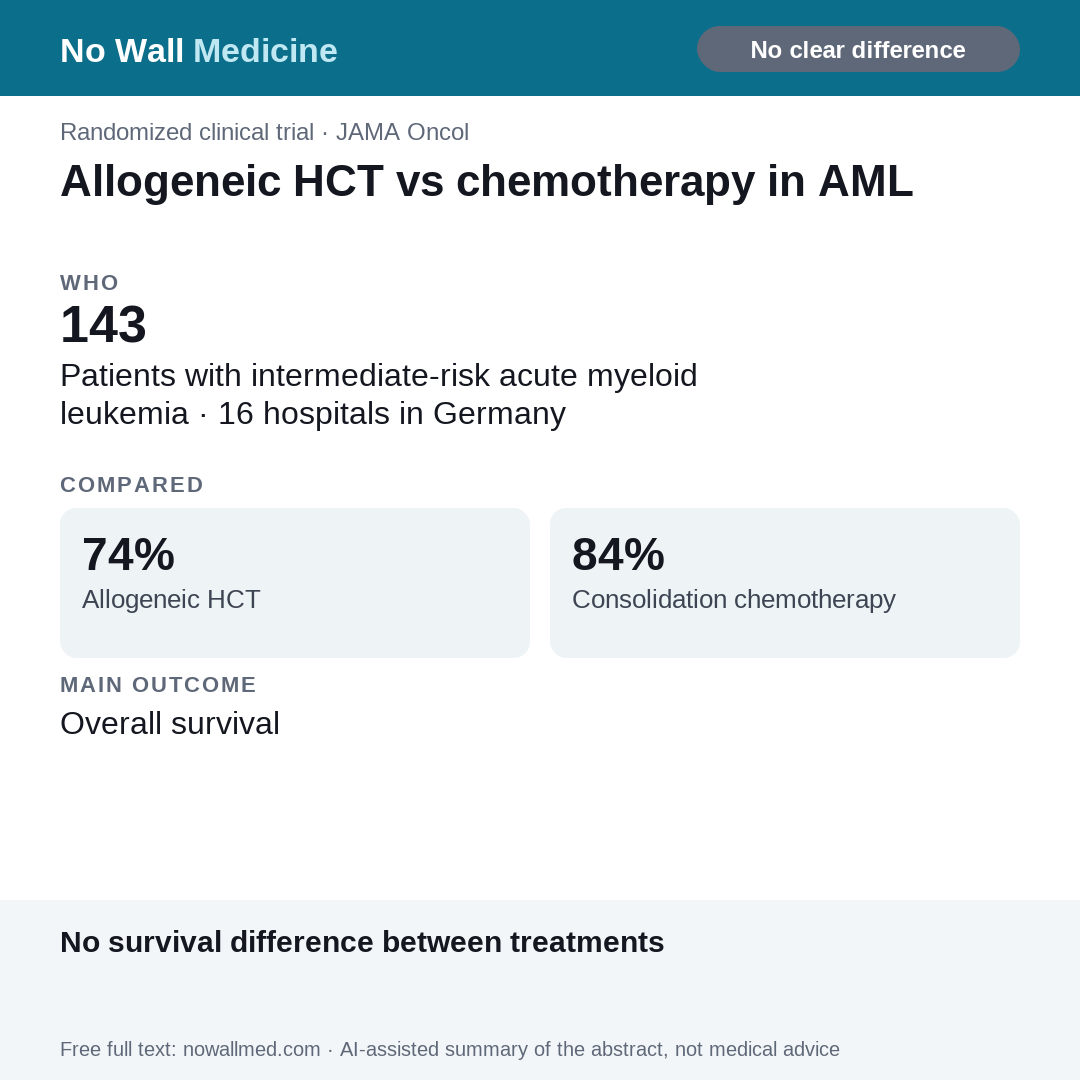
Allogeneic HCT vs chemotherapy in AML
Who
143
Patients with intermediate-risk acute myeloid leukemia · 16 hospitals in Germany
Compared
74%Allogeneic HCT (95% CI, 62%-83%)
84%Consolidation chemotherapy (95% CI, 73%-92%)
Main outcome
Overall survival
Bottom line: No survival difference between treatments
JAMA Oncol · 2023-02-10Download image
Why it matters: The ideal therapy for patients with intermediate-risk acute myeloid leukemia after their first complete remission remains a matter of debate.
Key points
- Researchers randomized 143 patients with intermediate-risk acute myeloid leukemia to receive either allogeneic hematopoietic cell transplantation or high-dose cytarabine chemotherapy.
- The 2-year survival probability was 74% for the transplantation group and 84% for the chemotherapy group, which was not a statistically significant difference.
- Transplantation was associated with a 2-year disease-free survival of 69% compared to 40% for chemotherapy and a lower relapse rate of 20% versus 58%.
Headline and key points written with AI from the paper’s abstract, with every number checked against it. Read the paper before relying on them.
Was this summary helpful?
Subject terms
Cite this article
Bornhäuser M, Schliemann C, Schetelig J, Röllig C, Kramer M, Glass B. Allogeneic Hematopoietic Cell Transplantation vs Standard Consolidation Chemotherapy in Patients With Intermediate-Risk Acute Myeloid Leukemia: A Randomized Clinical Trial. JAMA Oncol. 2023. doi:10.1001/jamaoncol.2022.7605
Spotted a mistake? Suggest a correction
Top studies every Monday
The week’s key trials and guidelines in your specialties, plus any topics you follow. By email, free.
Get the weekly digest