Brain activation patterns during reward anticipation differ in people with bipolar disorder
Altered brain activation during reward anticipation in bipolar disorder
Meta-analysis of 21 studiesMixed results
What are the brain activation alterations during reward anticipation in bipolar disorder?
Who
Individuals with bipolar disorder compared to healthy controls
Compared
Bipolar disorder
Healthy controls
Main outcome
Brain activation during reward anticipation
Bottom line: Bipolar disorder showed hypoactivation in the bilateral angular gyrus and right inferior frontal gyrus during reward anticipation.
Limitation: Clinical subtype, mood state, and duration of illness may confound neurobiological abnormalities.
Transl Psychiatry · 2022-07-28Download image
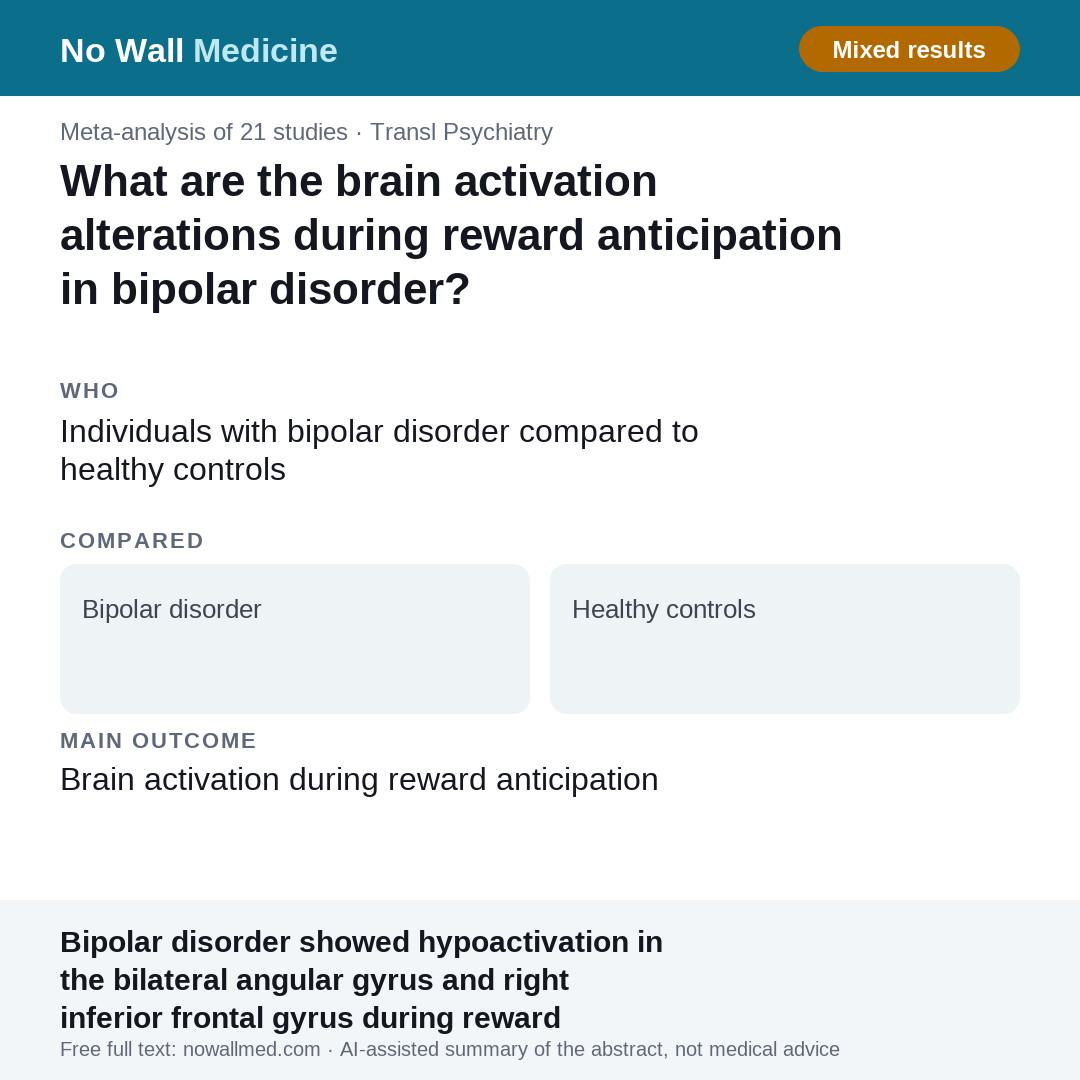
Clinical question: What are the brain activation alterations during reward anticipation in bipolar disorder?
Why it matters: Brain function findings related to reward processing in people with bipolar disorder remain unexplored and inconsistent.
Key points
- Researchers conducted a meta-analysis of 21 studies to compare functional magnetic resonance imaging (fMRI) brain activity during reward tasks in people with bipolar disorder and healthy controls.
- The analysis showed decreased activity in the bilateral angular gyrus and right inferior frontal gyrus during reward anticipation in people with bipolar disorder.
- Decreased activity in the right angular gyrus was positively correlated with how long the person had lived with the illness.
Limitation the authors note: Clinical features such as clinical subtype, mood state, and duration of illness may confound the underlying neurobiological abnormality.
Headline and key points written with AI from the paper’s abstract, with every number checked against it. Read the paper before relying on them.
Was this summary helpful?
Subject terms
Cite this article
Long X, Wang X, Tian F, Cao Y, Xie H, Jia Z. Altered brain activation during reward anticipation in bipolar disorder. Transl Psychiatry. 2022. doi:10.1038/s41398-022-02075-w
Spotted a mistake? Suggest a correction
Top studies every Monday
The week’s key trials and guidelines in your specialties, plus any topics you follow. By email, free.
Get the weekly digest