Abnormal muscle gene expression profiles were associated with long-term weakness in intensive care survivors
Altered muscle transcriptome as molecular basis of long-term muscle weakness in survivors from critical illness
Randomized trial analysisHarm found
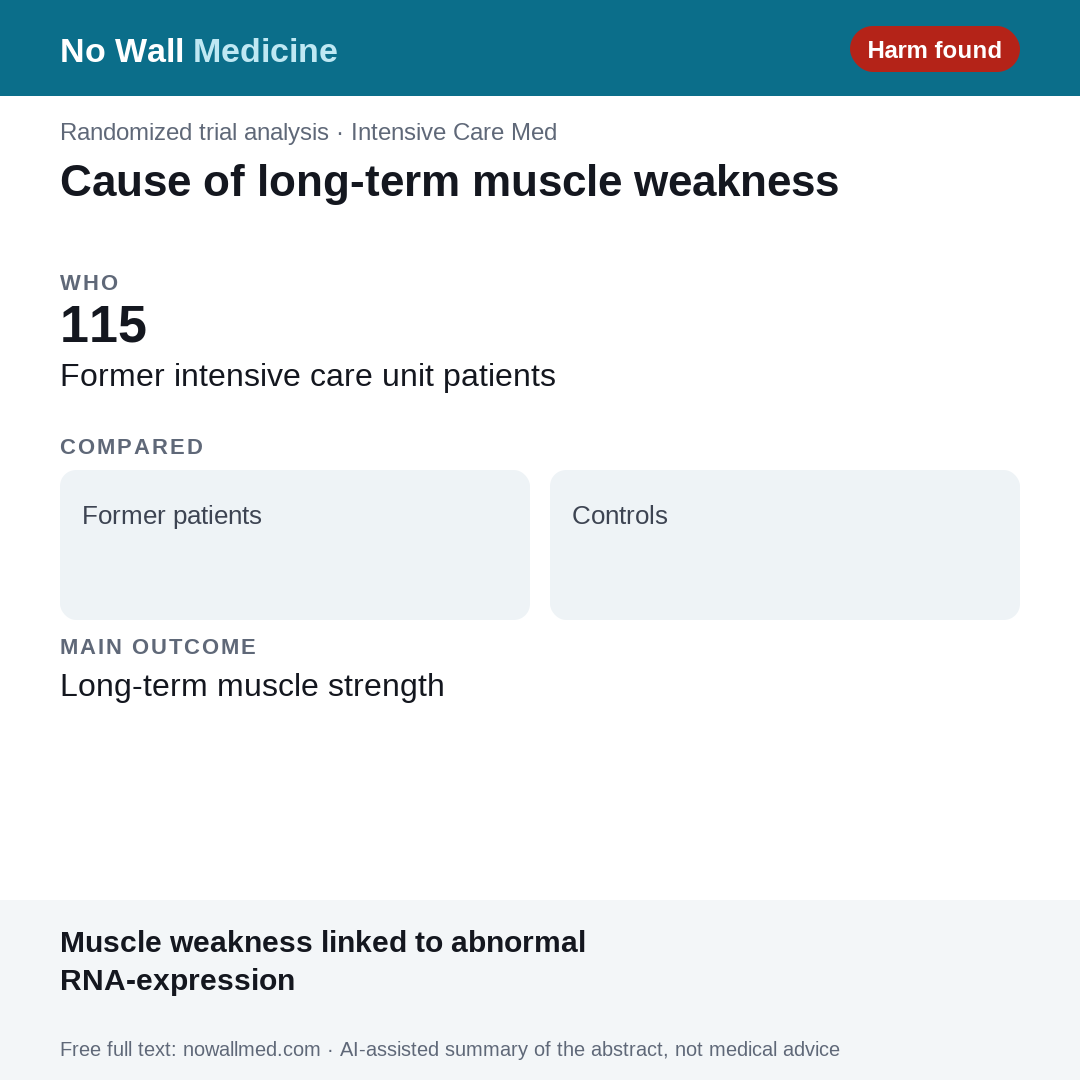
Cause of long-term muscle weakness
Who
115
Former intensive care unit patients
Compared
Former patients
Controls
Main outcome
Long-term muscle strength
Bottom line: Muscle weakness linked to abnormal RNA-expression
Intensive Care Med · 2025-06-10Download image
Why it matters: The biological mechanisms that cause muscle weakness to persist for years after intensive care unit admission remain unclear.
Key points
- Researchers compared the muscle transcriptome, or the complete set of RNA molecules, of 115 former intensive care unit patients and 30 matched controls 5 years after critical illness.
- The study identified 234 down-regulated and 116 up-regulated RNAs associated with impaired mitochondrial energy metabolism, disturbed lipid metabolism, and increased collagen formation or fibrosis.
- Abnormal muscle RNA-expression was associated with lower long-term muscle strength and was linked to intensive care unit treatments such as early parenteral nutrition and glucocorticoid use.
Headline and key points written with AI from the paper’s abstract, with every number checked against it. Read the paper before relying on them.
Was this summary helpful?
Subject terms
Cite this article
Uzun Ayar C, Güiza F, Derese I, Pauwels L, Vander Perre S, Pintelon I. Altered muscle transcriptome as molecular basis of long-term muscle weakness in survivors from critical illness. Intensive Care Med. 2025. doi:10.1007/s00134-025-07949-3
Spotted a mistake? Suggest a correction
Top studies every Monday
The week’s key trials and guidelines in your specialties, plus any topics you follow. By email, free.
Get the weekly digest