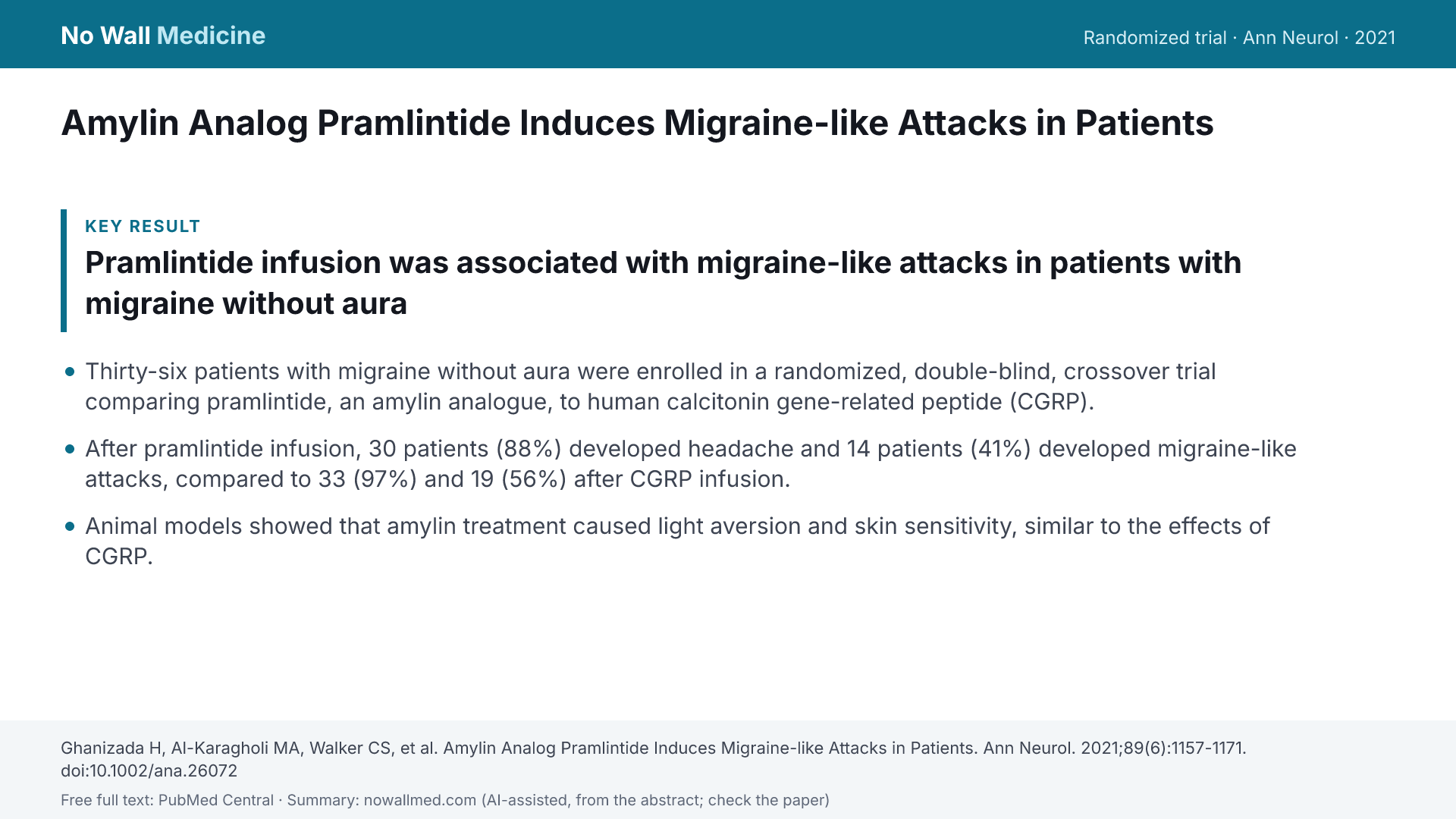
Pramlintide infusion was associated with migraine-like attacks in patients with migraine without aura
Amylin Analog Pramlintide Induces Migraine-like Attacks in Patients
Why it matters: The biological mechanisms and potential therapeutic targets for the development of migraine remain poorly understood.
Key points
- Thirty-six patients with migraine without aura were enrolled in a randomized, double-blind, crossover trial comparing pramlintide, an amylin analogue, to human calcitonin gene-related peptide (CGRP).
- After pramlintide infusion, 30 patients (88%) developed headache and 14 patients (41%) developed migraine-like attacks, compared to 33 (97%) and 19 (56%) after CGRP infusion.
- Animal models showed that amylin treatment caused light aversion and skin sensitivity, similar to the effects of CGRP.
Headline and key points written with AI from the paper’s abstract, with every number checked against it. Read the paper before relying on them.
Was this summary helpful?
Subject terms
Cite this article
Ghanizada H, Al-Karagholi MA, Walker CS, Arngrim N, Rees T, Petersen J. Amylin Analog Pramlintide Induces Migraine-like Attacks in Patients. Ann Neurol. 2021. doi:10.1002/ana.26072
Spotted a mistake? Suggest a correction