An epitope-based approach of HLA-matched platelets for transfusion: a noninferiority crossover randomized trial
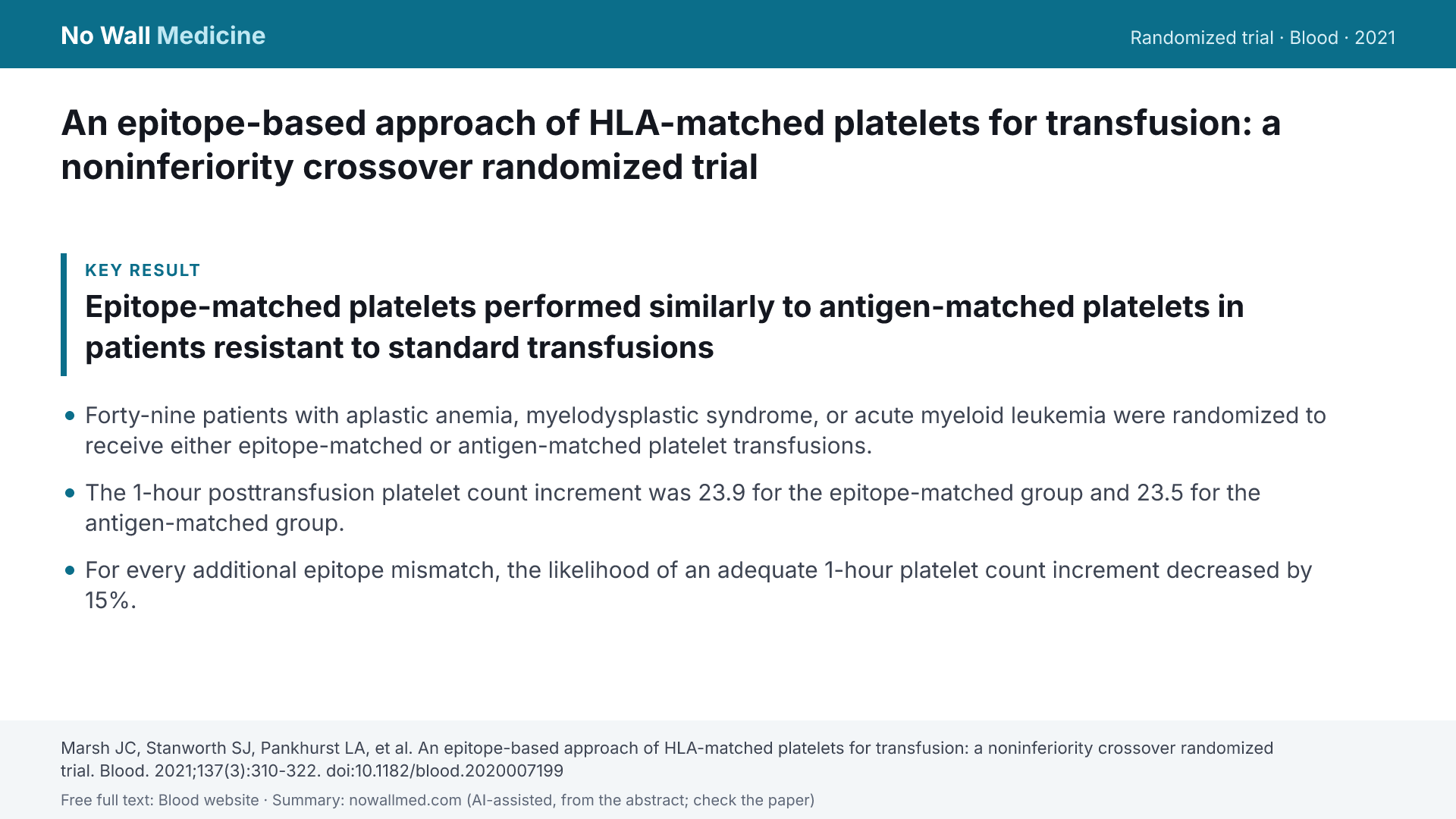
Key result: Epitope-matched platelets performed similarly to antigen-matched platelets in patients resistant to standard transfusions
Key points
- Forty-nine patients with aplastic anemia, myelodysplastic syndrome, or acute myeloid leukemia were randomized to receive either epitope-matched or antigen-matched platelet transfusions.
- The 1-hour posttransfusion platelet count increment was 23.9 for the epitope-matched group and 23.5 for the antigen-matched group.
- For every additional epitope mismatch, the likelihood of an adequate 1-hour platelet count increment decreased by 15%.
Why it matters: Managing platelet transfusion resistance caused by human leukocyte antigen (HLA) alloimmunization is difficult because finding fully matched donors is hard and does not guarantee a match.
Discussion prompts
- Would these patients look like yours? Who was left out?
- Is the main outcome one that matters to patients?
- Is the difference large enough to change what you do?
Cite: Marsh JC, Stanworth SJ, Pankhurst LA, et al. An epitope-based approach of HLA-matched platelets for transfusion: a noninferiority crossover randomized trial. Blood. 2021;137(3):310-322. doi:10.1182/blood.2020007199
Free full text: Blood website · Summary and visual abstract: nowallmed.com/a/an-epitope-based-approach-of-hla-matched-platelets-for-transfusion-a-yud2bz/ (AI-assisted from the abstract; check the paper before relying on it).