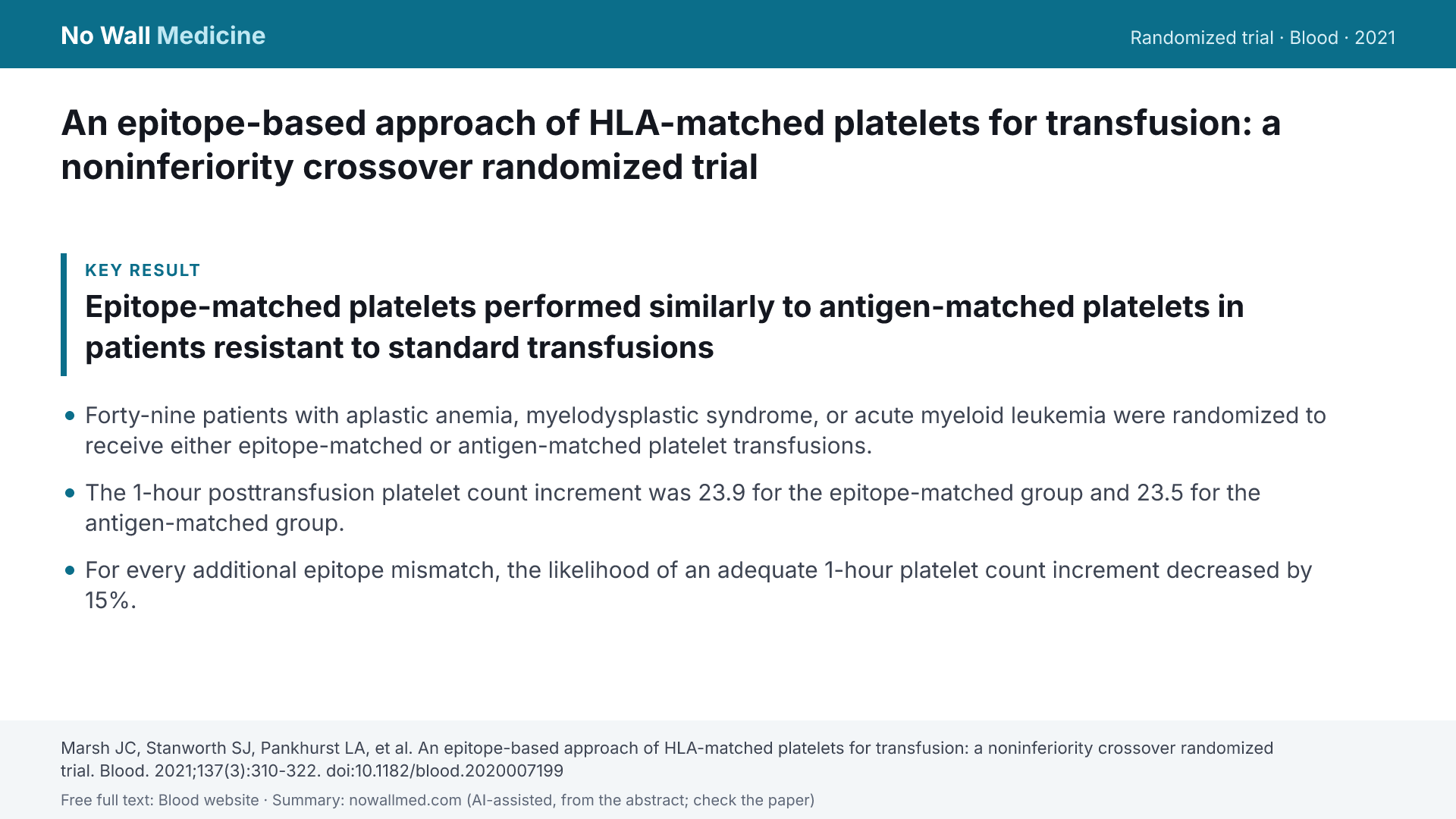
Epitope-matched platelets performed similarly to antigen-matched platelets in patients resistant to standard transfusions
An epitope-based approach of HLA-matched platelets for transfusion: a noninferiority crossover randomized trial
Why it matters: Managing platelet transfusion resistance caused by human leukocyte antigen (HLA) alloimmunization is difficult because finding fully matched donors is hard and does not guarantee a match.
Key points
- Forty-nine patients with aplastic anemia, myelodysplastic syndrome, or acute myeloid leukemia were randomized to receive either epitope-matched or antigen-matched platelet transfusions.
- The 1-hour posttransfusion platelet count increment was 23.9 for the epitope-matched group and 23.5 for the antigen-matched group.
- For every additional epitope mismatch, the likelihood of an adequate 1-hour platelet count increment decreased by 15%.
Headline and key points written with AI from the paper’s abstract, with every number checked against it. Read the paper before relying on them.
Was this summary helpful?
Subject terms
Cite this article
Marsh JC, Stanworth SJ, Pankhurst LA, Kallon D, Gilbertson AZ, Pigden C. An epitope-based approach of HLA-matched platelets for transfusion: a noninferiority crossover randomized trial. Blood. 2021. doi:10.1182/blood.2020007199
Spotted a mistake? Suggest a correction
Top studies every Monday
The week’s key trials and guidelines in your specialties, plus any topics you follow. By email, free.
Get the weekly digest