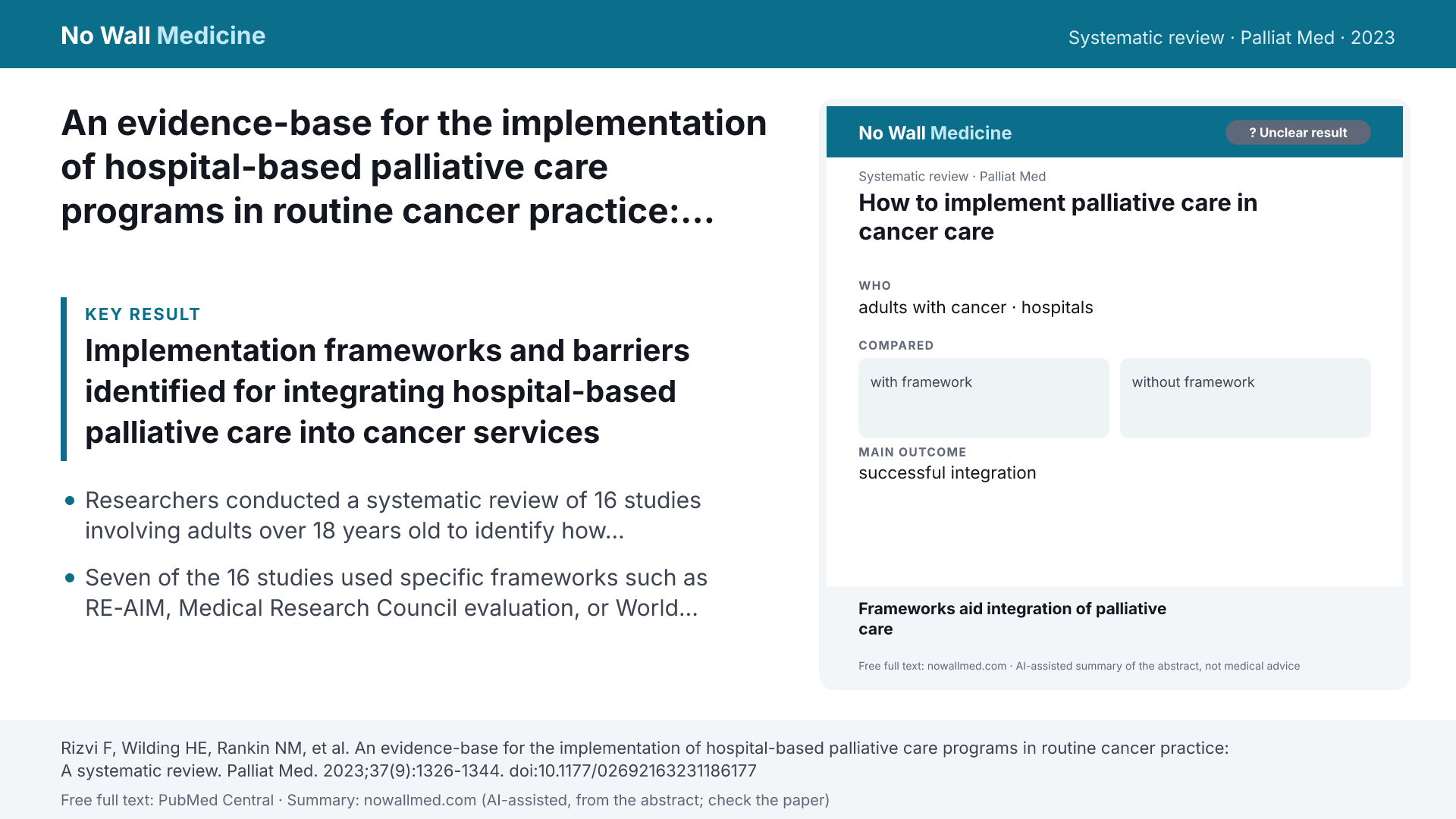
Implementation frameworks and barriers identified for integrating hospital-based palliative care into cancer services
An evidence-base for the implementation of hospital-based palliative care programs in routine cancer practice: A systematic review
Systematic reviewUnclear result
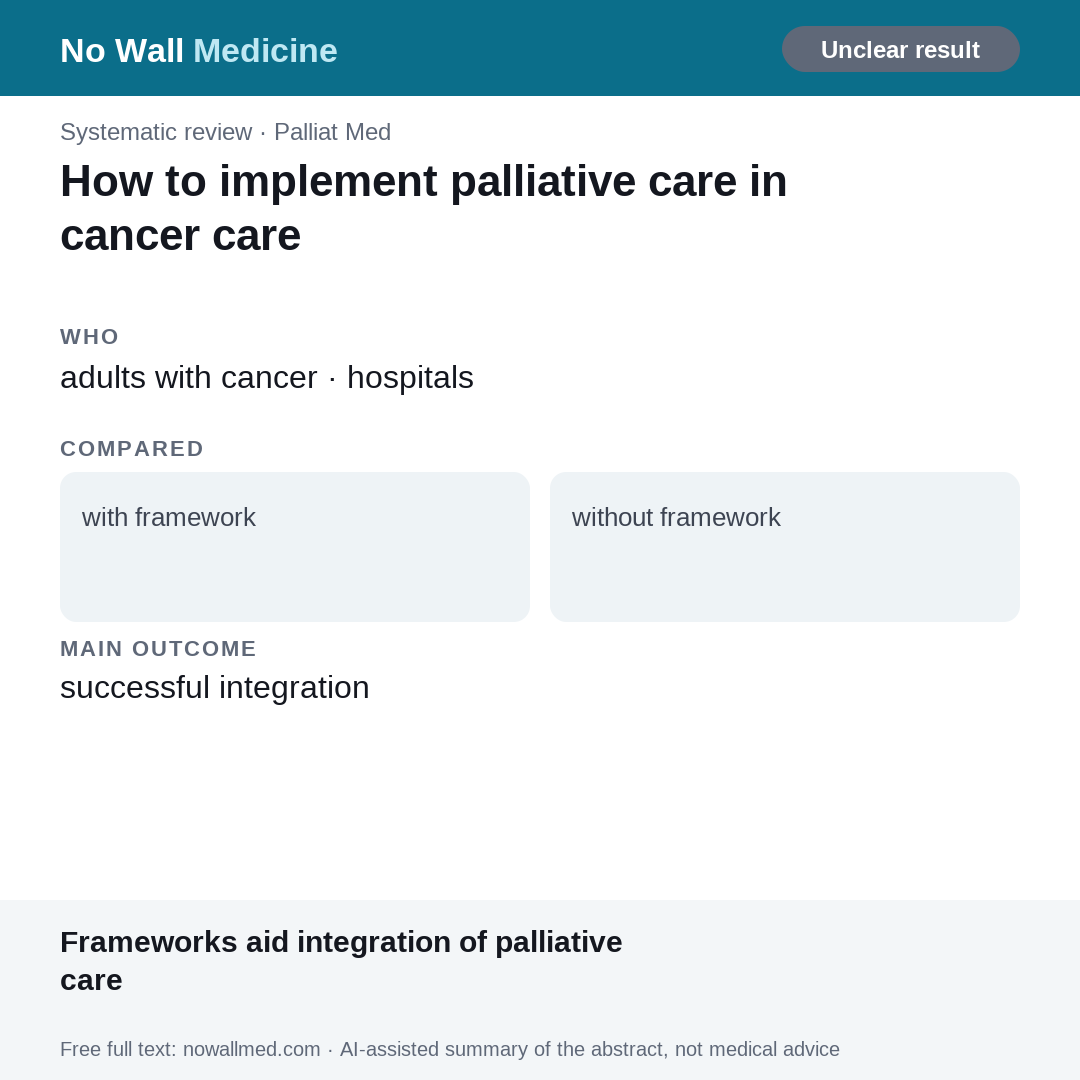
How to implement palliative care in cancer care
Who
adults with cancer · hospitals
Compared
with framework
without framework
Main outcome
successful integration
Bottom line: Frameworks aid integration of palliative care
Palliat Med · 2023-07-08Download image
Why it matters: It is unknown which implementation frameworks, enablers, or barriers are most relevant when integrating palliative care into routine hospital-based oncology services.
Key points
- Researchers conducted a systematic review of 16 studies involving adults over 18 years old to identify how palliative care is integrated into hospital oncology services.
- Seven of the 16 studies used specific frameworks such as RE-AIM, Medical Research Council evaluation, or World Health Organization constructs to guide implementation.
- Successful integration was associated with supportive culture and adequate funding, while barriers included stigma around the term 'palliative' and undefined staff roles.
Headline and key points written with AI from the paper’s abstract, with every number checked against it. Read the paper before relying on them.
Was this summary helpful?
Subject terms
Cite this article
Rizvi F, Wilding HE, Rankin NM, et al. An evidence-base for the implementation of hospital-based palliative care programs in routine cancer practice: A systematic review. Palliat Med. 2023. doi:10.1177/02692163231186177
Spotted a mistake? Suggest a correction