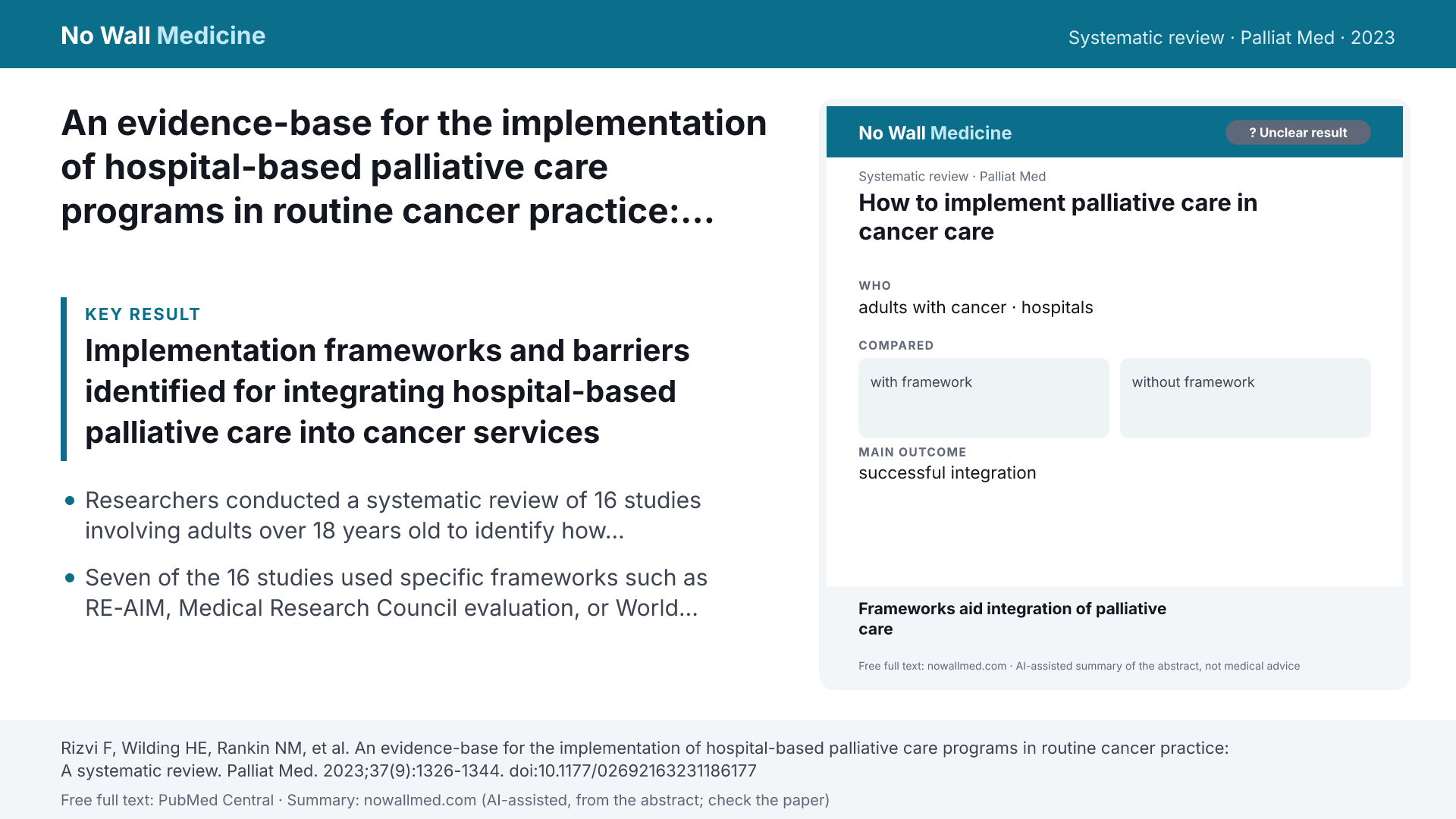
An evidence-base for the implementation of hospital-based palliative care programs in routine cancer practice: A systematic review
Key result: Implementation frameworks and barriers identified for integrating hospital-based palliative care into cancer services
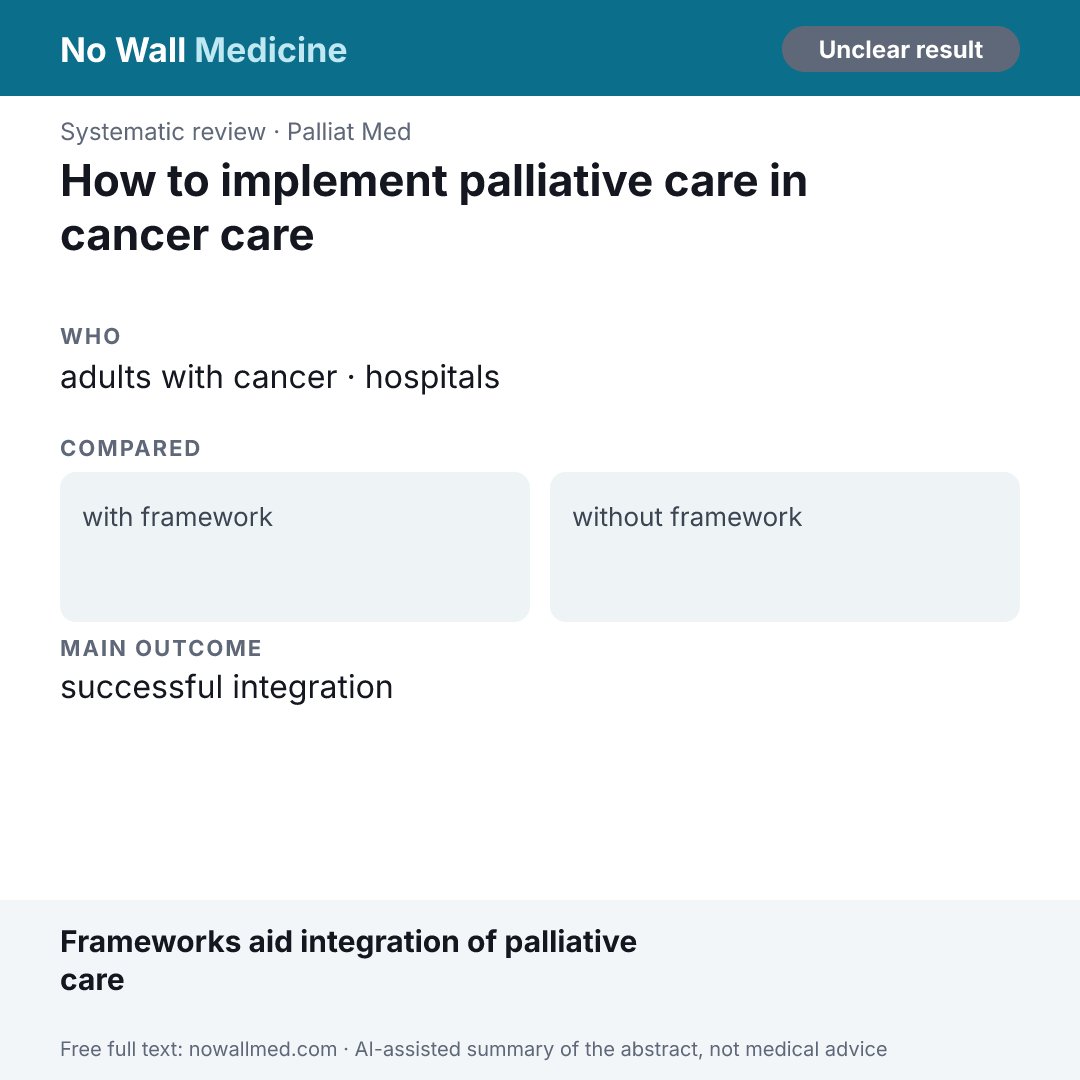
Systematic reviewUnclear result
How to implement palliative care in cancer care
Who
adults with cancer · hospitals
Compared
with framework
without framework
Main outcome
successful integration
Bottom line: Frameworks aid integration of palliative care
Palliat Med · 2023-07-08 · Save PNG
Key points
- Researchers conducted a systematic review of 16 studies involving adults over 18 years old to identify how palliative care is integrated into hospital oncology services.
- Seven of the 16 studies used specific frameworks such as RE-AIM, Medical Research Council evaluation, or World Health Organization constructs to guide implementation.
- Successful integration was associated with supportive culture and adequate funding, while barriers included stigma around the term 'palliative' and undefined staff roles.
Discussion prompts
- Would these patients look like yours? Who was left out?
- Is the main outcome one that matters to patients?
- Is the difference large enough to change what you do?
Cite: Rizvi F, Wilding HE, Rankin NM, et al. An evidence-base for the implementation of hospital-based palliative care programs in routine cancer practice: A systematic review. Palliat Med. 2023;37(9):1326-1344. doi:10.1177/02692163231186177
Free full text: PubMed Central · Summary and visual abstract: nowallmed.com/a/an-evidence-base-for-the-implementation-of-hospital-based-palliative-5n1y4u/ (AI-assisted from the abstract; check the paper before relying on it).