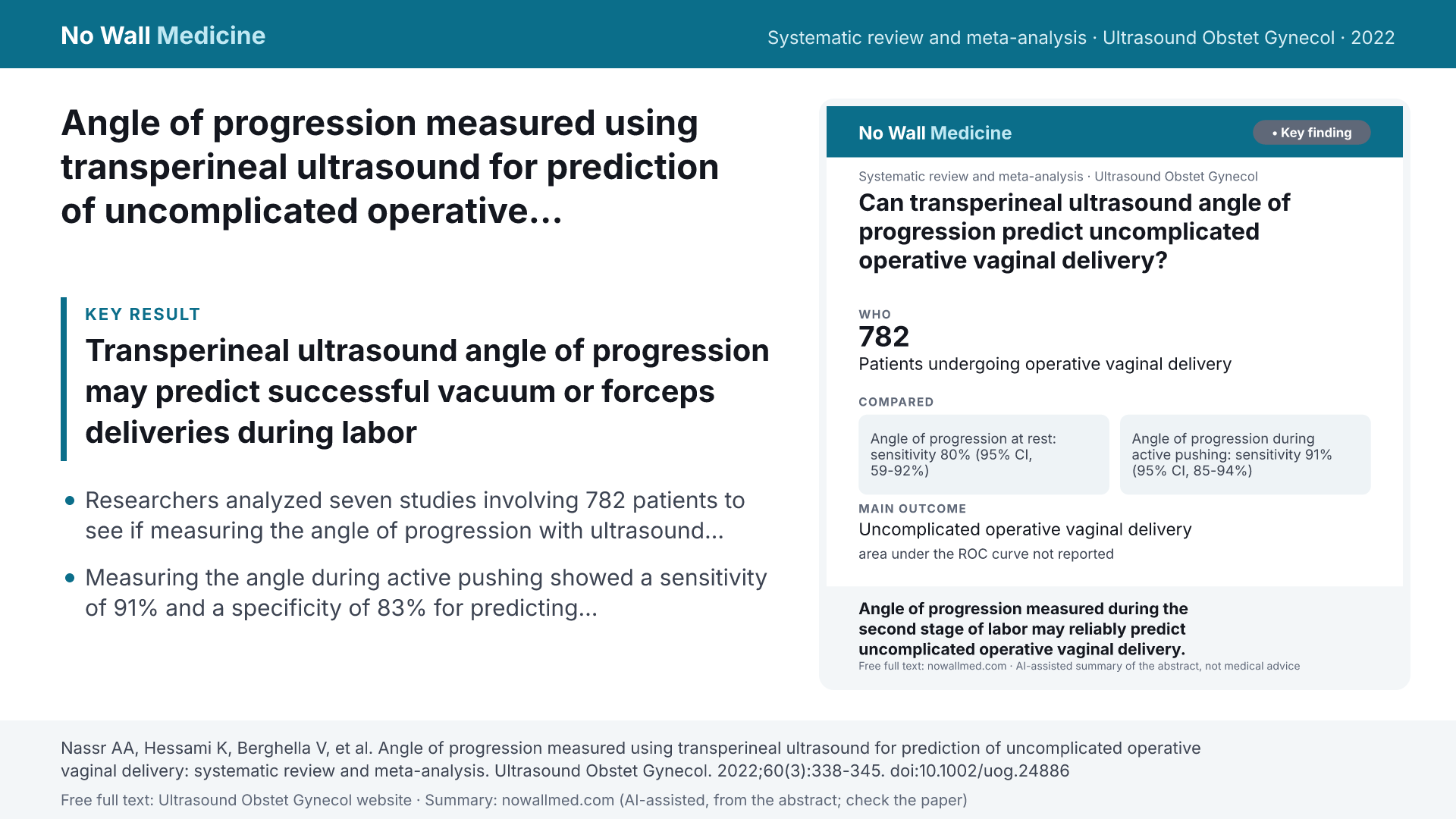
Angle of progression measured using transperineal ultrasound for prediction of uncomplicated operative vaginal delivery: systematic review and meta-analysis
Key result: Transperineal ultrasound angle of progression may predict successful vacuum or forceps deliveries during labor
Systematic review and meta-analysisKey finding
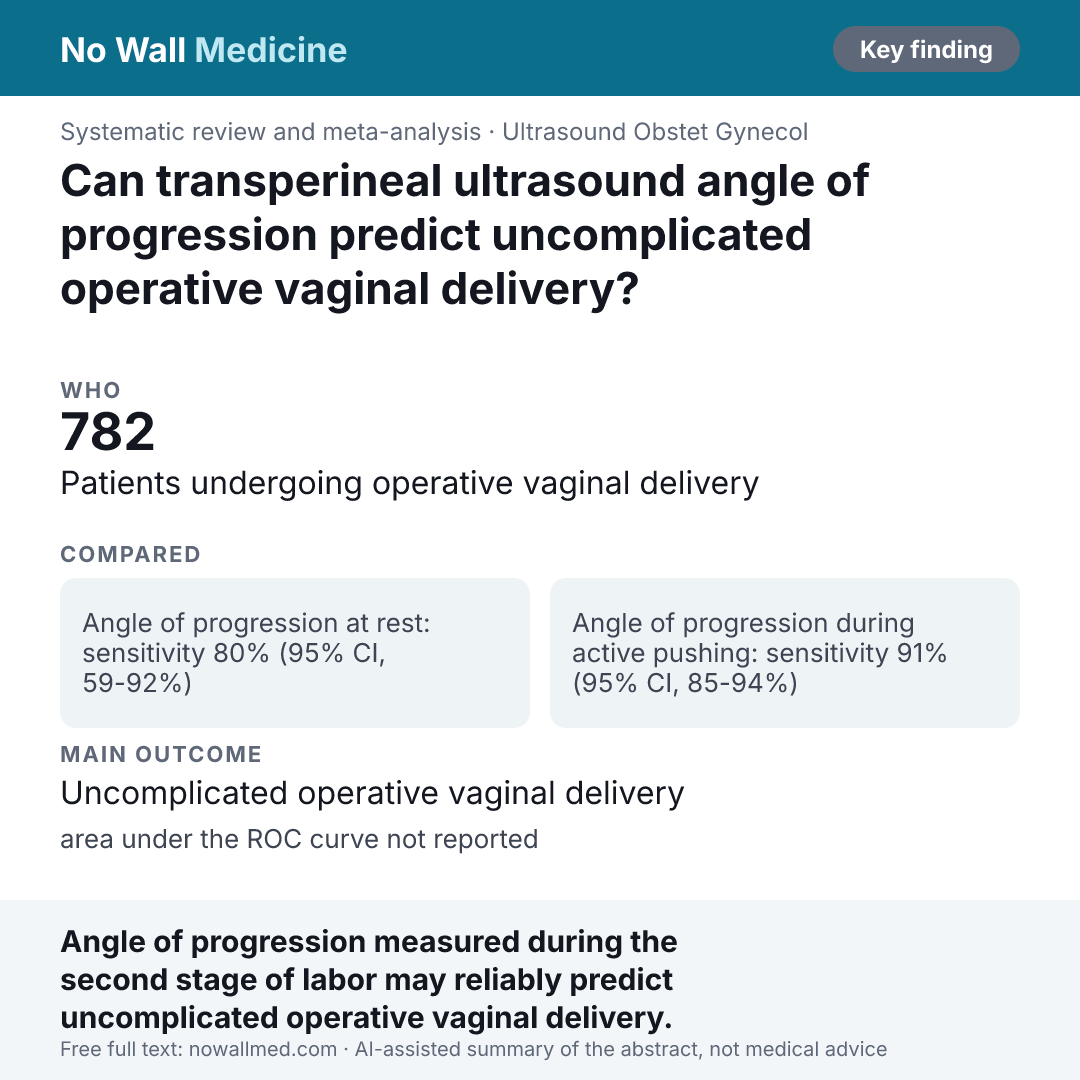
Can transperineal ultrasound angle of progression predict uncomplicated operative vaginal delivery?
Who
782
Patients undergoing operative vaginal delivery
Compared
Angle of progression at rest: sensitivity 80% (95% CI, 59-92%)
Angle of progression during active pushing: sensitivity 91% (95% CI, 85-94%)
Main outcome
Uncomplicated operative vaginal delivery
Result: area under the ROC curve not reported
Bottom line: Angle of progression measured during the second stage of labor may reliably predict uncomplicated operative vaginal delivery.
Ultrasound Obstet Gynecol · 2022-03-04 · Save PNG
Key points
- Researchers analyzed seven studies involving 782 patients to see if measuring the angle of progression with ultrasound could predict successful operative vaginal delivery.
- Measuring the angle during active pushing showed a sensitivity of 91% and a specificity of 83% for predicting uncomplicated delivery.
- Measuring the angle during maternal rest showed a sensitivity of 80% and a specificity of 89%, with particularly high performance in women who have not given birth before.
Discussion prompts
- Would these patients look like yours? Who was left out?
- Is the main outcome one that matters to patients?
- Is the difference large enough to change what you do?
Cite: Nassr AA, Hessami K, Berghella V, et al. Angle of progression measured using transperineal ultrasound for prediction of uncomplicated operative vaginal delivery: systematic review and meta-analysis. Ultrasound Obstet Gynecol. 2022;60(3):338-345. doi:10.1002/uog.24886
Free full text: Ultrasound Obstet Gynecol website · Summary and visual abstract: nowallmed.com/a/angle-of-progression-measured-using-transperineal-ultrasound-for-1j3ym7t/ (AI-assisted from the abstract; check the paper before relying on it).