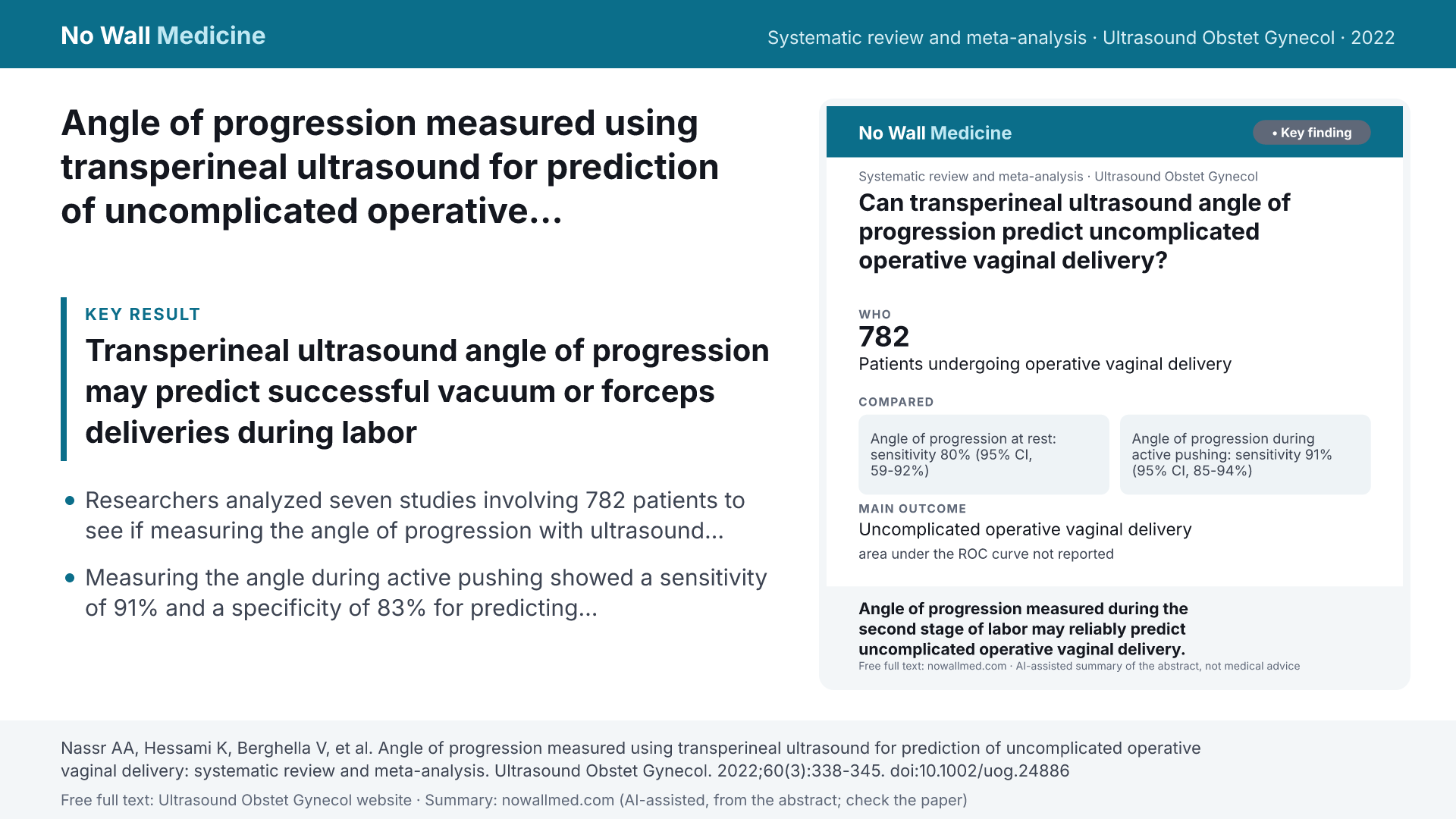
Transperineal ultrasound angle of progression may predict successful vacuum or forceps deliveries during labor
Angle of progression measured using transperineal ultrasound for prediction of uncomplicated operative vaginal delivery: systematic review and meta-analysis
Systematic review and meta-analysisKey finding
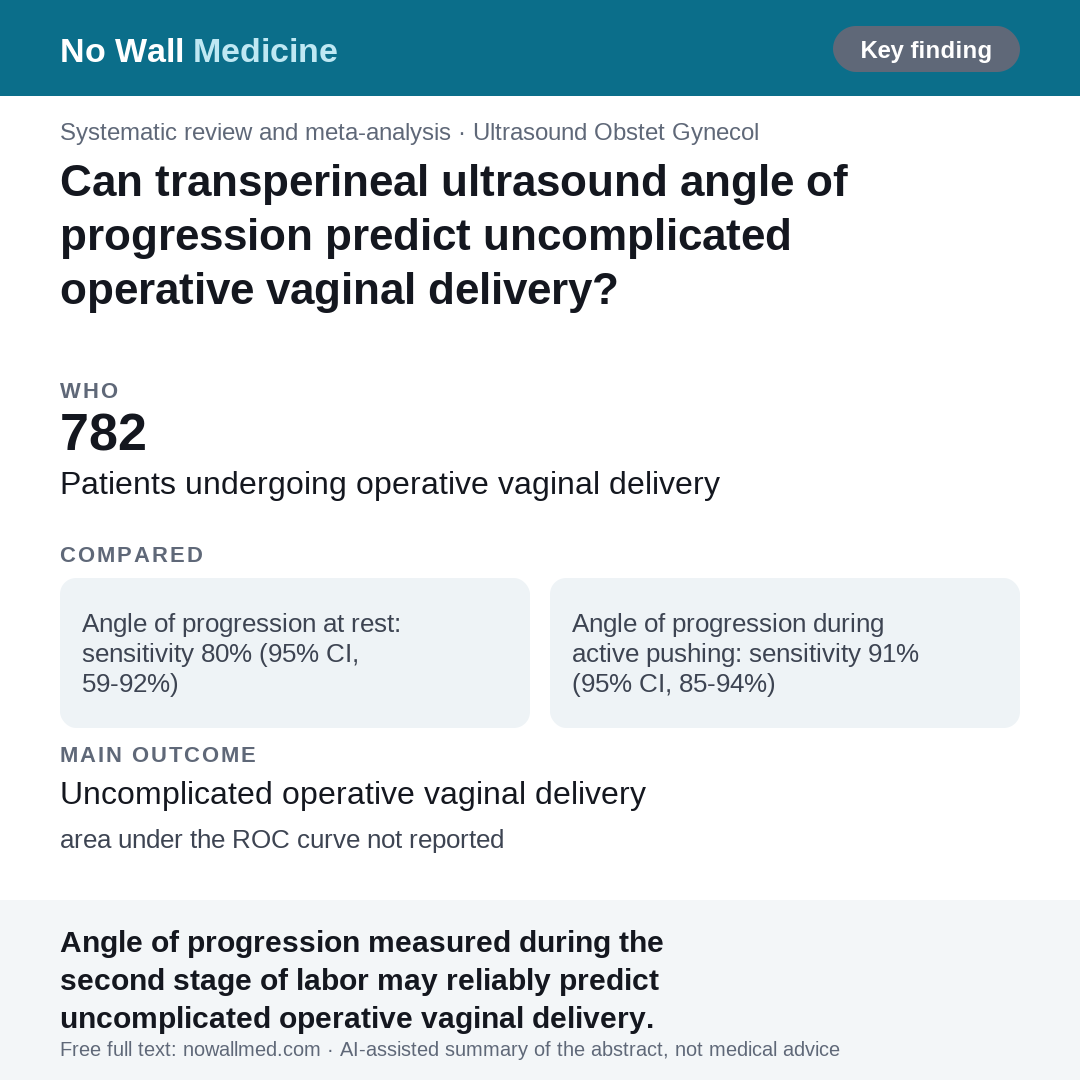
Can transperineal ultrasound angle of progression predict uncomplicated operative vaginal delivery?
Who
782
Patients undergoing operative vaginal delivery
Compared
Angle of progression at rest: sensitivity 80% (95% CI, 59-92%)
Angle of progression during active pushing: sensitivity 91% (95% CI, 85-94%)
Main outcome
Uncomplicated operative vaginal delivery
Result: area under the ROC curve not reported
Bottom line: Angle of progression measured during the second stage of labor may reliably predict uncomplicated operative vaginal delivery.
Ultrasound Obstet Gynecol · 2022-03-04Download image
Clinical question: Can transperineal ultrasound angle of progression predict uncomplicated operative vaginal delivery?
Key points
- Researchers analyzed seven studies involving 782 patients to see if measuring the angle of progression with ultrasound could predict successful operative vaginal delivery.
- Measuring the angle during active pushing showed a sensitivity of 91% and a specificity of 83% for predicting uncomplicated delivery.
- Measuring the angle during maternal rest showed a sensitivity of 80% and a specificity of 89%, with particularly high performance in women who have not given birth before.
Headline and key points written with AI from the paper’s abstract, with every number checked against it. Read the paper before relying on them.
Was this summary helpful?
Subject terms
Cite this article
Nassr AA, Hessami K, Berghella V, et al. Angle of progression measured using transperineal ultrasound for prediction of uncomplicated operative vaginal delivery: systematic review and meta-analysis. Ultrasound Obstet Gynecol. 2022. doi:10.1002/uog.24886
Spotted a mistake? Suggest a correction