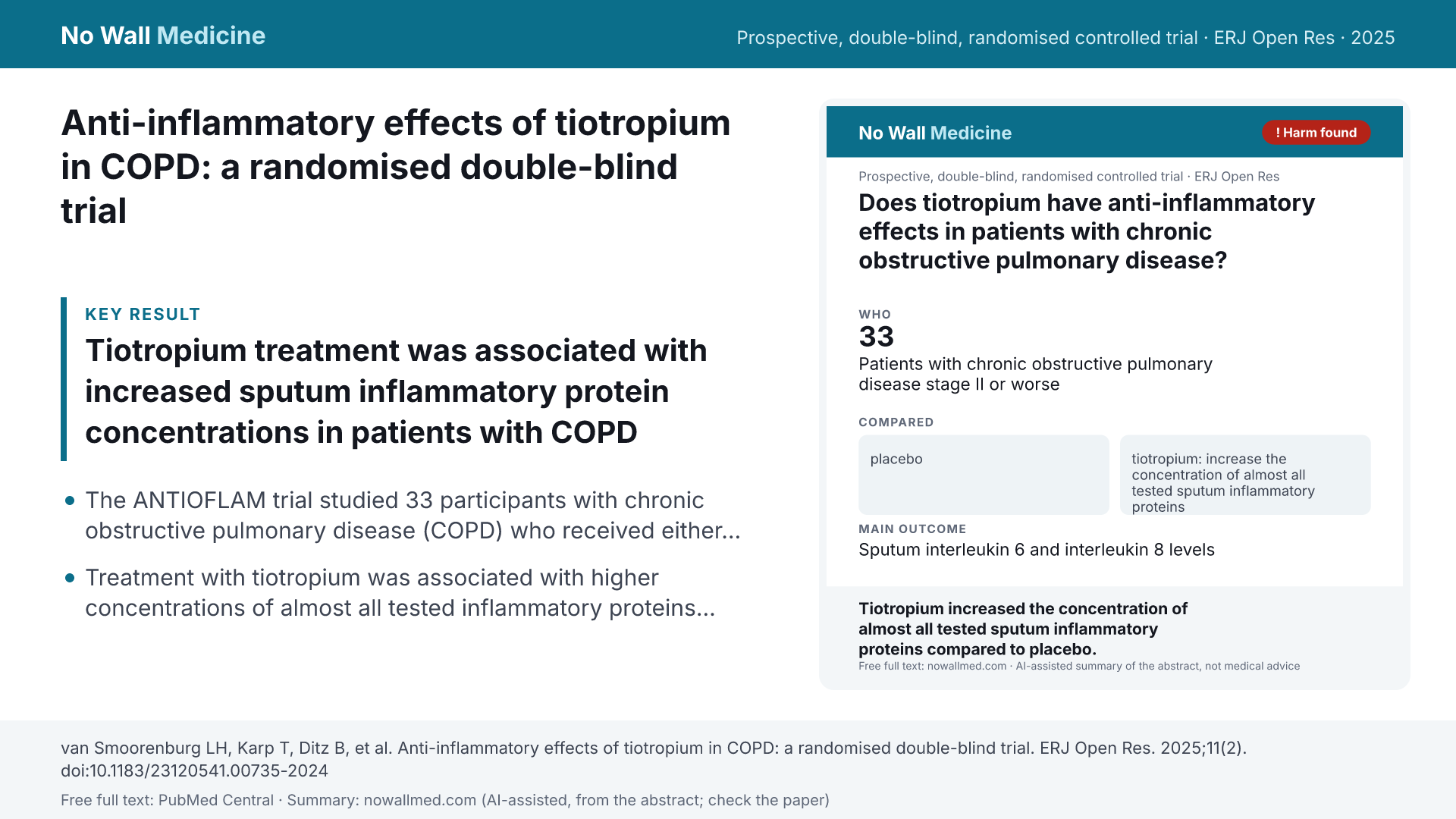
Tiotropium treatment was associated with increased sputum inflammatory protein concentrations in patients with COPD
Anti-inflammatory effects of tiotropium in COPD: a randomised double-blind trial
Prospective, double-blind, randomised controlled trialHarm found
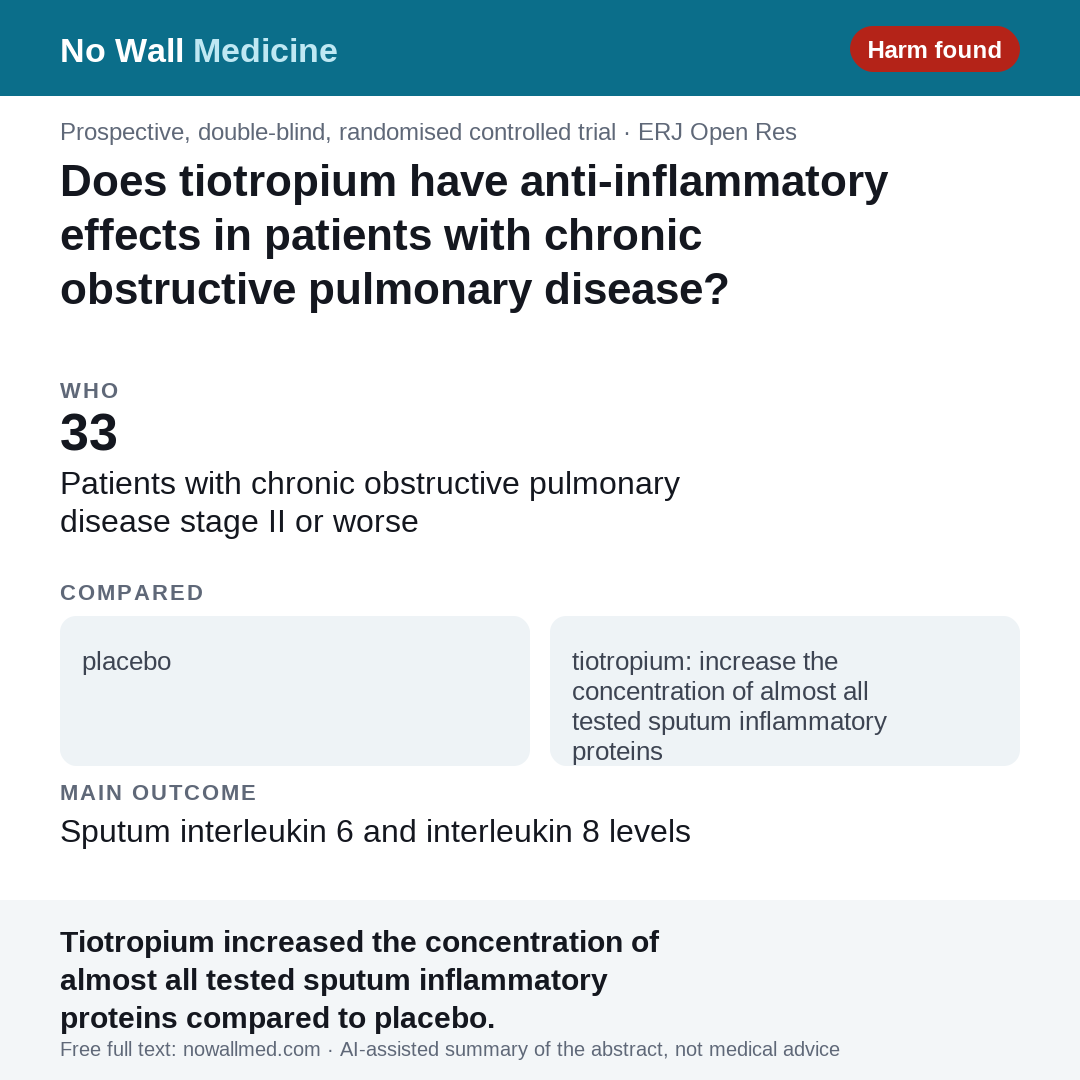
Does tiotropium have anti-inflammatory effects in patients with chronic obstructive pulmonary disease?
Who
33
Patients with chronic obstructive pulmonary disease stage II or worse
Compared
placebo
tiotropium: increase the concentration of almost all tested sputum inflammatory proteins
Main outcome
Sputum interleukin 6 and interleukin 8 levels
Bottom line: Tiotropium increased the concentration of almost all tested sputum inflammatory proteins compared to placebo.
ERJ Open Res · 2025-03-31Download image
Clinical question: Does tiotropium have anti-inflammatory effects in patients with chronic obstructive pulmonary disease?
Why it matters: It was unknown if muscarinic antagonists like tiotropium exert anti-inflammatory effects by mitigating airway inflammation in patients with chronic obstructive pulmonary disease.
Key points
- The ANTIOFLAM trial studied 33 participants with chronic obstructive pulmonary disease (COPD) who received either a placebo or 5 µg of tiotropium daily for 6 weeks.
- Treatment with tiotropium was associated with higher concentrations of almost all tested inflammatory proteins in sputum compared to placebo, despite a significant decrease in interleukin-6 and interleukin-8 levels.
- The study found no differences in gene expression for interleukin-6 or interleukin-8 in the sputum of patients.
Headline and key points written with AI from the paper’s abstract, with every number checked against it. Read the paper before relying on them.
Was this summary helpful?
Cite this article
van Smoorenburg LH, Karp T, Ditz B, van Geffen WH, Guryev V, Almusa A. Anti-inflammatory effects of tiotropium in COPD: a randomised double-blind trial. ERJ Open Res. 2025. doi:10.1183/23120541.00735-2024
Spotted a mistake? Suggest a correction
Top studies every Monday
The week’s key trials and guidelines in your specialties, plus any topics you follow. By email, free.
Get the weekly digest