Anti-inflammatory effects of tiotropium in COPD: a randomised double-blind trial
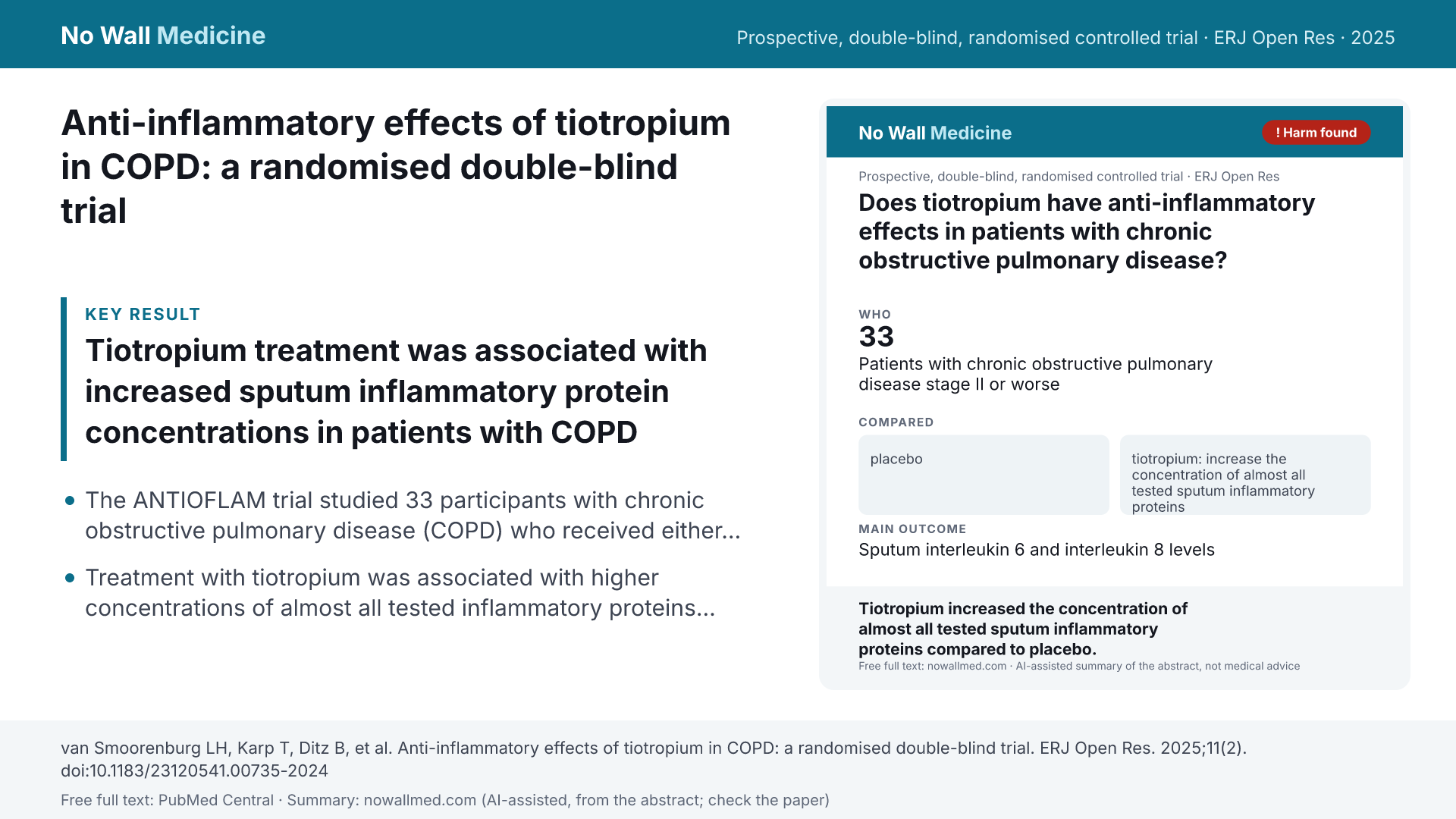
Key result: Tiotropium treatment was associated with increased sputum inflammatory protein concentrations in patients with COPD
Prospective, double-blind, randomised controlled trialHarm found
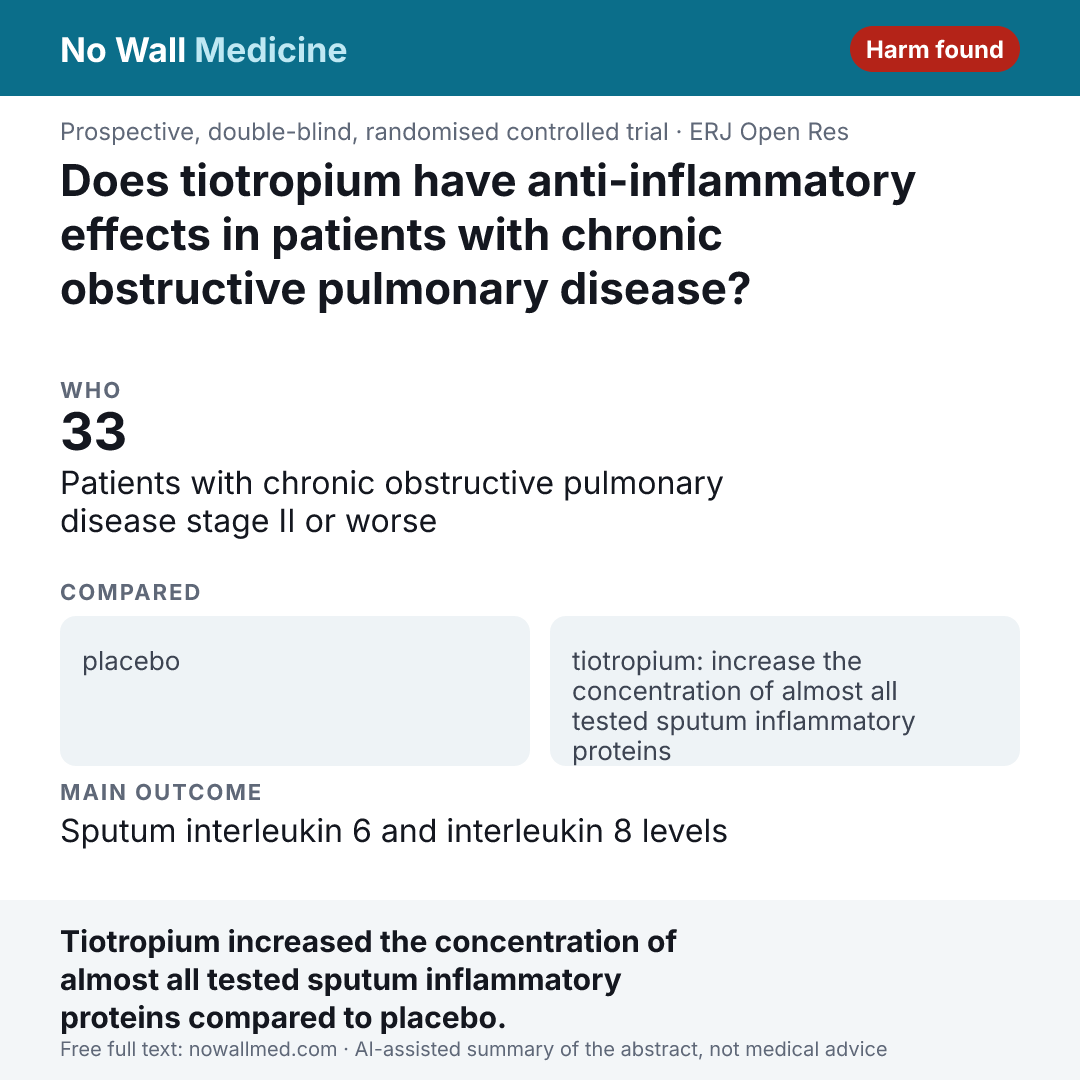
Does tiotropium have anti-inflammatory effects in patients with chronic obstructive pulmonary disease?
Who
33
Patients with chronic obstructive pulmonary disease stage II or worse
Compared
placebo
tiotropium: increase the concentration of almost all tested sputum inflammatory proteins
Main outcome
Sputum interleukin 6 and interleukin 8 levels
Bottom line: Tiotropium increased the concentration of almost all tested sputum inflammatory proteins compared to placebo.
ERJ Open Res · 2025-03-31 · Save PNG
Key points
- The ANTIOFLAM trial studied 33 participants with chronic obstructive pulmonary disease (COPD) who received either a placebo or 5 µg of tiotropium daily for 6 weeks.
- Treatment with tiotropium was associated with higher concentrations of almost all tested inflammatory proteins in sputum compared to placebo, despite a significant decrease in interleukin-6 and interleukin-8 levels.
- The study found no differences in gene expression for interleukin-6 or interleukin-8 in the sputum of patients.
Discussion prompts
- Would these patients look like yours? Who was left out?
- Is the main outcome one that matters to patients?
- Is the difference large enough to change what you do?
Cite: van Smoorenburg LH, Karp T, Ditz B, et al. Anti-inflammatory effects of tiotropium in COPD: a randomised double-blind trial. ERJ Open Res. 2025;11(2). doi:10.1183/23120541.00735-2024
Free full text: PubMed Central · Summary and visual abstract: nowallmed.com/a/anti-inflammatory-effects-of-tiotropium-in-copd-a-randomised-double-1azevds/ (AI-assisted from the abstract; check the paper before relying on it).