Antiphospholipid antibodies in COVID-19: a meta-analysis and systematic review
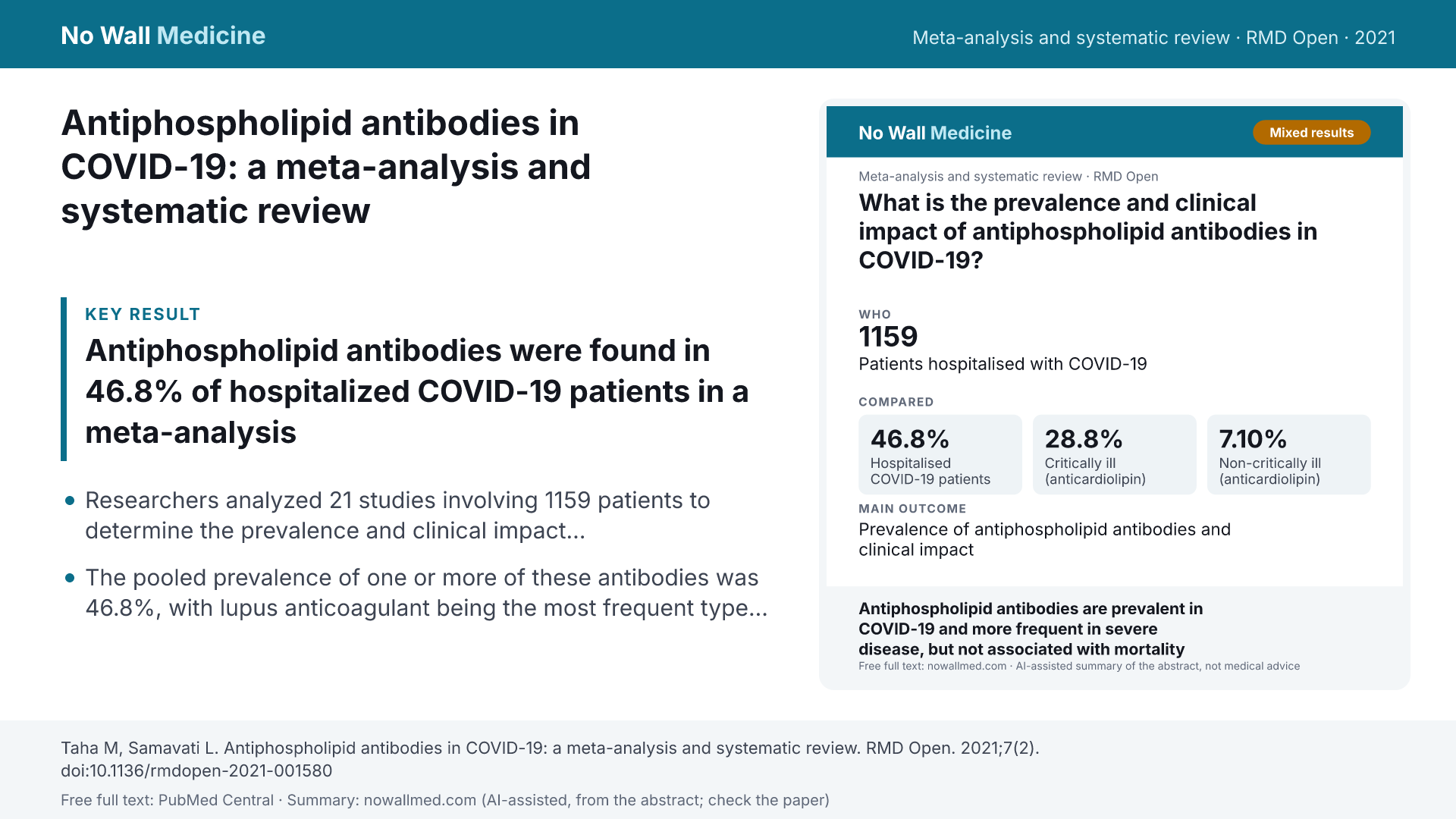
Key result: Antiphospholipid antibodies were found in 46.8% of hospitalized COVID-19 patients in a meta-analysis
Meta-analysis and systematic reviewMixed results
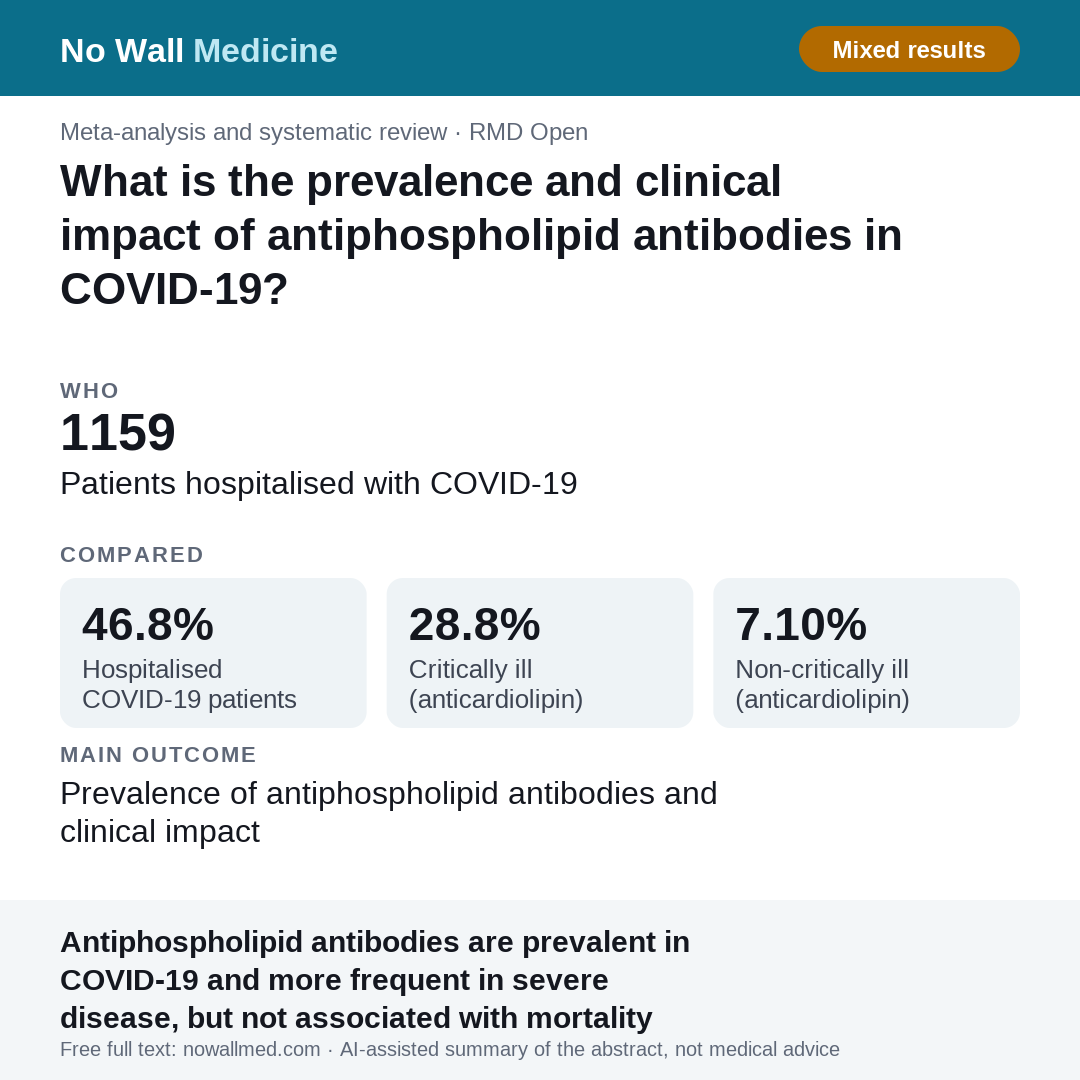
What is the prevalence and clinical impact of antiphospholipid antibodies in COVID-19?
Who
1159
Patients hospitalised with COVID-19
Compared
46.8%Hospitalised COVID-19 patients (95% CI 36.1% to 57.8%)
28.8%Critically ill (anticardiolipin)
7.10%Non-critically ill (anticardiolipin)
Main outcome
Prevalence of antiphospholipid antibodies and clinical impact
Bottom line: Antiphospholipid antibodies are prevalent in COVID-19 and more frequent in severe disease, but not associated with mortality or thrombosis.
Limitation: Further studies are required to identify the clinical and pathological role of antiphospholipid antibodies.
RMD Open · 2021-05-07Download image
Key points
- Researchers analyzed 21 studies involving 1159 patients to determine the prevalence and clinical impact of antiphospholipid antibodies, which are proteins that can increase blood clotting risks.
- The pooled prevalence of one or more of these antibodies was 46.8%, with lupus anticoagulant being the most frequent type at 50.7%.
- Higher prevalence of certain antibodies was associated with critical illness, but antibody positivity was not linked to mortality, invasive ventilation, or venous thromboembolism.
Why it matters: The true prevalence of antiphospholipid antibodies in COVID-19 patients and their impact on the course of the disease were unknown.
Discussion prompts
- Would these patients look like yours? Who was left out?
- Is the main outcome one that matters to patients?
- Is the difference large enough to change what you do?
Cite: Taha M, Samavati L. Antiphospholipid antibodies in COVID-19: a meta-analysis and systematic review. RMD Open. 2021. doi:10.1136/rmdopen-2021-001580
Free full text: PubMed Central · Summary and visual abstract: nowallmed.com/a/antiphospholipid-antibodies-in-covid-19-a-meta-analysis-and-1widu4/ (AI-assisted from the abstract; check the paper before relying on it).