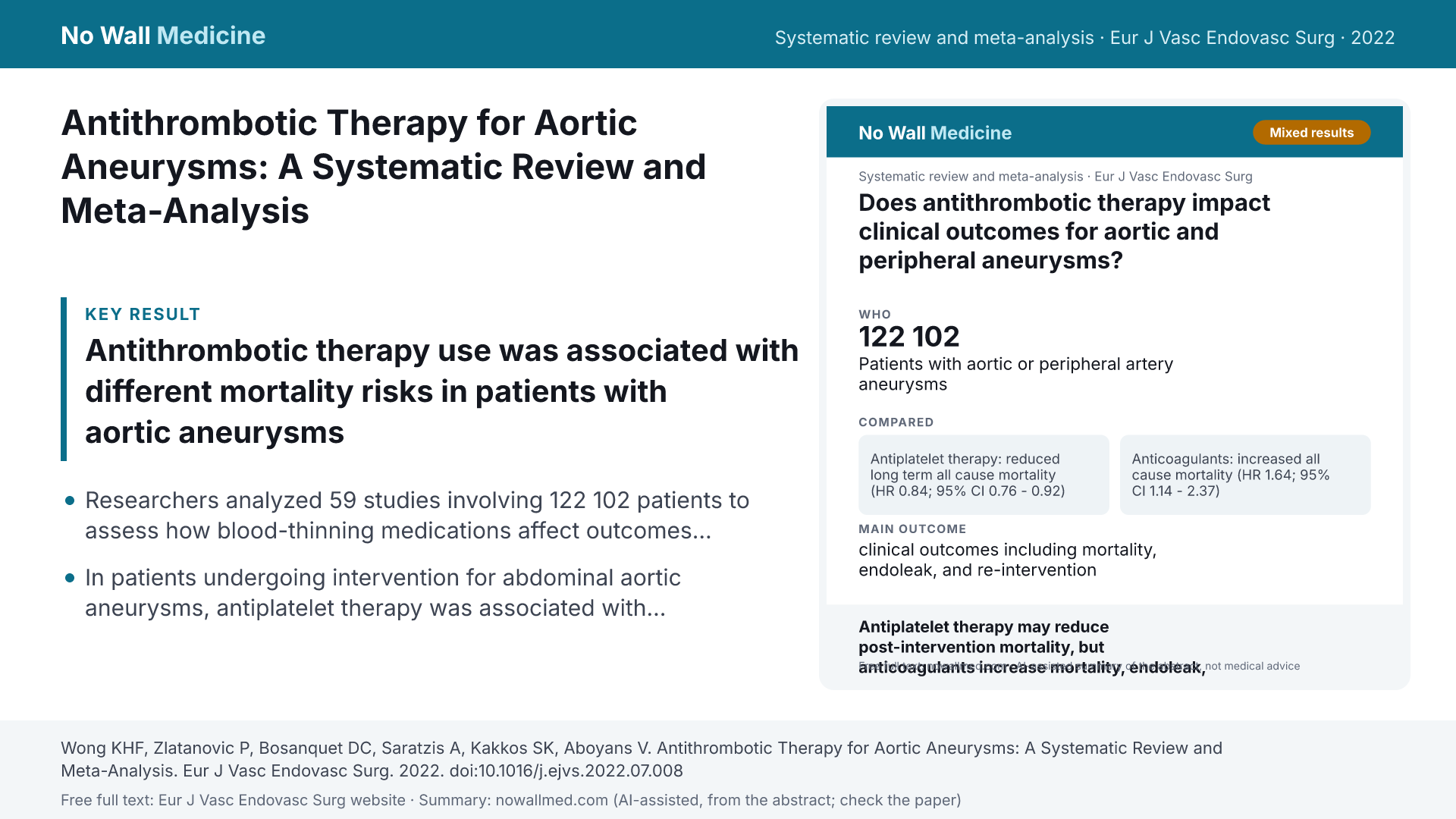
Antithrombotic Therapy for Aortic Aneurysms: A Systematic Review and Meta-Analysis
Key result: Antithrombotic therapy use was associated with different mortality risks in patients with aortic aneurysms
Key points
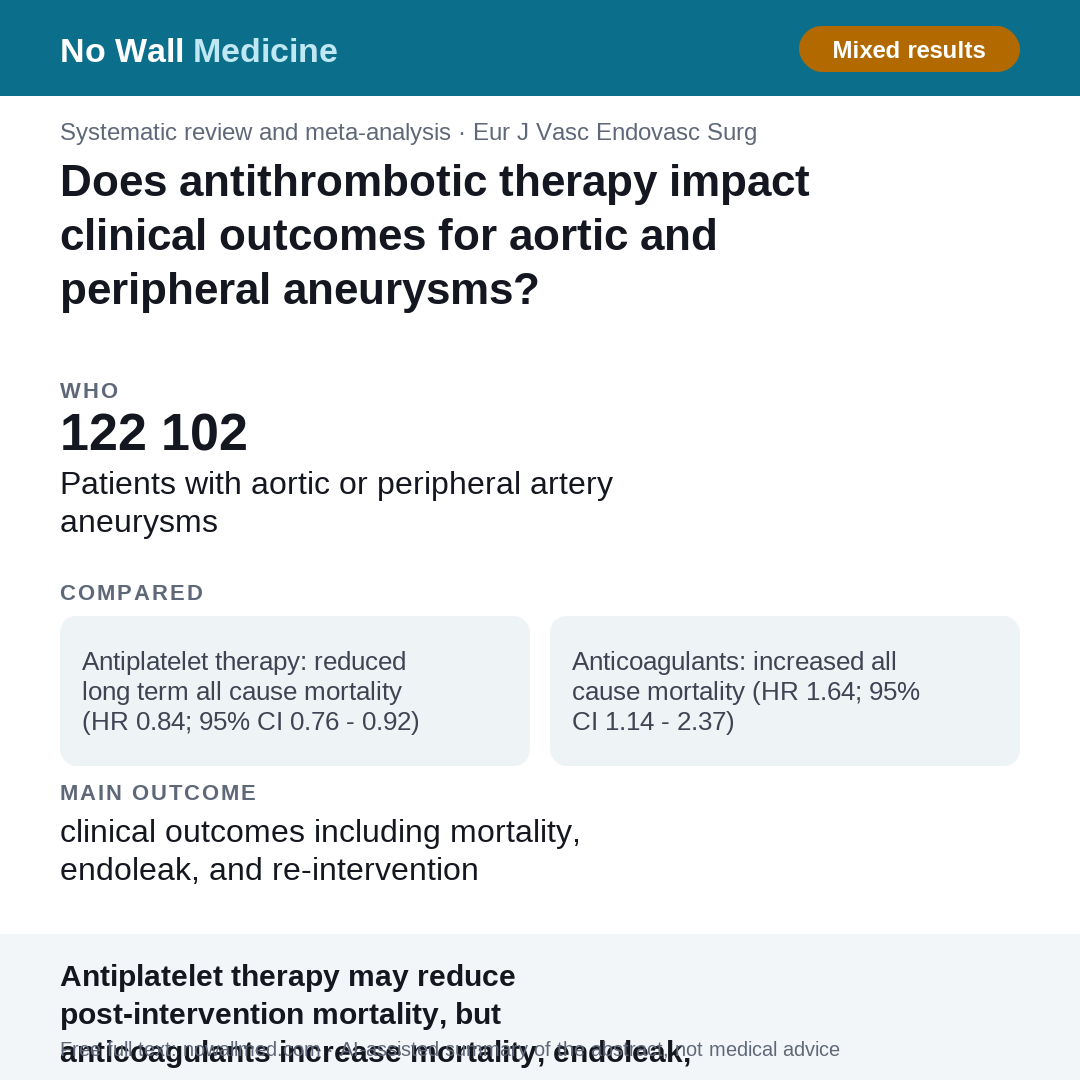
- Researchers analyzed 59 studies involving 122 102 patients to assess how blood-thinning medications affect outcomes for aortic and peripheral artery aneurysms.
- In patients undergoing intervention for abdominal aortic aneurysms, antiplatelet therapy was associated with reduced long term all cause mortality (HR 0.84; 95% CI 0.76 - 0.92).
- Anticoagulants were associated with increased all cause mortality (HR 1.64; 95% CI 1.14 - 2.37), increased endoleak within three years (OR 1.99; 95% CI 1.10 - 3.60), and higher re-intervention rates (OR 3.25; 95% CI 1.82 - 5.82).
Why it matters: The impact of antithrombotic therapy on clinical outcomes for patients with aortic and peripheral artery aneurysms is unclear.
Limitation the authors note: There was a lack of high quality data examining antithrombotic therapy for patients with aneurysms.
Discussion prompts
- Would these patients look like yours? Who was left out?
- Is the main outcome one that matters to patients?
- Is the difference large enough to change what you do?
Cite: Wong KHF, Zlatanovic P, Bosanquet DC, Saratzis A, Kakkos SK, Aboyans V. Antithrombotic Therapy for Aortic Aneurysms: A Systematic Review and Meta-Analysis. Eur J Vasc Endovasc Surg. 2022. doi:10.1016/j.ejvs.2022.07.008
Free full text: Eur J Vasc Endovasc Surg website · Summary and visual abstract: nowallmed.com/a/antithrombotic-therapy-for-aortic-aneurysms-a-systematic-review-and-1js2dys/ (AI-assisted from the abstract; check the paper before relying on it).