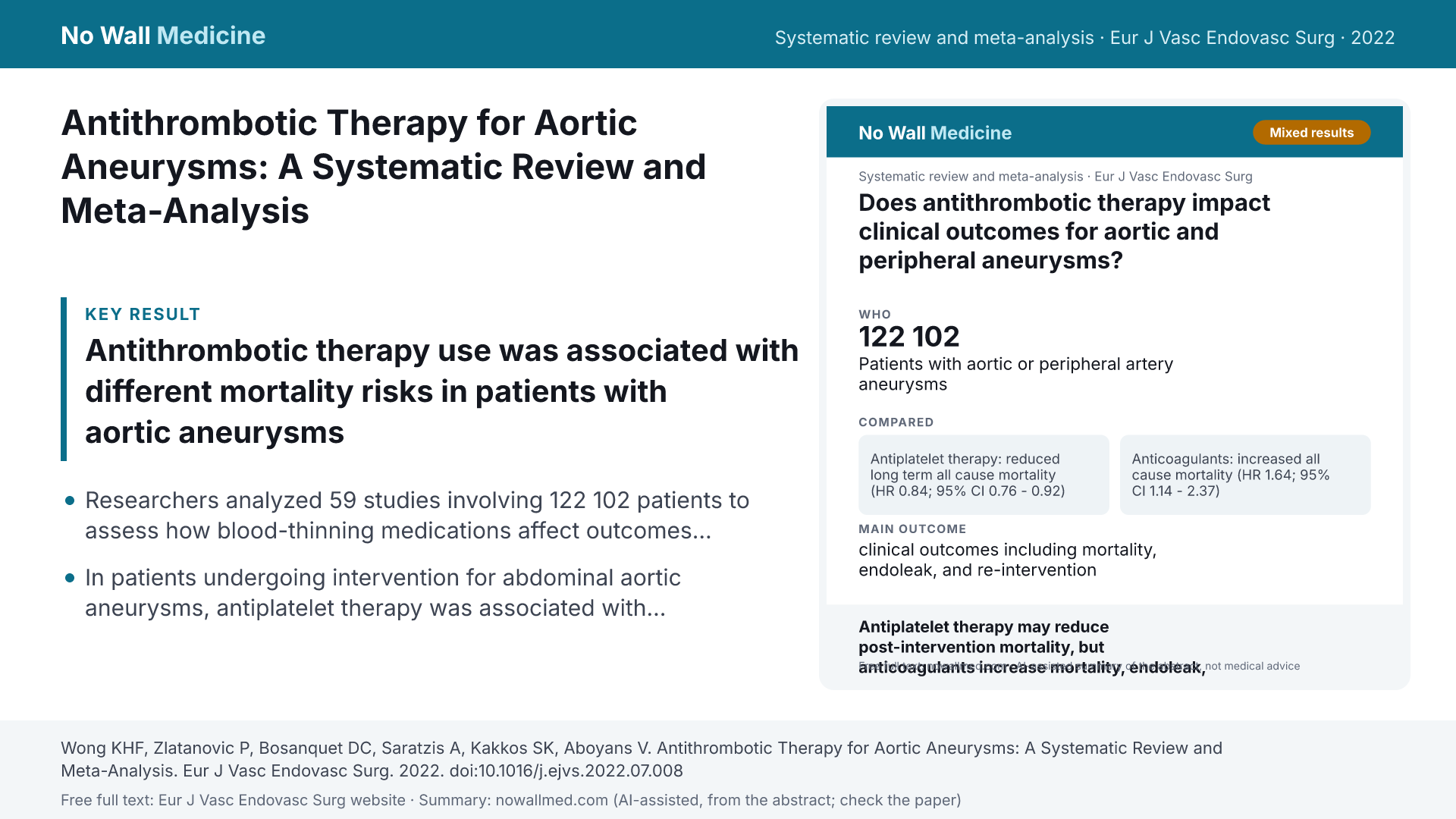
Antithrombotic therapy use was associated with different mortality risks in patients with aortic aneurysms
Antithrombotic Therapy for Aortic Aneurysms: A Systematic Review and Meta-Analysis
Systematic review and meta-analysisMixed results
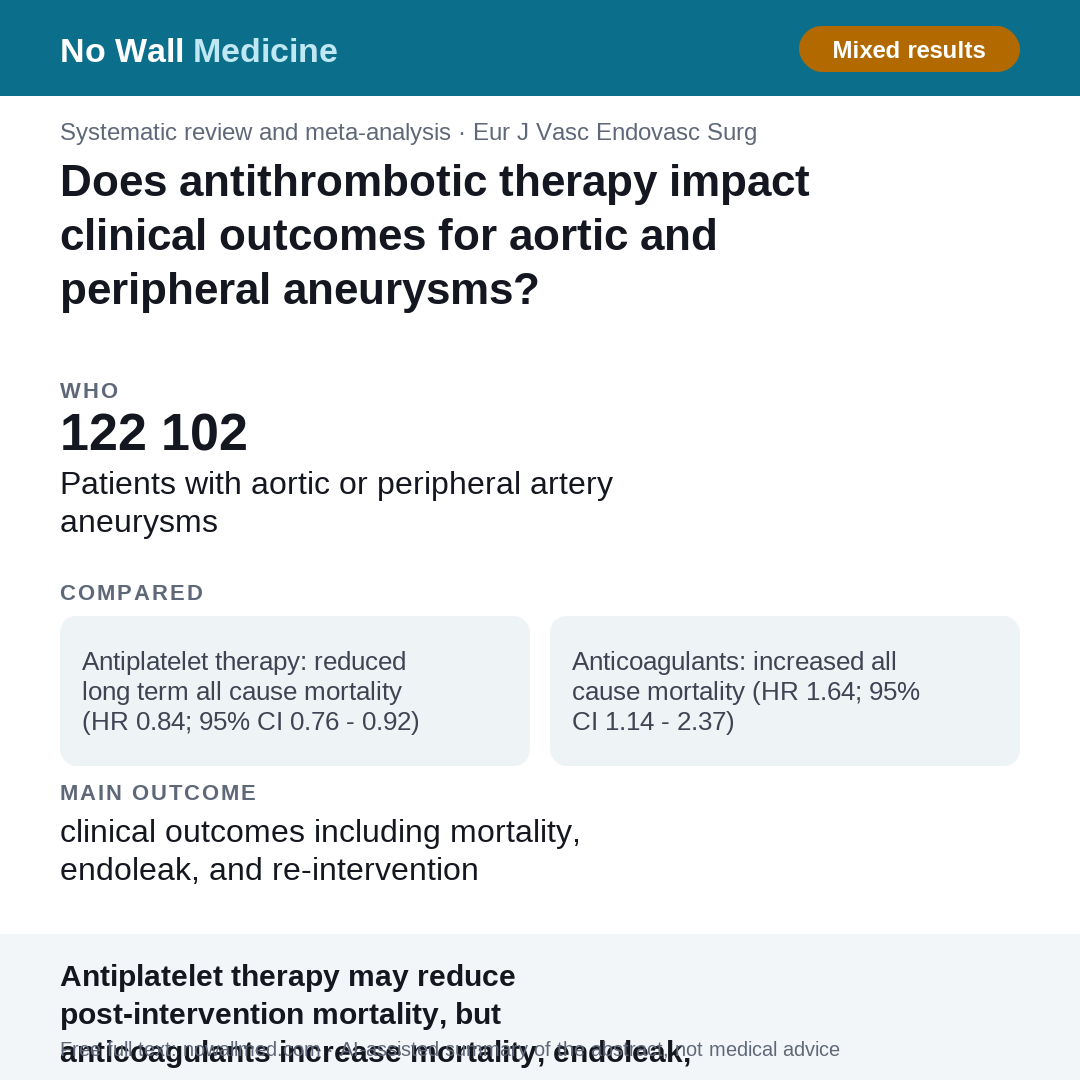
Does antithrombotic therapy impact clinical outcomes for aortic and peripheral aneurysms?
Who
122 102
Patients with aortic or peripheral artery aneurysms
Compared
Antiplatelet therapy: reduced long term all cause mortality (HR 0.84; 95% CI 0.76 - 0.92)
Anticoagulants: increased all cause mortality (HR 1.64; 95% CI 1.14 - 2.37)
Main outcome
clinical outcomes including mortality, endoleak, and re-intervention
Bottom line: Antiplatelet therapy may reduce post-intervention mortality, but anticoagulants increase mortality, endoleak, and re-intervention risks.
Eur J Vasc Endovasc Surg · 2022-07-16Download image
Clinical question: Does antithrombotic therapy impact clinical outcomes for aortic and peripheral aneurysms?
Why it matters: The impact of antithrombotic therapy on clinical outcomes for patients with aortic and peripheral artery aneurysms is unclear.
Key points
- Researchers analyzed 59 studies involving 122 102 patients to assess how blood-thinning medications affect outcomes for aortic and peripheral artery aneurysms.
- In patients undergoing intervention for abdominal aortic aneurysms, antiplatelet therapy was associated with reduced long term all cause mortality (HR 0.84; 95% CI 0.76 - 0.92).
- Anticoagulants were associated with increased all cause mortality (HR 1.64; 95% CI 1.14 - 2.37), increased endoleak within three years (OR 1.99; 95% CI 1.10 - 3.60), and higher re-intervention rates (OR 3.25; 95% CI 1.82 - 5.82).
Limitation the authors note: There was a lack of high quality data examining antithrombotic therapy for patients with aneurysms.
Headline and key points written with AI from the paper’s abstract, with every number checked against it. Read the paper before relying on them.
Was this summary helpful?
Subject terms
Cite this article
Wong KHF, Zlatanovic P, Bosanquet DC, Saratzis A, Kakkos SK, Aboyans V. Antithrombotic Therapy for Aortic Aneurysms: A Systematic Review and Meta-Analysis. Eur J Vasc Endovasc Surg. 2022. doi:10.1016/j.ejvs.2022.07.008
Spotted a mistake? Suggest a correction
Top studies every Monday
The week’s key trials and guidelines in your specialties, plus any topics you follow. By email, free.
Get the weekly digest