Network Meta-Analysis of Initial Antithrombotic Regimens After Left Atrial Appendage Occlusion
Network meta-analysisBenefit found
What is the optimal antithrombotic therapy after left atrial appendage occlusion?
Who
12,451
Patients with nonvalvular atrial fibrillation
Compared
Direct oral anticoagulants
Vitamin K antagonists
Single antiplatelet therapy
Dual antiplatelet therapy
Main outcome
Device-related thrombosis, all-cause mortality, thromboembolic events, and major bleeding
Result: OR: 0.39 (95% CI: 0.17-0.89) for all-cause mortality (DOAC vs VKA)
Bottom line: Direct oral anticoagulant monotherapy was most likely to result in lower thromboembolic events and major bleeding.
JACC · 2023-08-21Download image
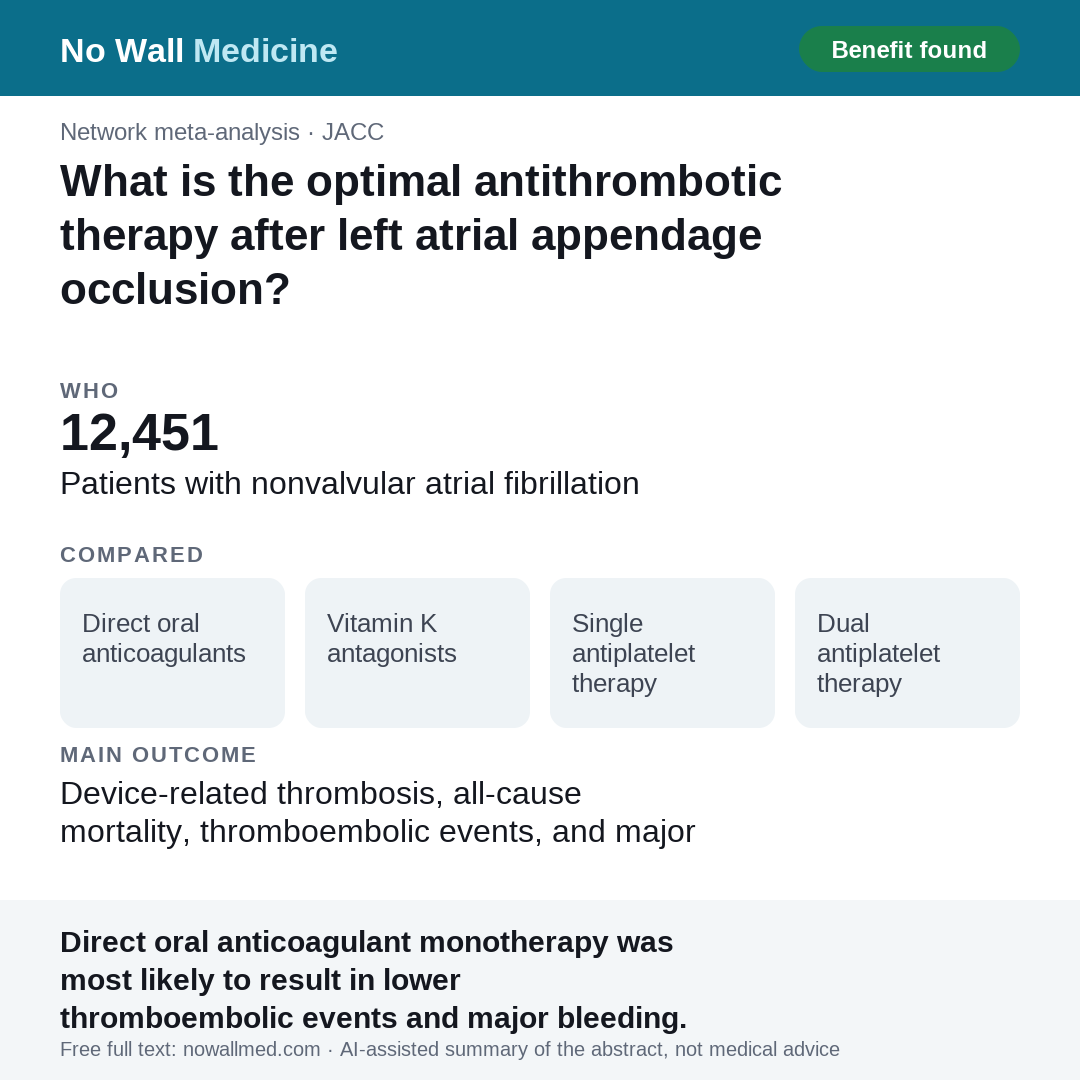
Clinical question: What is the optimal antithrombotic therapy after left atrial appendage occlusion?
Abstract
Background
The optimal antithrombotic therapy following left atrial appendage occlusion (LAAO) in patients with nonvalvular atrial fibrillation (AF) remains uncertain. Objectives
In this study, the authors sought to compare the efficacy and safety of various antithrombotic strategies after LAAO. Methods
We searched the Medline, Cochrane, EMBASE, LILACS, and ClinicalTrials.gov databases for studies reporting outcomes after LAAO, stratified by antithrombotic therapy prescribed at postprocedural discharge. Direct oral anticoagulants (DOACs), vitamin K antagonists (VKAs), single antiplatelet therapy (SAPT), dual antiplatelet therapy (DAPT), DOAC plus SAPT, VKA plus SAPT, and no antithrombotic therapy were analyzed. We performed a frequentist random effects model network meta-analysis to estimate the OR and 95% CI for each comparison. P-scores provided a ranking of treatments. Results
Forty-one studies comprising 12,451 patients with nonvalvular AF were included. DAPT, DOAC, DOAC plus SAPT, and VKA were significantly superior to no therapy to prevent device-related thrombosis. DOAC was associated with lower all-cause mortality than VKA (OR: 0.39; 95% CI: 0.17-0.89; P = 0.03). Compared with SAPT, DAPT was associated with fewer thromboembolic events (OR: 0.50; 95% CI: 0.29-0.88; P = 0.02), without a difference in major bleeding. In the analysis of P-scores, DOAC monotherapy was the strategy most likely to have lower thromboembolic events and major bleeding. Conclusions
In this network meta-analysis comparing initial antithrombotic therapies after LAAO, monotherapy with DOAC had the highest likelihood of lower thromboembolic events and major bleeding. DAPT was associated with a lower incidence of thromboembolic events compared with SAPT and may be a preferred option in patients unable to tolerate anticoagulation.
Topics
Cite this article
Carvalho PEP, Gewehr DM, Miyawaki IA, Nogueira A, Felix N, Garot P. Network Meta-Analysis of Initial Antithrombotic Regimens After Left Atrial Appendage Occlusion. JACC. 2023. doi:10.1016/j.jacc.2023.08.010
Spotted a mistake? Suggest a correction
Top studies every Monday
The week’s key trials and guidelines in your specialties, plus any topics you follow. By email, free.
Get the weekly digest