Apixaban was associated with lower recurrent stroke risk in patients with left ventricular dysfunction
Apixaban and Recurrent Stroke Risk With Left Ventricular Dysfunction: A Secondary Analysis of the ARCADIA Trial
Randomized trial, post hoc analysisBenefit found
Does apixaban versus aspirin reduce recurrent ischemic stroke risk in patients with left ventricular systolic dysfunction?
Who
964
Patients with cryptogenic stroke and atrial cardiopathy · 185 sites in the United States and Canada
Compared
Apixaban with left ventricular systolic dysfunction
Aspirin with left ventricular systolic dysfunction
Apixaban without left ventricular systolic dysfunction
Aspirin without left ventricular systolic dysfunction
Main outcome
recurrent ischemic stroke
Result: hazard ratio 0.24 (95% CI 0.07-0.87) for apixaban vs aspirin with dysfunction
Bottom line: Apixaban significantly reduced recurrent ischemic stroke risk compared to aspirin in patients with left ventricular systolic dysfunction.
Stroke · 2025-09-02Download image
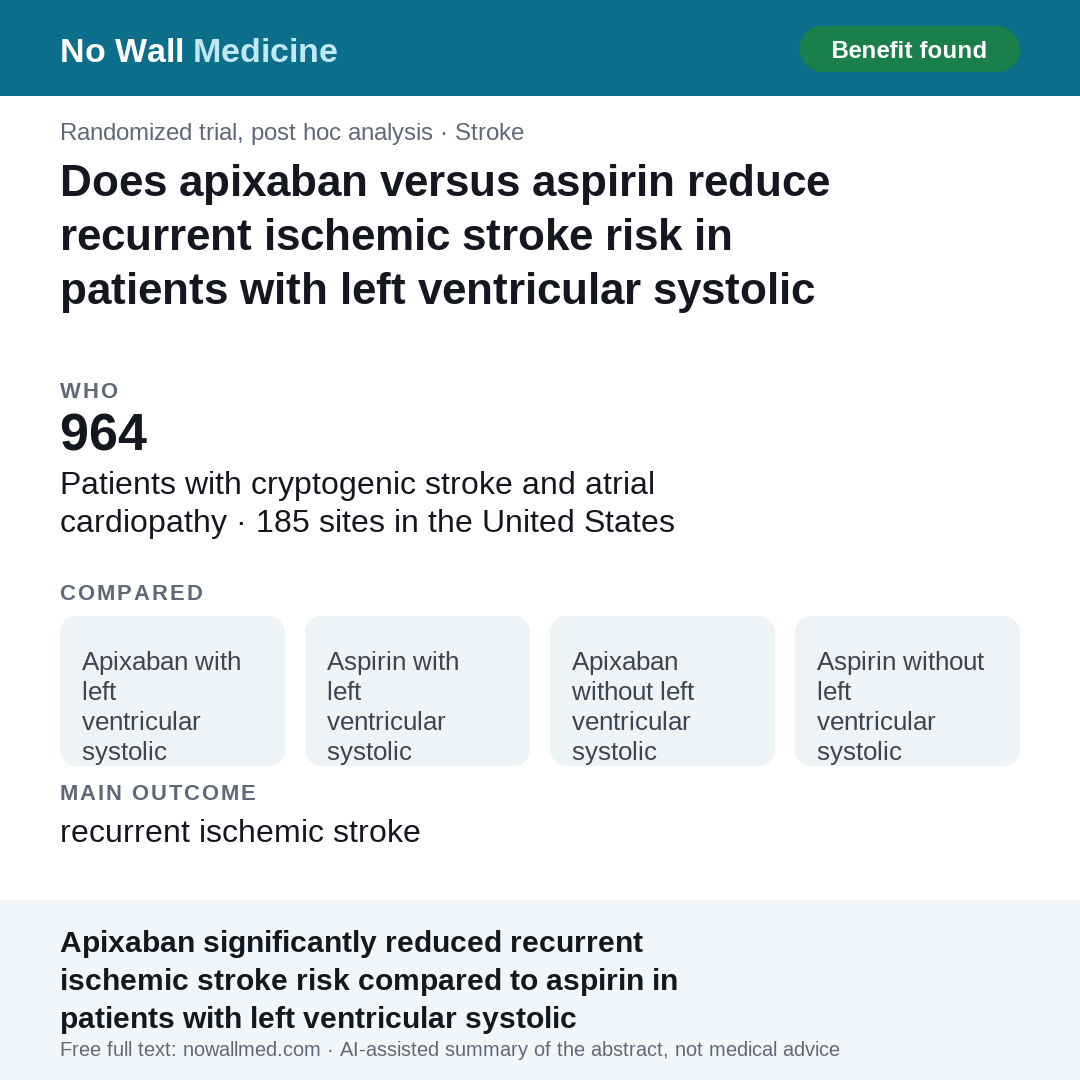
Clinical question: Does apixaban versus aspirin reduce recurrent ischemic stroke risk in patients with left ventricular systolic dysfunction?
Why it matters: It is uncertain how left ventricular systolic dysfunction affects recurrent stroke risk and the best antithrombotic therapy for secondary stroke prevention in these patients.
Key points
- Researchers analyzed 964 patients from the ARCADIA trial to compare apixaban and aspirin for preventing recurrent ischemic stroke.
- In patients with left ventricular systolic dysfunction, apixaban was associated with a lower risk of recurrent ischemic stroke compared to aspirin (hazard ratio, 0.24 [95% CI, 0.07-0.87]).
- For patients without left ventricular systolic dysfunction, apixaban was not associated with a different risk of recurrent ischemic stroke than aspirin (hazard ratio, 1.13 [95% CI, 0.65-1.96]).
Headline and key points written with AI from the paper’s abstract, with every number checked against it. Read the paper before relying on them.
Topics
Cite this article
Sharma R, Jillella D, Zhang C, Elkind MSV, Kamel H, Di Tullio MR. Apixaban and Recurrent Stroke Risk With Left Ventricular Dysfunction: A Secondary Analysis of the ARCADIA Trial. Stroke. 2025. doi:10.1161/STROKEAHA.125.052724
Spotted a mistake? Suggest a correction