Extended reality shows potential in ophthalmic education, diagnostics, and therapeutics despite low study quality
Applications of Extended Reality in Ophthalmology: Systematic Review
Systematic reviewMixed results
What is the utility of extended reality in ophthalmic education, diagnostics, and therapeutics?
Who
87
Studies evaluating extended reality in ophthalmology
Compared
Education: improved surgical performance and ophthalmoscopy skills
Diagnostics: proof-of-concept in presenting ocular imaging data
Therapeutics: similar complication rates and procedural success rates
Main outcome
Utility in ophthalmic education, diagnostics, and therapeutics
Bottom line: Extended reality shows promise in ophthalmology, but high-quality comparative studies are still needed.
J Med Internet Res · 2021-08-19Download image
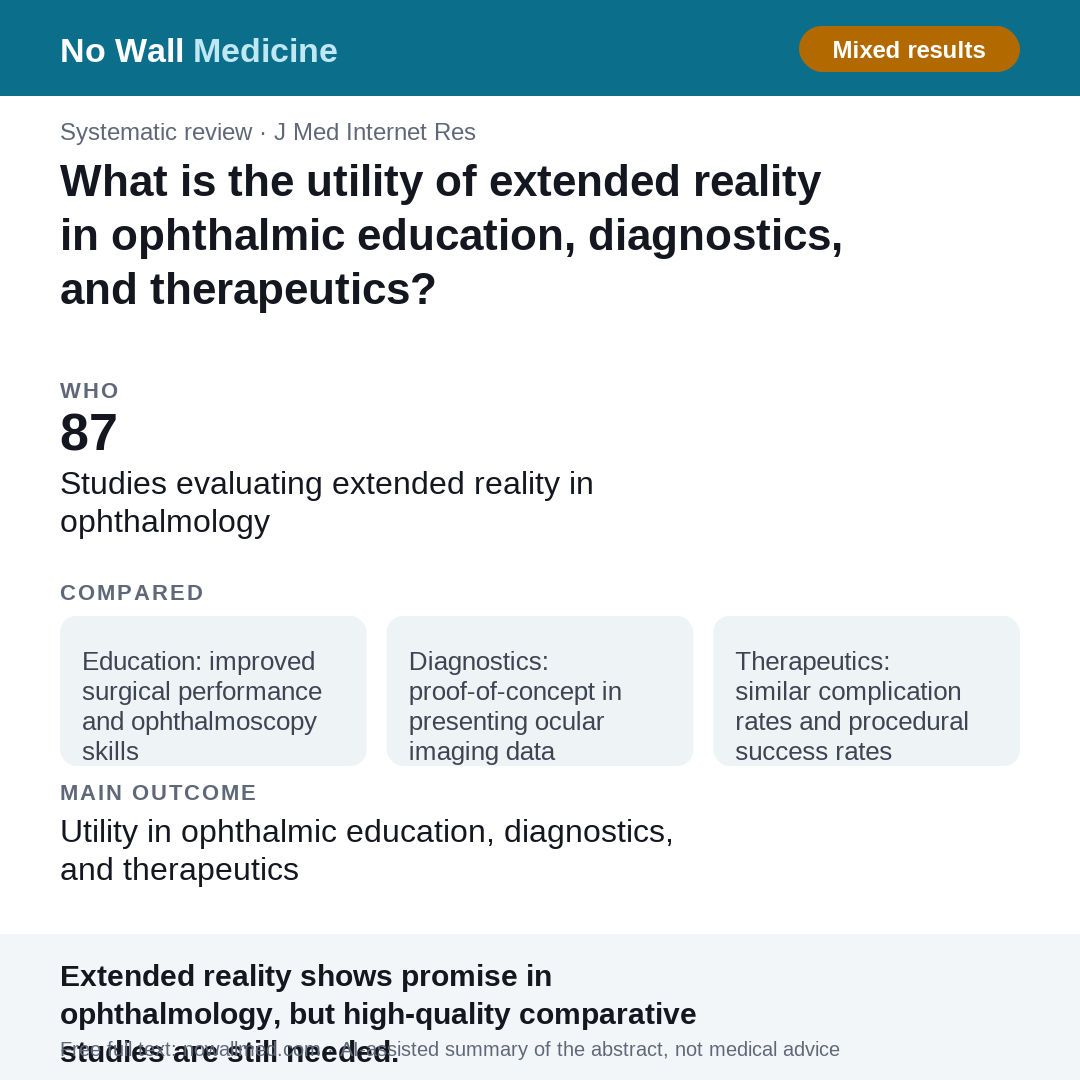
Clinical question: What is the utility of extended reality in ophthalmic education, diagnostics, and therapeutics?
Why it matters: The utility and quality of evidence for using extended reality technologies in ophthalmic education, diagnostics, and therapeutics remain unclear.
Key points
- Researchers reviewed 87 studies from 12,490 records regarding extended reality use in eye care education, diagnosis, and treatment.
- Surgical and ophthalmoscopy simulators were linked to improved performance, while heads-up surgical systems showed similar complication and success rates to conventional surgery.
- Most included studies were of poor quality, with 79 studies (91%) falling within evidence levels 2b to 4.
Headline and key points written with AI from the paper’s abstract, with every number checked against it. Read the paper before relying on them.
Was this summary helpful?
Subject terms
Cite this article
Ong CW, Tan MCJ, Lam M, Koh VTC. Applications of Extended Reality in Ophthalmology: Systematic Review. J Med Internet Res. 2021. doi:10.2196/24152
Spotted a mistake? Suggest a correction
Top studies every Monday
The week’s key trials and guidelines in your specialties, plus any topics you follow. By email, free.
Get the weekly digest