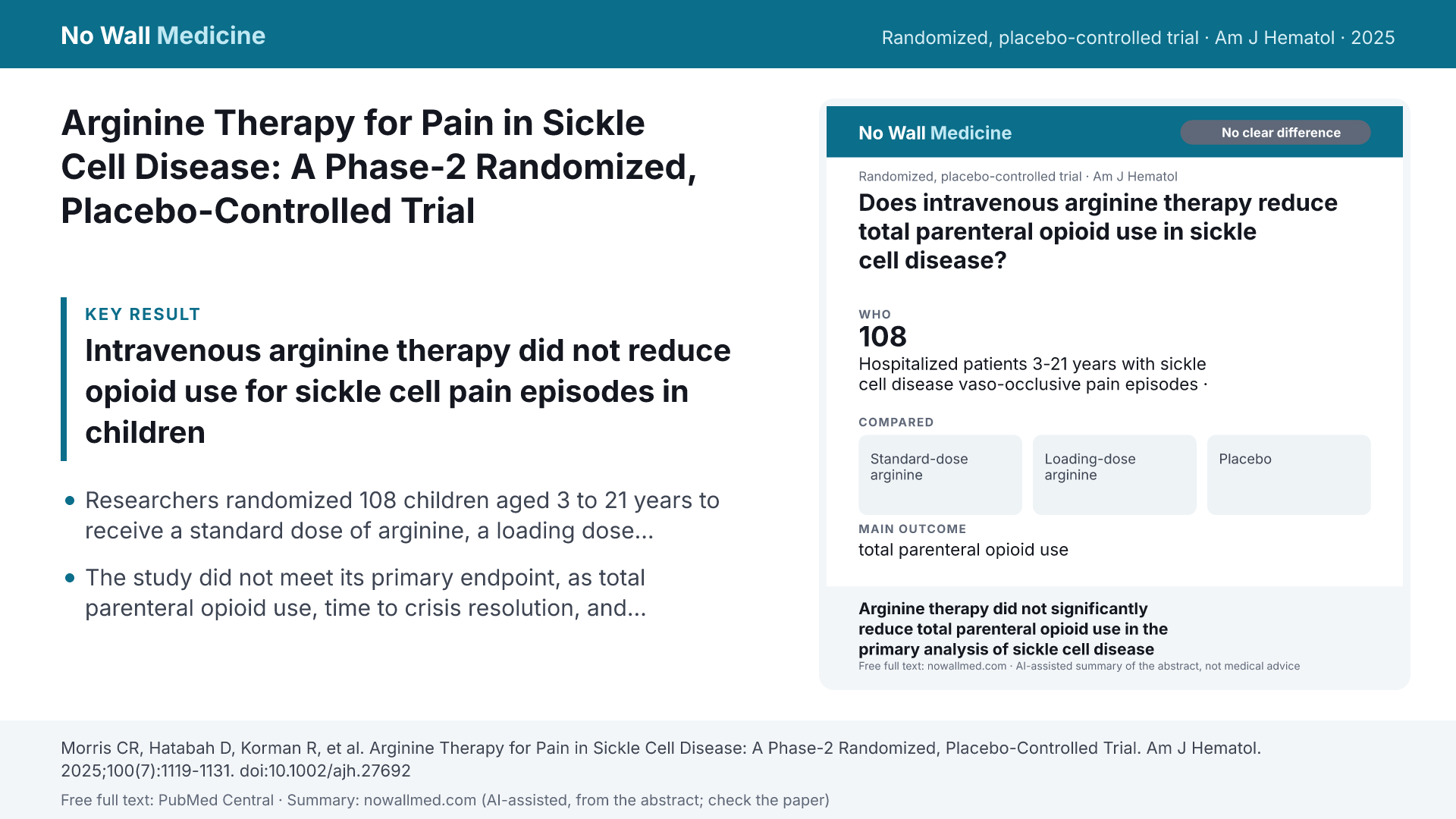
Intravenous arginine therapy did not reduce opioid use for sickle cell pain episodes in children
Arginine Therapy for Pain in Sickle Cell Disease: A Phase-2 Randomized, Placebo-Controlled Trial
Randomized, placebo-controlled trialNo clear difference
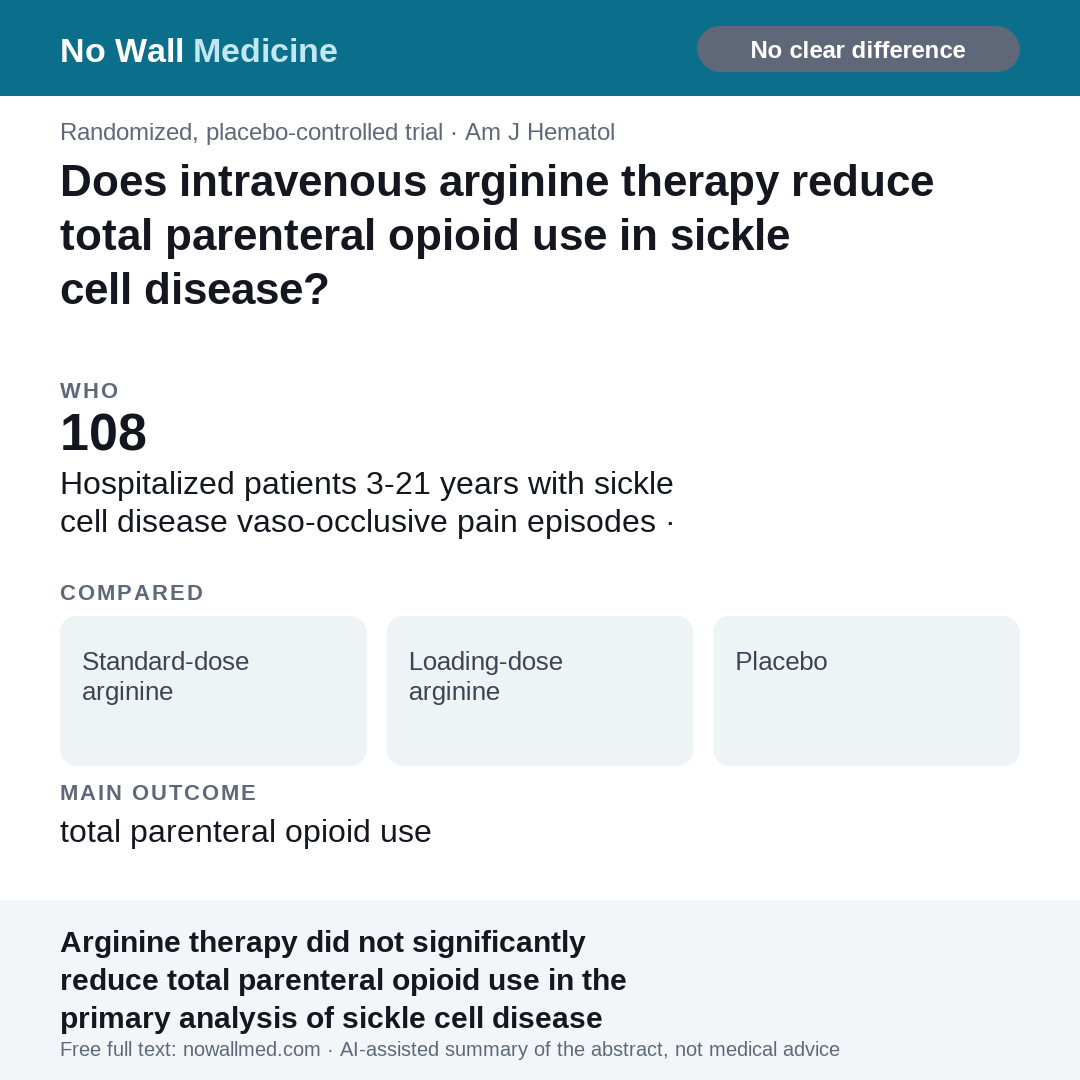
Does intravenous arginine therapy reduce total parenteral opioid use in sickle cell disease?
Who
108
Hospitalized patients 3-21 years with sickle cell disease vaso-occlusive pain episodes · Two tertiary-care children's hospitals
Compared
Standard-dose arginine
Loading-dose arginine
Placebo
Main outcome
total parenteral opioid use
Bottom line: Arginine therapy did not significantly reduce total parenteral opioid use in the primary analysis of sickle cell disease patients.
Am J Hematol · 2025-04-24Download image
Clinical question: Does intravenous arginine therapy reduce total parenteral opioid use in sickle cell disease?
Why it matters: It is unclear if intravenous arginine can reduce the need for opioid pain medication during sickle cell disease vaso-occlusive pain episodes.
Key points
- Researchers randomized 108 children aged 3 to 21 years to receive a standard dose of arginine, a loading dose of arginine, or a placebo.
- The study did not meet its primary endpoint, as total parenteral opioid use, time to crisis resolution, and pain scores were similar across all groups.
- Arginine therapy was associated with increased platelet-mitochondrial activity and decreased oxidative stress compared to the placebo group.
Headline and key points written with AI from the paper’s abstract, with every number checked against it. Read the paper before relying on them.
Was this summary helpful?
Subject terms
Cite this article
Morris CR, Hatabah D, Korman R, Gillespie S, Bakshi N, Brown LA. Arginine Therapy for Pain in Sickle Cell Disease: A Phase-2 Randomized, Placebo-Controlled Trial. Am J Hematol. 2025. doi:10.1002/ajh.27692
Spotted a mistake? Suggest a correction
Top studies every Monday
The week’s key trials and guidelines in your specialties, plus any topics you follow. By email, free.
Get the weekly digest