Arginine Therapy for Pain in Sickle Cell Disease: A Phase-2 Randomized, Placebo-Controlled Trial
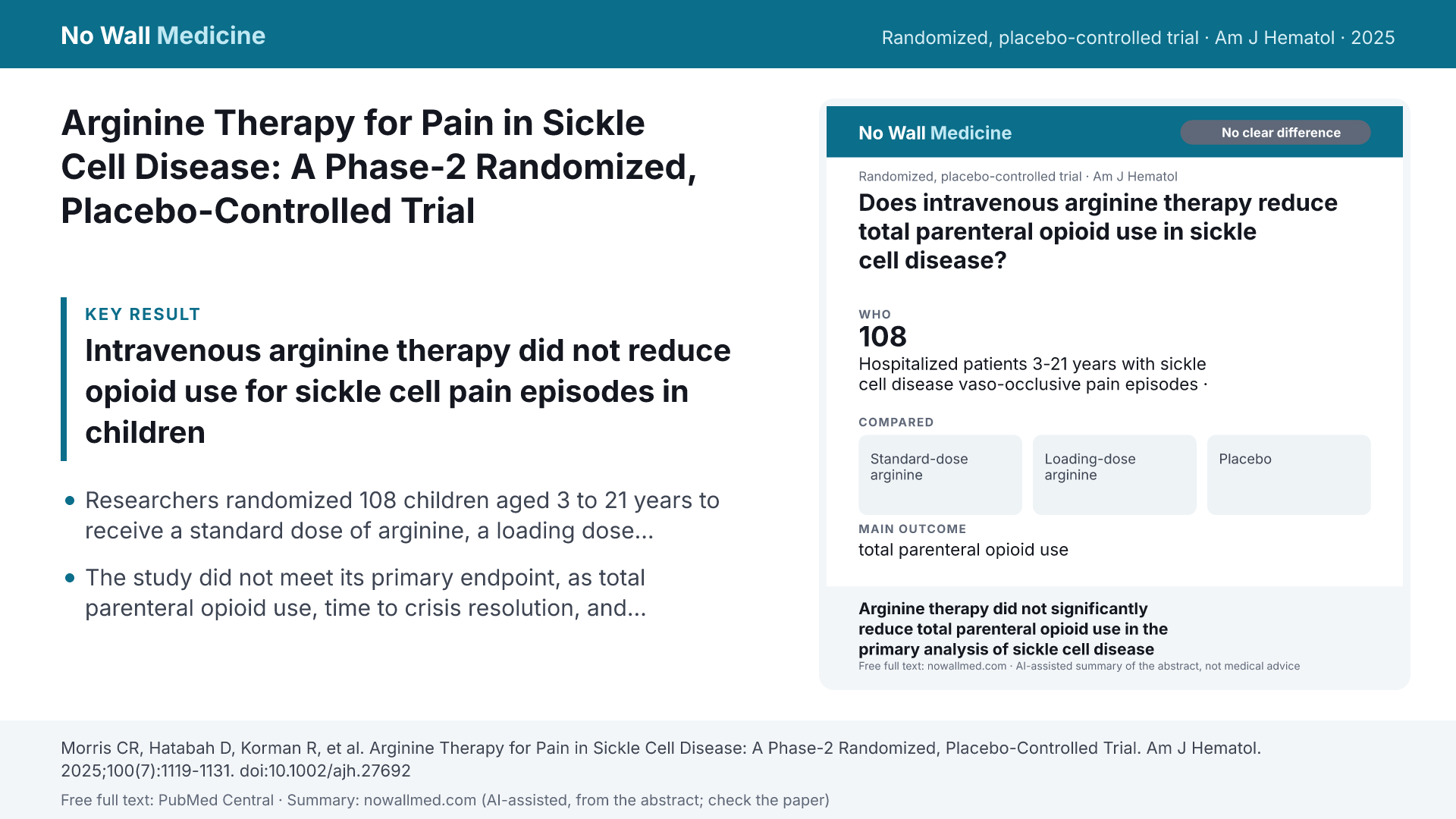
Key result: Intravenous arginine therapy did not reduce opioid use for sickle cell pain episodes in children
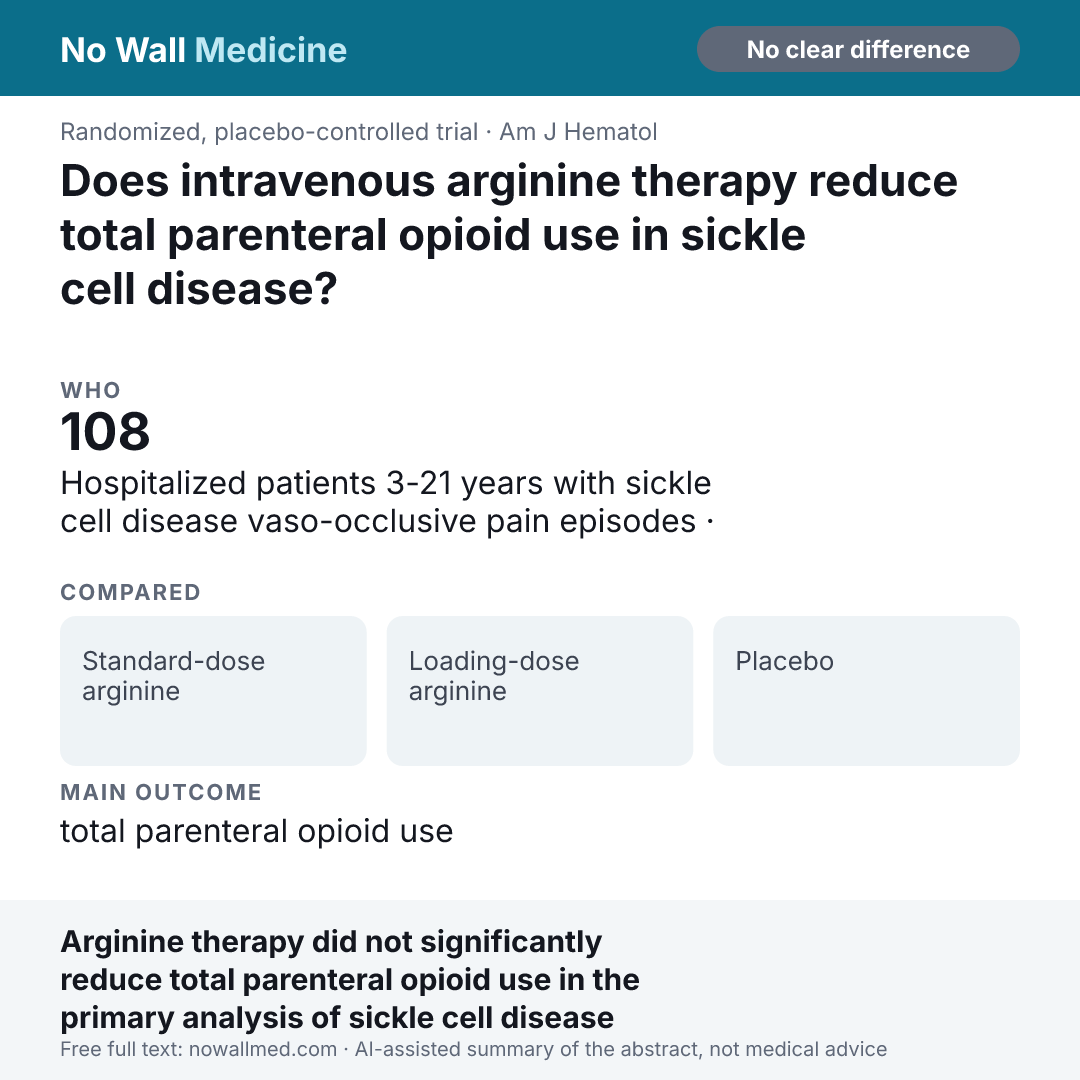
Randomized, placebo-controlled trialNo clear difference
Does intravenous arginine therapy reduce total parenteral opioid use in sickle cell disease?
Who
108
Hospitalized patients 3-21 years with sickle cell disease vaso-occlusive pain episodes · Two tertiary-care children's hospitals
Compared
Standard-dose arginine
Loading-dose arginine
Placebo
Main outcome
total parenteral opioid use
Bottom line: Arginine therapy did not significantly reduce total parenteral opioid use in the primary analysis of sickle cell disease patients.
Am J Hematol · 2025-04-24 · Save PNG
Key points
- Researchers randomized 108 children aged 3 to 21 years to receive a standard dose of arginine, a loading dose of arginine, or a placebo.
- The study did not meet its primary endpoint, as total parenteral opioid use, time to crisis resolution, and pain scores were similar across all groups.
- Arginine therapy was associated with increased platelet-mitochondrial activity and decreased oxidative stress compared to the placebo group.
Discussion prompts
- Would these patients look like yours? Who was left out?
- Is the main outcome one that matters to patients?
- Is the difference large enough to change what you do?
Cite: Morris CR, Hatabah D, Korman R, et al. Arginine Therapy for Pain in Sickle Cell Disease: A Phase-2 Randomized, Placebo-Controlled Trial. Am J Hematol. 2025;100(7):1119-1131. doi:10.1002/ajh.27692
Free full text: PubMed Central · Summary and visual abstract: nowallmed.com/a/arginine-therapy-for-pain-in-sickle-cell-disease-a-phase-2-randomized-148e8zh/ (AI-assisted from the abstract; check the paper before relying on it).