Percutaneous coronary intervention did not reduce death or aborted sudden death in patients with heart dysfunction
Arrhythmia and Death Following Percutaneous Revascularization in Ischemic Left Ventricular Dysfunction: Prespecified Analyses From the REVIVED-BCIS2 Trial
Randomized trialNo clear difference
Does PCI reduce arrhythmia and death?
Who
700
Patients with ischemic left ventricular dysfunction · United Kingdom, 40 centers
Compared
41.6%PCI plus OMT (144/347)
40.2%OMT alone (142/353)
Main outcome
All-cause death or aborted sudden death
Result: hazard ratio 1.03 (95% CI 0.82-1.30)
Bottom line: PCI does not reduce mortality or arrhythmia
Circulation · 2023-08-09Download image
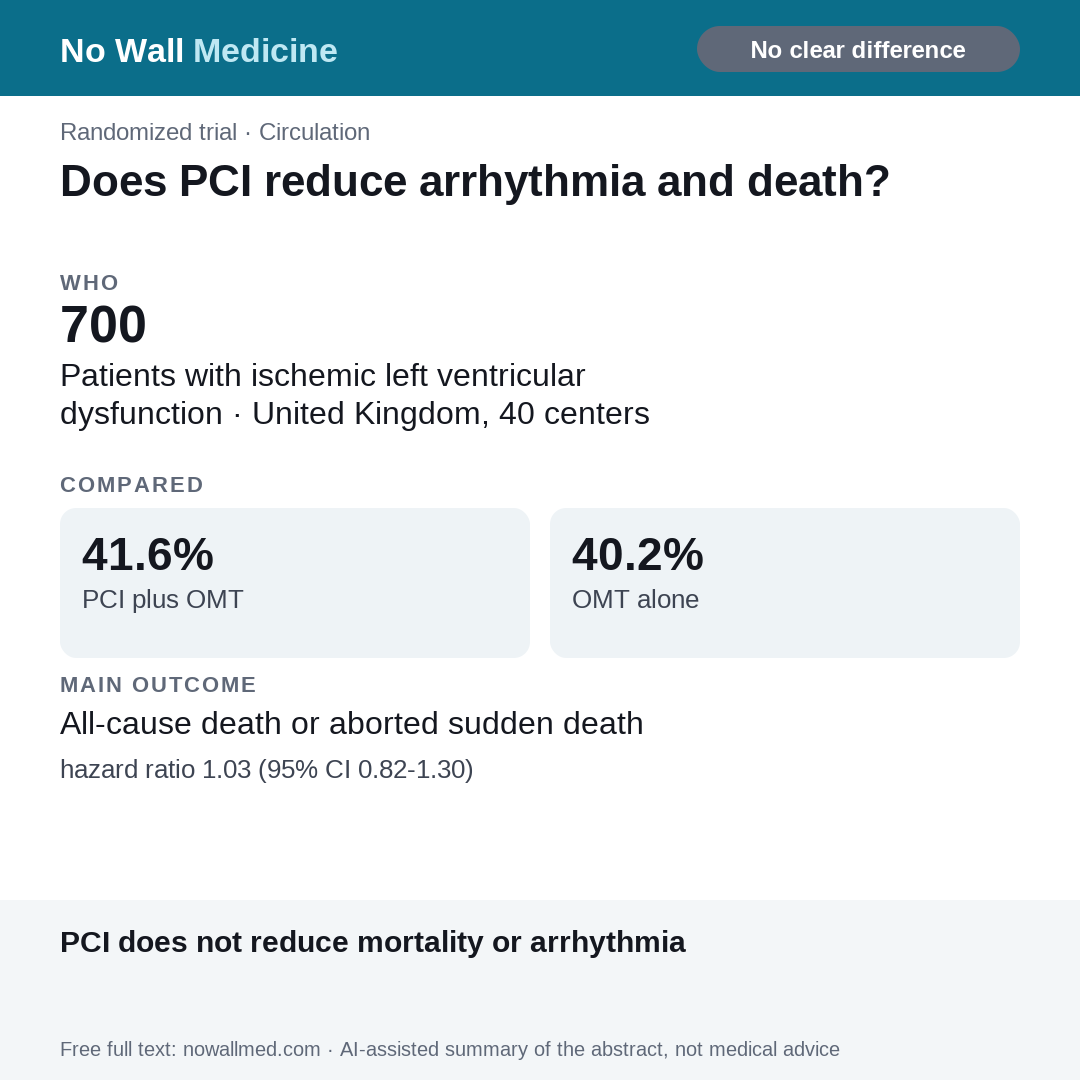
Clinical question: Does PCI reduce arrhythmia and death?
Why it matters: It was unknown if percutaneous coronary intervention reduces the incidence of fatal or potentially fatal ventricular arrhythmias in patients with ischemic left ventricular dysfunction.
Key points
- Researchers studied 700 patients with severe left ventricular dysfunction who were randomly assigned to receive percutaneous coronary intervention plus medical therapy or medical therapy alone.
- All-cause death or aborted sudden death occurred in 41.6% of the percutaneous coronary intervention group and 40.2% of the medical therapy group.
- There was no difference between the groups for secondary outcomes, including cardiovascular death or sustained ventricular arrhythmia.
Headline and key points written with AI from the paper’s abstract, with every number checked against it. Read the paper before relying on them.
Was this summary helpful?
Subject terms
Cite this article
Perera D, Morgan HP, Ryan M, Dodd M, Clayton T, O'Kane PD. Arrhythmia and Death Following Percutaneous Revascularization in Ischemic Left Ventricular Dysfunction: Prespecified Analyses From the REVIVED-BCIS2 Trial. Circulation. 2023. doi:10.1161/CIRCULATIONAHA.123.065300
Spotted a mistake? Suggest a correction
Top studies every Monday
The week’s key trials and guidelines in your specialties, plus any topics you follow. By email, free.
Get the weekly digest