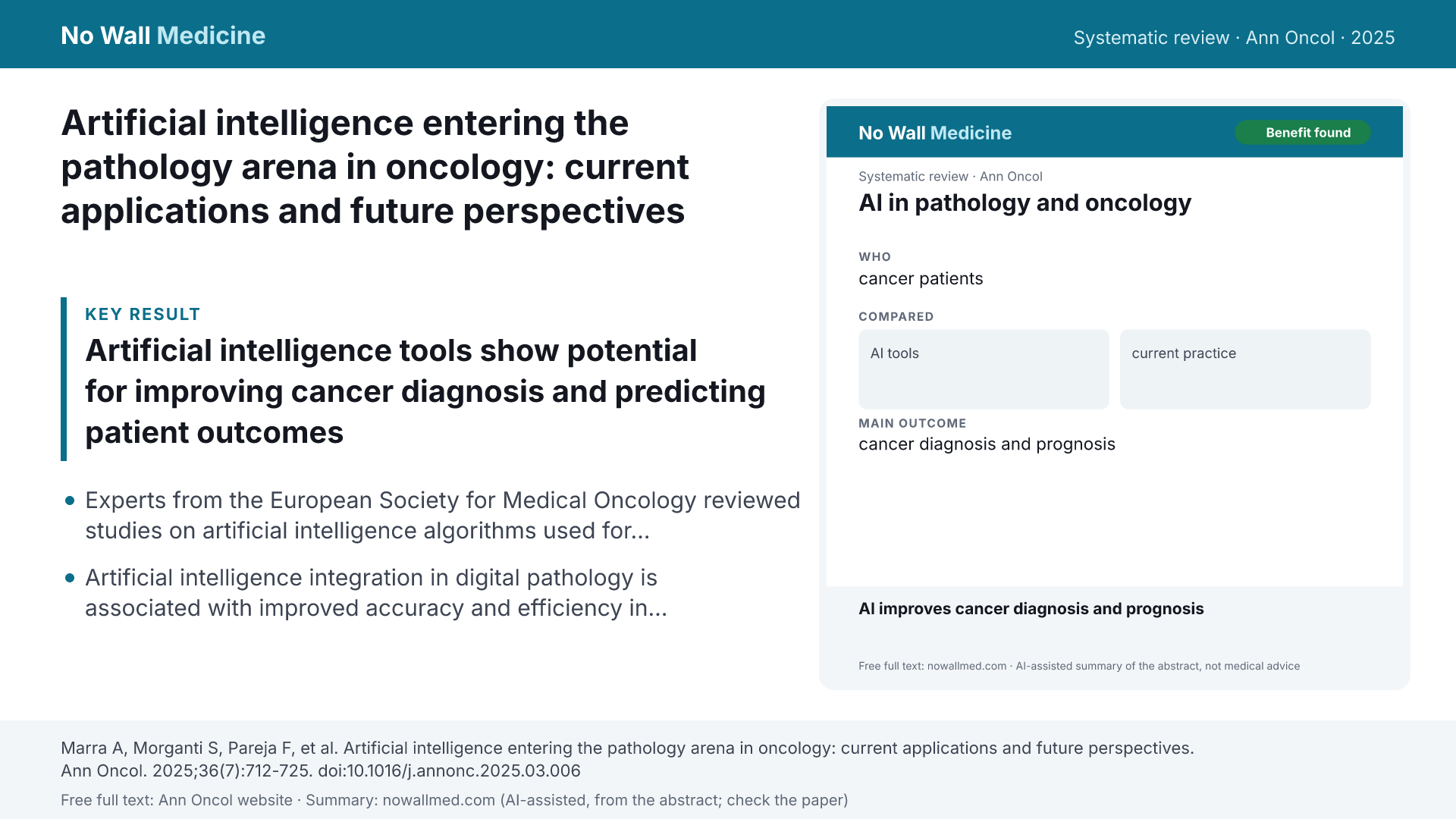
Artificial intelligence tools show potential for improving cancer diagnosis and predicting patient outcomes
Artificial intelligence entering the pathology arena in oncology: current applications and future perspectives
Systematic reviewBenefit found
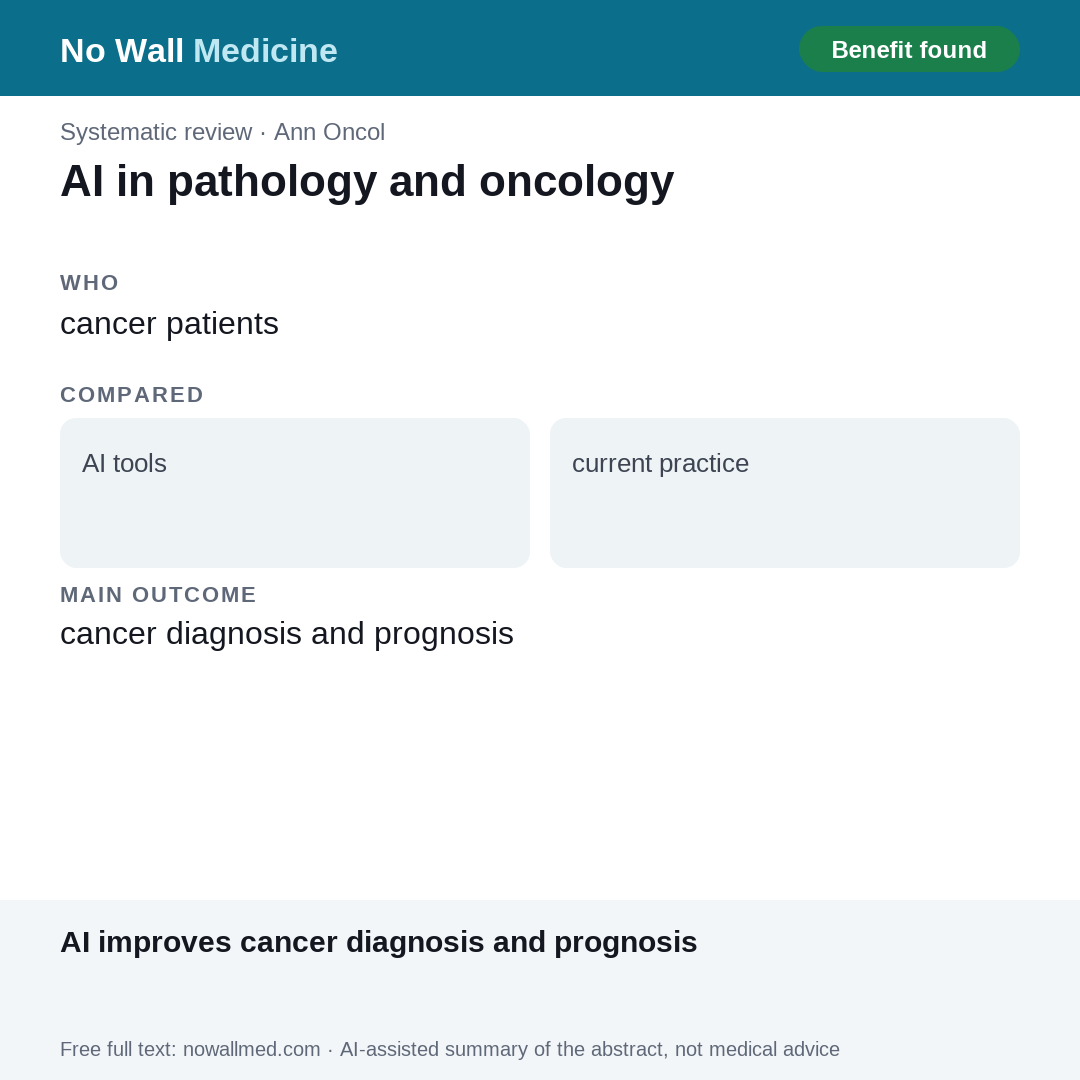
AI in pathology and oncology
Who
cancer patients
Compared
AI tools
current practice
Main outcome
cancer diagnosis and prognosis
Bottom line: AI improves cancer diagnosis and prognosis
Ann Oncol · 2025-04-29Download image
Why it matters: The field seeks to understand how artificial intelligence can advance cancer diagnosis, prognosis, and personalized treatment strategies.
Key points
- Experts from the European Society for Medical Oncology reviewed studies on artificial intelligence algorithms used for tumor diagnosis, biomarker detection, and prognosis assessment.
- Artificial intelligence integration in digital pathology is associated with improved accuracy and efficiency in image analysis, automated tumor detection, and predicting treatment response.
- There are currently no prognostic or predictive artificial intelligence-based biomarkers supported by level IA or IB evidence.
Limitation the authors note: Barriers to clinical adoption include data availability, explainability, and regulatory considerations.
Headline and key points written with AI from the paper’s abstract, with every number checked against it. Read the paper before relying on them.
Was this summary helpful?
Subject terms
Cite this article
Marra A, Morganti S, Pareja F, Campanella G, Bibeau F, Fuchs T. Artificial intelligence entering the pathology arena in oncology: current applications and future perspectives. Ann Oncol. 2025. doi:10.1016/j.annonc.2025.03.006
Spotted a mistake? Suggest a correction
Top studies every Monday
The week’s key trials and guidelines in your specialties, plus any topics you follow. By email, free.
Get the weekly digest