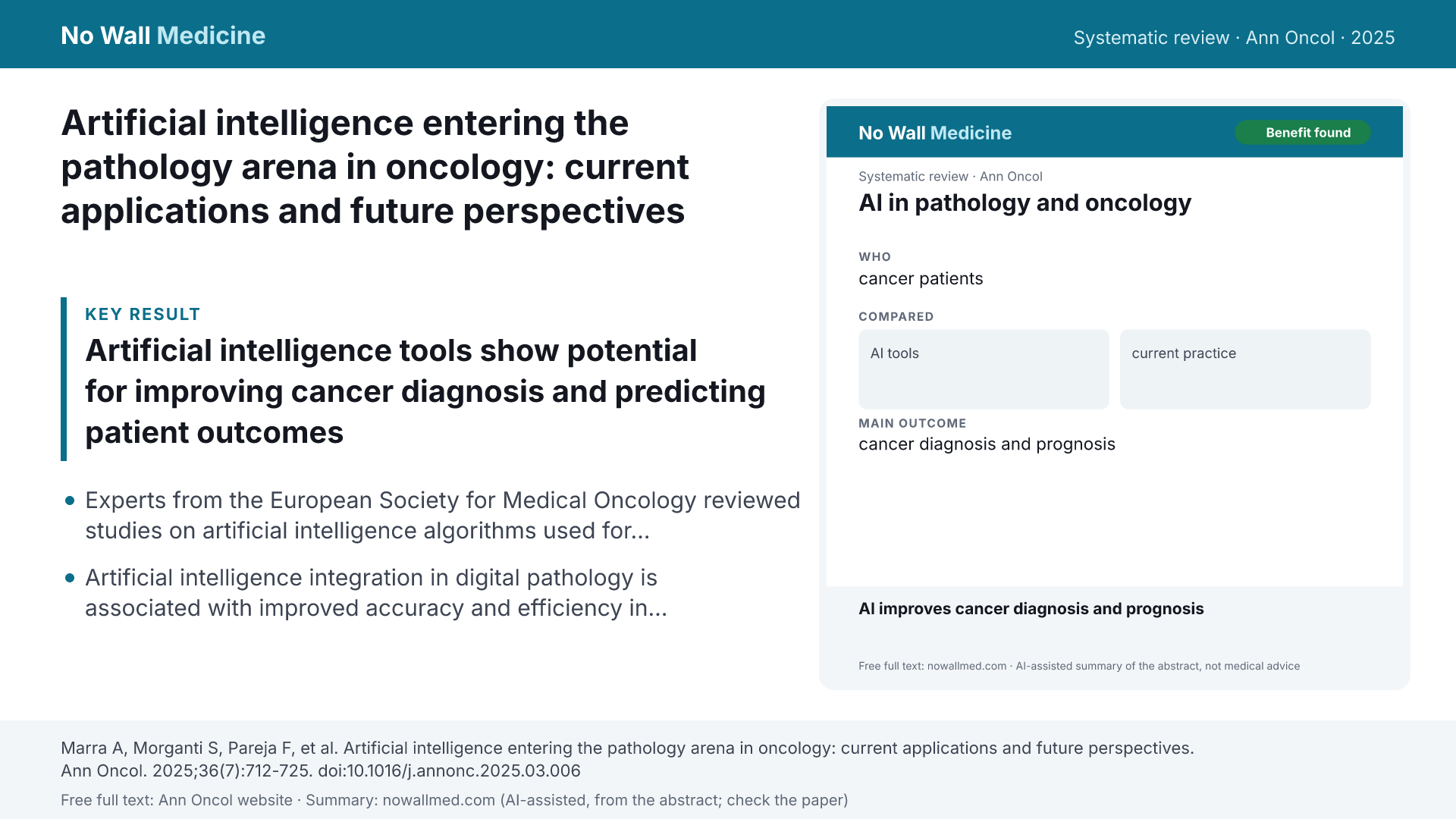
Artificial intelligence entering the pathology arena in oncology: current applications and future perspectives
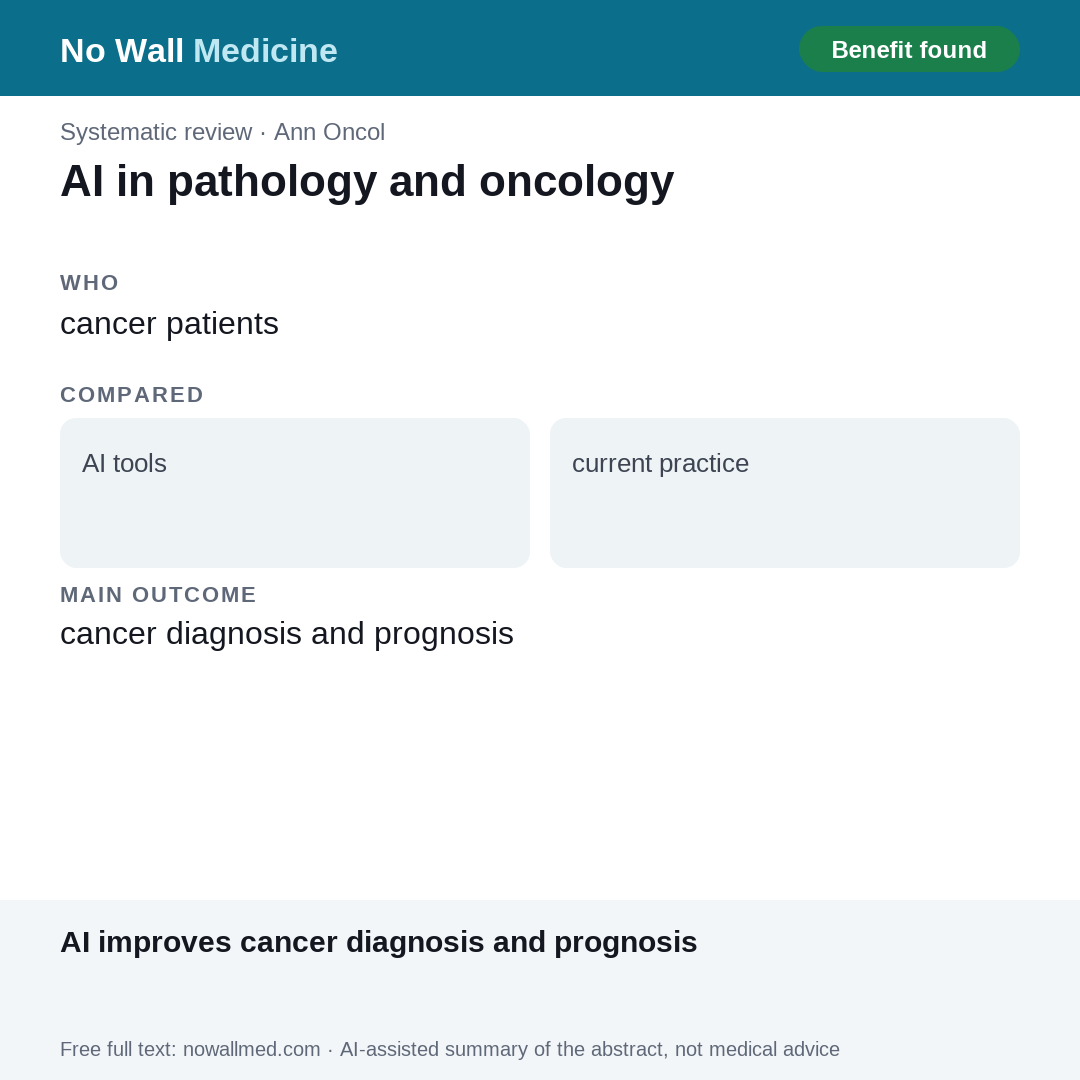
Key result: Artificial intelligence tools show potential for improving cancer diagnosis and predicting patient outcomes
Key points
- Experts from the European Society for Medical Oncology reviewed studies on artificial intelligence algorithms used for tumor diagnosis, biomarker detection, and prognosis assessment.
- Artificial intelligence integration in digital pathology is associated with improved accuracy and efficiency in image analysis, automated tumor detection, and predicting treatment response.
- There are currently no prognostic or predictive artificial intelligence-based biomarkers supported by level IA or IB evidence.
Why it matters: The field seeks to understand how artificial intelligence can advance cancer diagnosis, prognosis, and personalized treatment strategies.
Limitation the authors note: Barriers to clinical adoption include data availability, explainability, and regulatory considerations.
Discussion prompts
- Would these patients look like yours? Who was left out?
- Is the main outcome one that matters to patients?
- Is the difference large enough to change what you do?
Cite: Marra A, Morganti S, Pareja F, et al. Artificial intelligence entering the pathology arena in oncology: current applications and future perspectives. Ann Oncol. 2025. doi:10.1016/j.annonc.2025.03.006
Free full text: Ann Oncol website · Summary and visual abstract: nowallmed.com/a/artificial-intelligence-entering-the-pathology-arena-in-oncology-1p9gxy2/ (AI-assisted from the abstract; check the paper before relying on it).