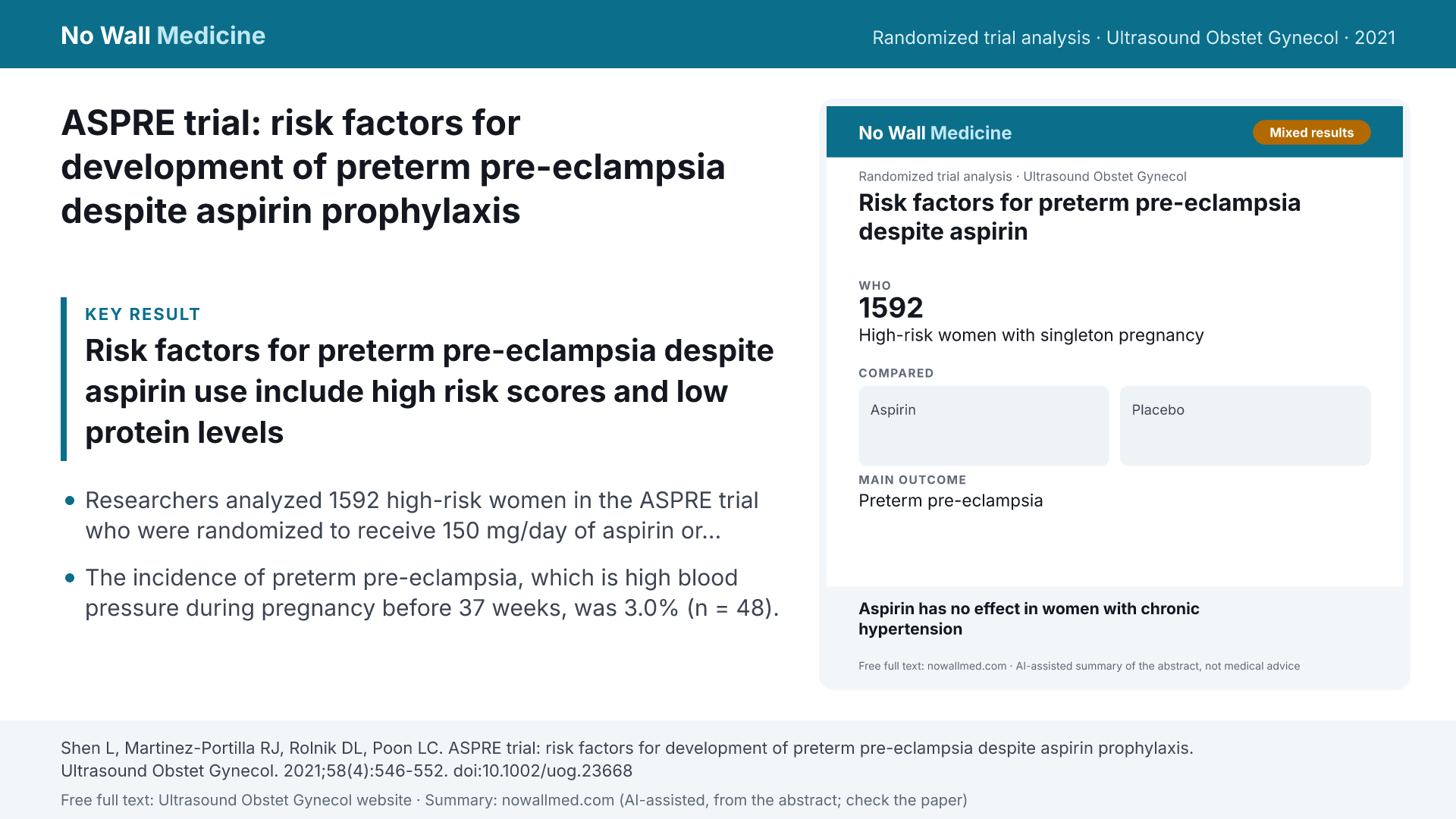
ASPRE trial: risk factors for development of preterm pre-eclampsia despite aspirin prophylaxis
Key result: Risk factors for preterm pre-eclampsia despite aspirin use include high risk scores and low protein levels
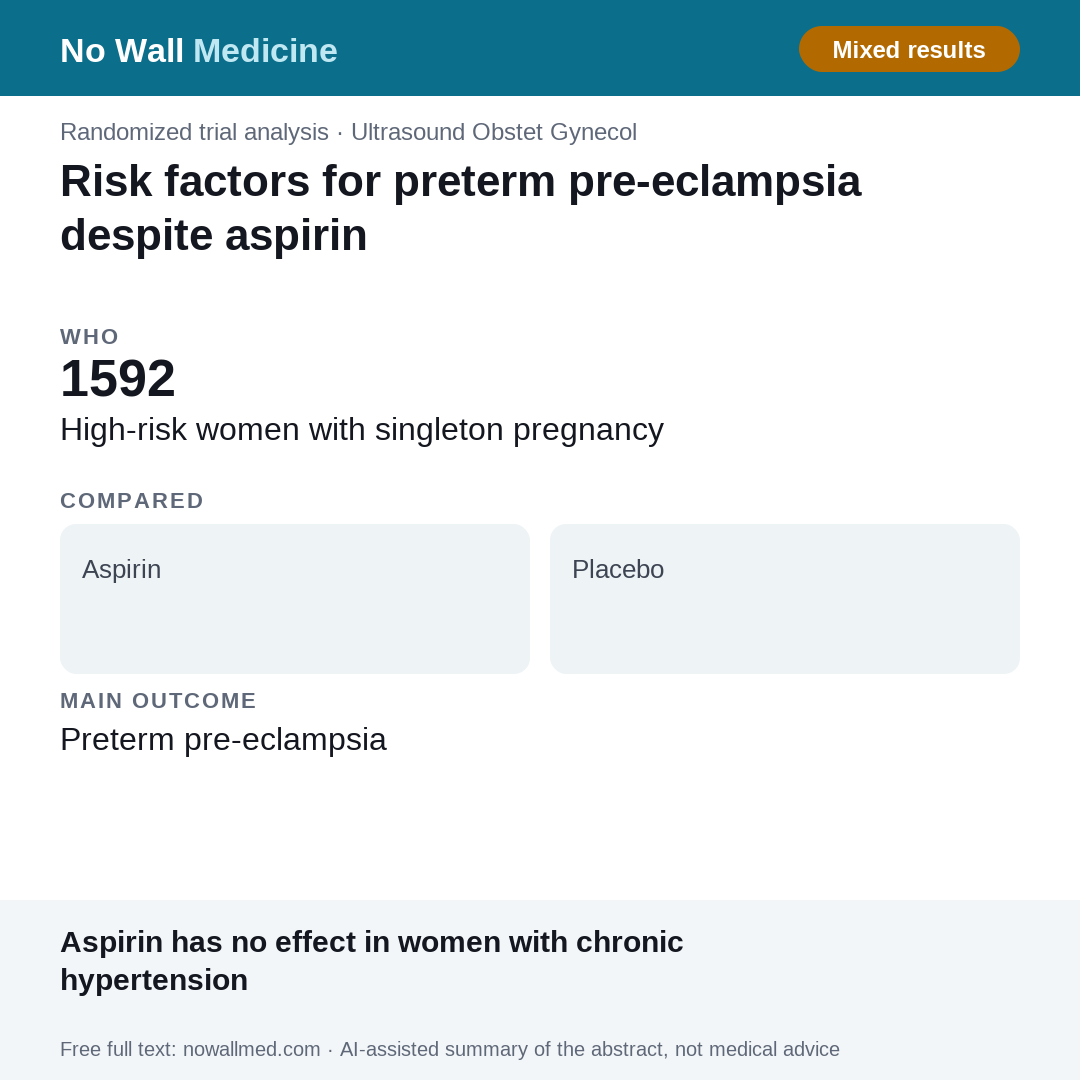
Randomized trial analysisMixed results
Risk factors for preterm pre-eclampsia despite aspirin
Who
1592
High-risk women with singleton pregnancy
Compared
Aspirin
Placebo
Main outcome
Preterm pre-eclampsia
Bottom line: Aspirin has no effect in women with chronic hypertension
Ultrasound Obstet Gynecol · 2021-09-06Download image
Key points
- Researchers analyzed 1592 high-risk women in the ASPRE trial who were randomized to receive 150 mg/day of aspirin or a placebo.
- The incidence of preterm pre-eclampsia, which is high blood pressure during pregnancy before 37 weeks, was 3.0% (n = 48).
- A very high estimated risk of 1 in 2 to 1 in 10 was associated with a 6.706 times higher risk of preterm pre-eclampsia.
Why it matters: It is unknown which specific maternal characteristics or biomarkers predict the development of preterm pre-eclampsia in women already taking aspirin prophylaxis.
Discussion prompts
- Would these patients look like yours? Who was left out?
- Is the main outcome one that matters to patients?
- Is the difference large enough to change what you do?
Cite: Shen L, Martinez-Portilla RJ, Rolnik DL, Poon LC. ASPRE trial: risk factors for development of preterm pre-eclampsia despite aspirin prophylaxis. Ultrasound Obstet Gynecol. 2021. doi:10.1002/uog.23668
Free full text: Ultrasound Obstet Gynecol website · Summary and visual abstract: nowallmed.com/a/aspre-trial-risk-factors-for-development-of-preterm-pre-eclampsia-1buew8k/ (AI-assisted from the abstract; check the paper before relying on it).