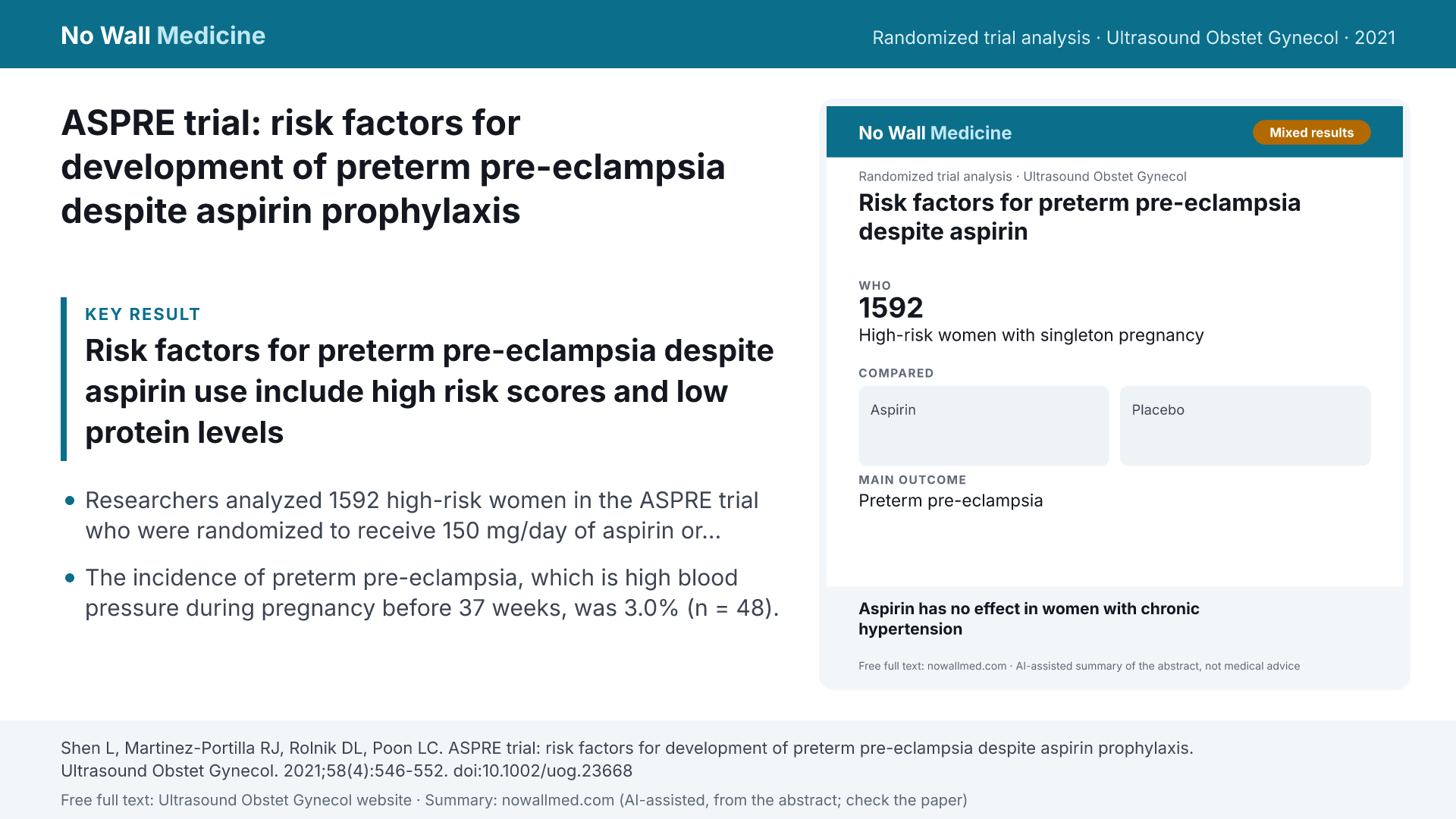
Risk factors for preterm pre-eclampsia despite aspirin use include high risk scores and low protein levels
ASPRE trial: risk factors for development of preterm pre-eclampsia despite aspirin prophylaxis
Randomized trial analysisMixed results
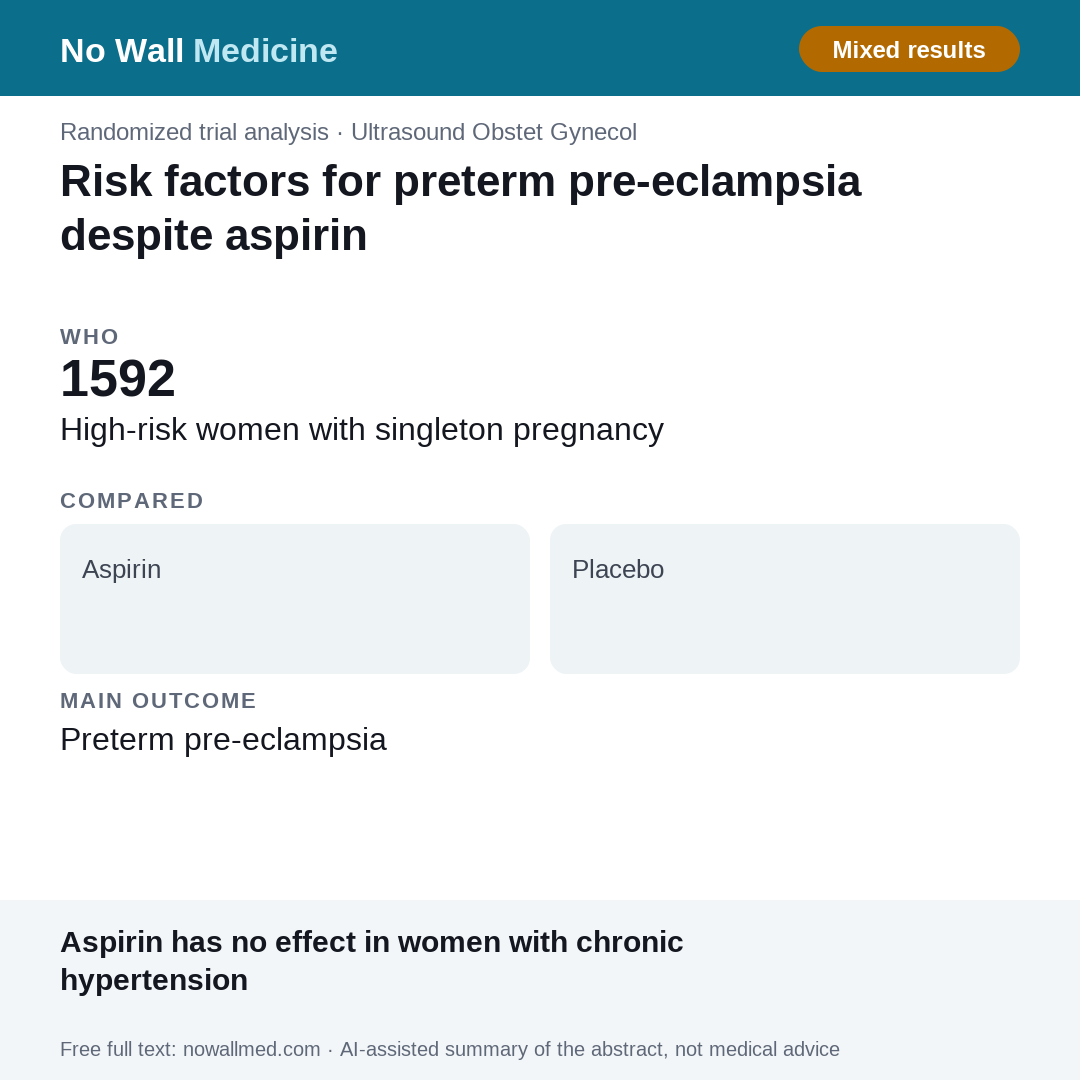
Risk factors for preterm pre-eclampsia despite aspirin
Who
1592
High-risk women with singleton pregnancy
Compared
Aspirin
Placebo
Main outcome
Preterm pre-eclampsia
Bottom line: Aspirin has no effect in women with chronic hypertension
Ultrasound Obstet Gynecol · 2021-09-06Download image
Why it matters: It is unknown which specific maternal characteristics or biomarkers predict the development of preterm pre-eclampsia in women already taking aspirin prophylaxis.
Key points
- Researchers analyzed 1592 high-risk women in the ASPRE trial who were randomized to receive 150 mg/day of aspirin or a placebo.
- The incidence of preterm pre-eclampsia, which is high blood pressure during pregnancy before 37 weeks, was 3.0% (n = 48).
- A very high estimated risk of 1 in 2 to 1 in 10 was associated with a 6.706 times higher risk of preterm pre-eclampsia.
Headline and key points written with AI from the paper’s abstract, with every number checked against it. Read the paper before relying on them.
Was this summary helpful?
Subject terms
Cite this article
Shen L, Martinez-Portilla RJ, Rolnik DL, Poon LC. ASPRE trial: risk factors for development of preterm pre-eclampsia despite aspirin prophylaxis. Ultrasound Obstet Gynecol. 2021. doi:10.1002/uog.23668
Spotted a mistake? Suggest a correction