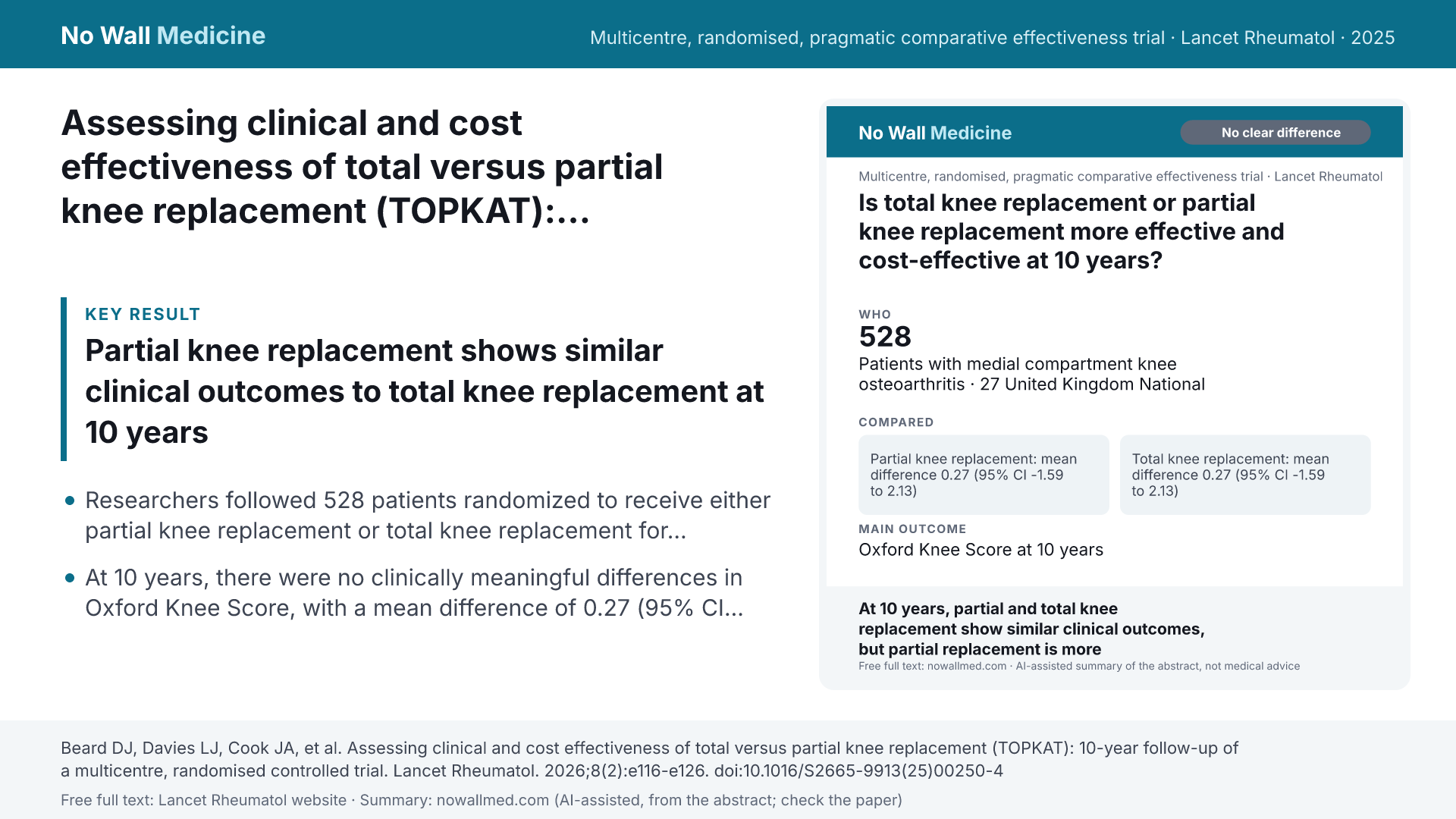
Assessing clinical and cost effectiveness of total versus partial knee replacement (TOPKAT): 10-year follow-up of a multicentre, randomised controlled trial
Key result: Partial knee replacement shows similar clinical outcomes to total knee replacement at 10 years
Key points
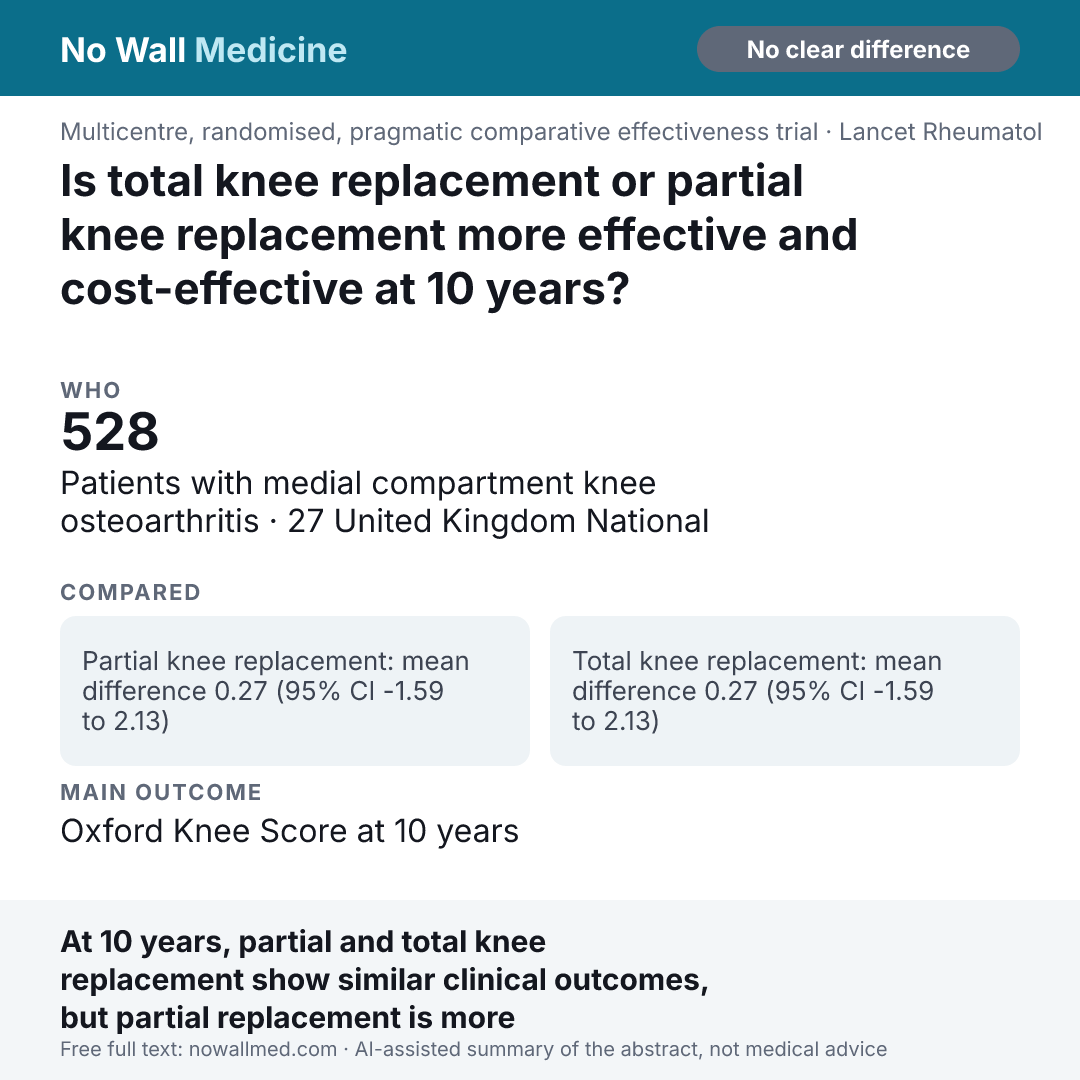
- Researchers followed 528 patients randomized to receive either partial knee replacement or total knee replacement for medial compartment knee osteoarthritis.
- At 10 years, there were no clinically meaningful differences in Oxford Knee Score, with a mean difference of 0.27 (95% CI -1.59 to 2.13).
- Partial knee replacement was associated with lower health-care costs, with a mean difference in cost of -£731 (95% CI -1352 to -110).
Why it matters: Extended follow-up is required to fully evaluate the long-term efficacy and cost-effectiveness of partial versus total knee replacement for late-stage knee osteoarthritis.
Discussion prompts
- Would these patients look like yours? Who was left out?
- Is the main outcome one that matters to patients?
- Is the difference large enough to change what you do?
Cite: Beard DJ, Davies LJ, Cook JA, et al. Assessing clinical and cost effectiveness of total versus partial knee replacement (TOPKAT): 10-year follow-up of a multicentre, randomised controlled trial. Lancet Rheumatol. 2026;8(2):e116-e126. doi:10.1016/S2665-9913(25)00250-4
Free full text: Lancet Rheumatol website · Summary and visual abstract: nowallmed.com/a/assessing-clinical-and-cost-effectiveness-of-total-versus-partial-16o903i/ (AI-assisted from the abstract; check the paper before relying on it).