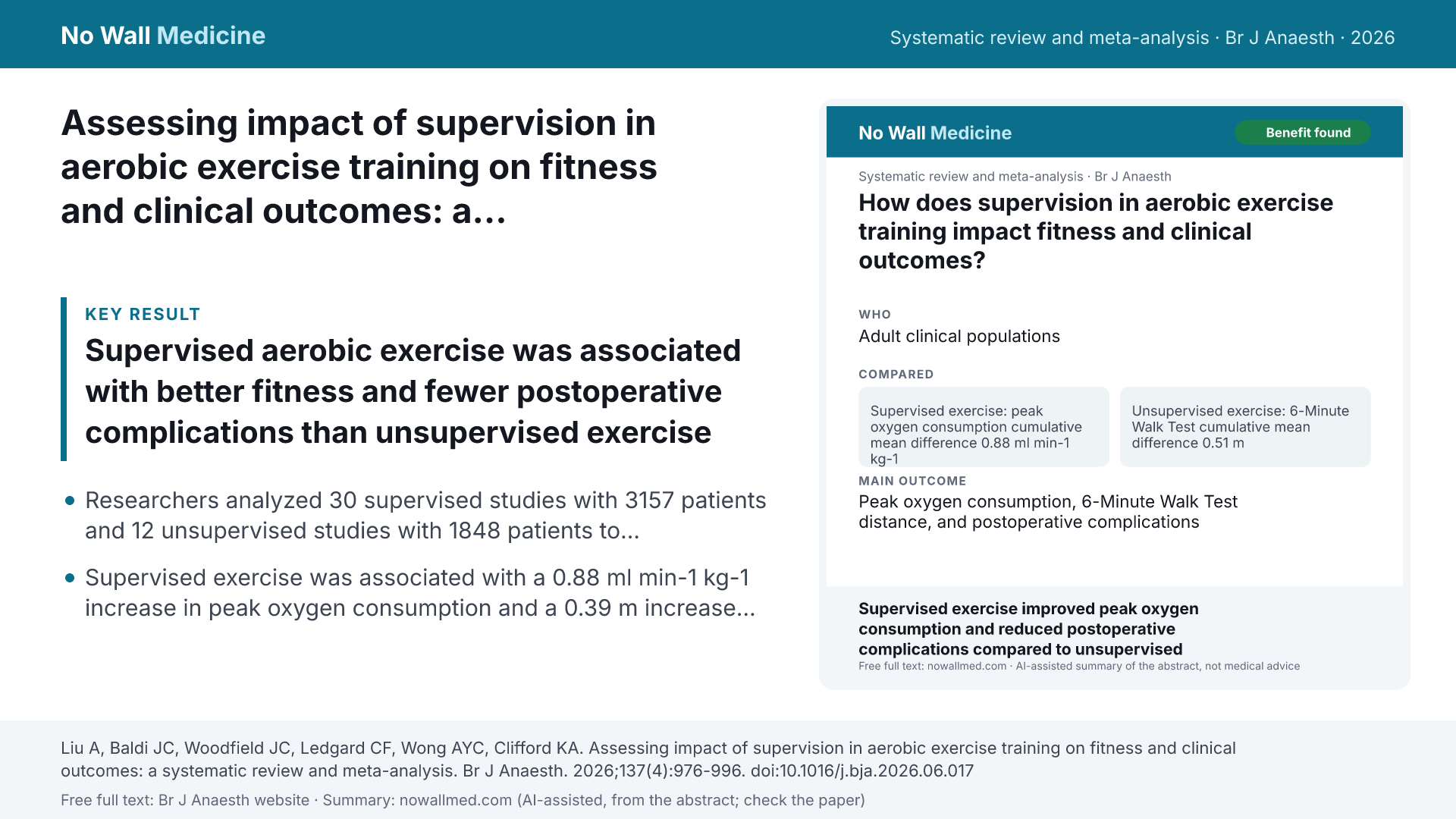
Supervised aerobic exercise was associated with better fitness and fewer postoperative complications than unsupervised exercise
Assessing impact of supervision in aerobic exercise training on fitness and clinical outcomes: a systematic review and meta-analysis
Systematic review and meta-analysisBenefit found
How does supervision in aerobic exercise training impact fitness and clinical outcomes?
Who
Adult clinical populations
Compared
Supervised exercise: peak oxygen consumption cumulative mean difference 0.88 ml min-1 kg-1
Unsupervised exercise: 6-Minute Walk Test cumulative mean difference 0.51 m
Main outcome
Peak oxygen consumption, 6-Minute Walk Test distance, and postoperative complications
Bottom line: Supervised exercise improved peak oxygen consumption and reduced postoperative complications compared to unsupervised exercise.
Limitation: Lack of direct comparisons between supervised and unsupervised exercise groups.
Br J Anaesth · 2026-08-04Download image
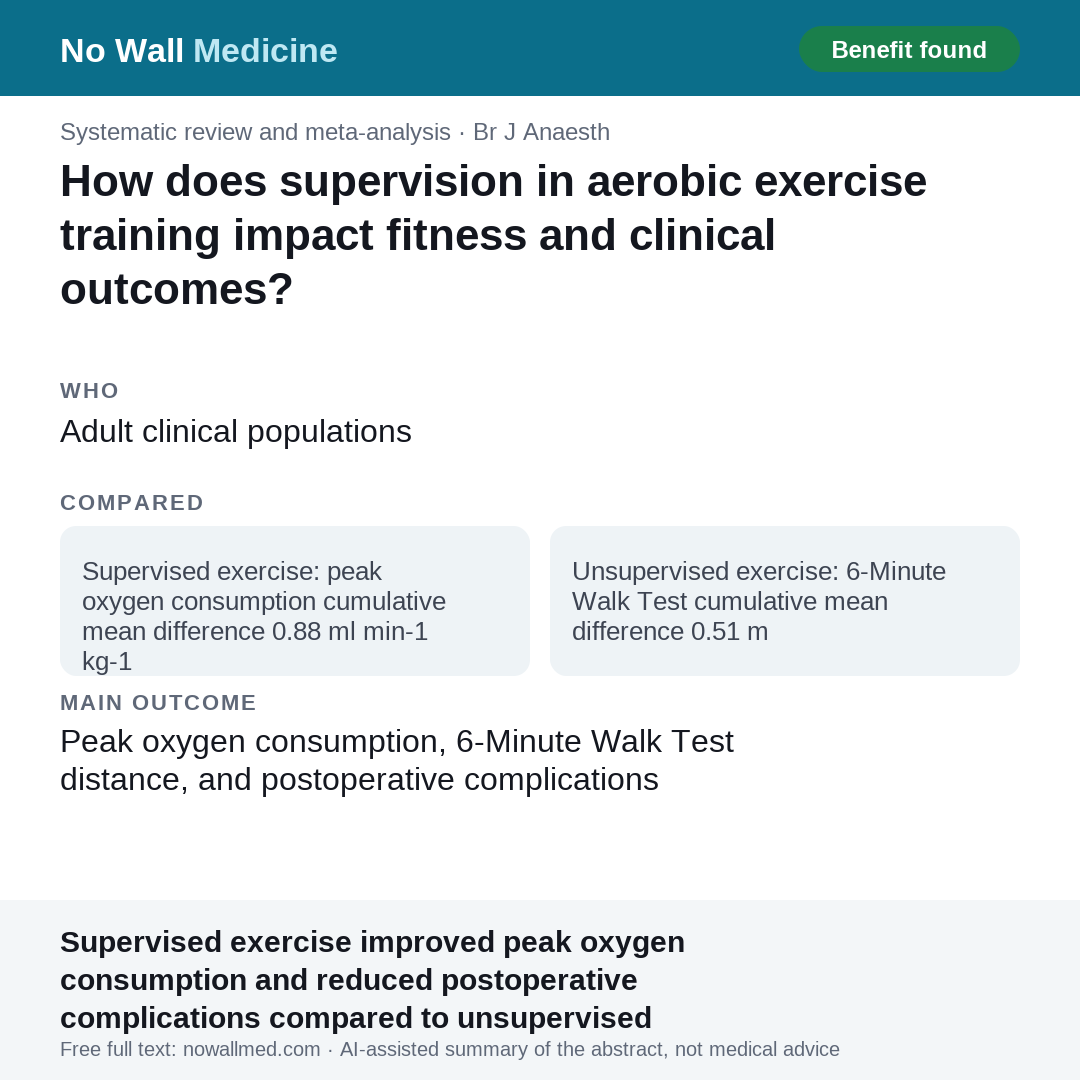
Clinical question: How does supervision in aerobic exercise training impact fitness and clinical outcomes?
Why it matters: The impact of different types of supervision on patient outcomes during aerobic exercise training has yet to be elucidated.
Key points
- Researchers analyzed 30 supervised studies with 3157 patients and 12 unsupervised studies with 1848 patients to compare fitness and clinical outcomes.
- Supervised exercise was associated with a 0.88 ml min-1 kg-1 increase in peak oxygen consumption and a 0.39 m increase in 6-Minute Walk Test distance.
- Supervised exercise was associated with an odds ratio of 0.60 for postoperative complications, which was 0.53 for high-intensity exercise.
Limitation the authors note: Findings were limited by a lack of direct comparisons between supervised and unsupervised exercise groups.
Headline and key points written with AI from the paper’s abstract, with every number checked against it. Read the paper before relying on them.
Was this summary helpful?
Subject terms
Cite this article
Liu A, Baldi JC, Woodfield JC, Ledgard CF, Wong AYC, Clifford KA. Assessing impact of supervision in aerobic exercise training on fitness and clinical outcomes: a systematic review and meta-analysis. Br J Anaesth. 2026. doi:10.1016/j.bja.2026.06.017
Spotted a mistake? Suggest a correction