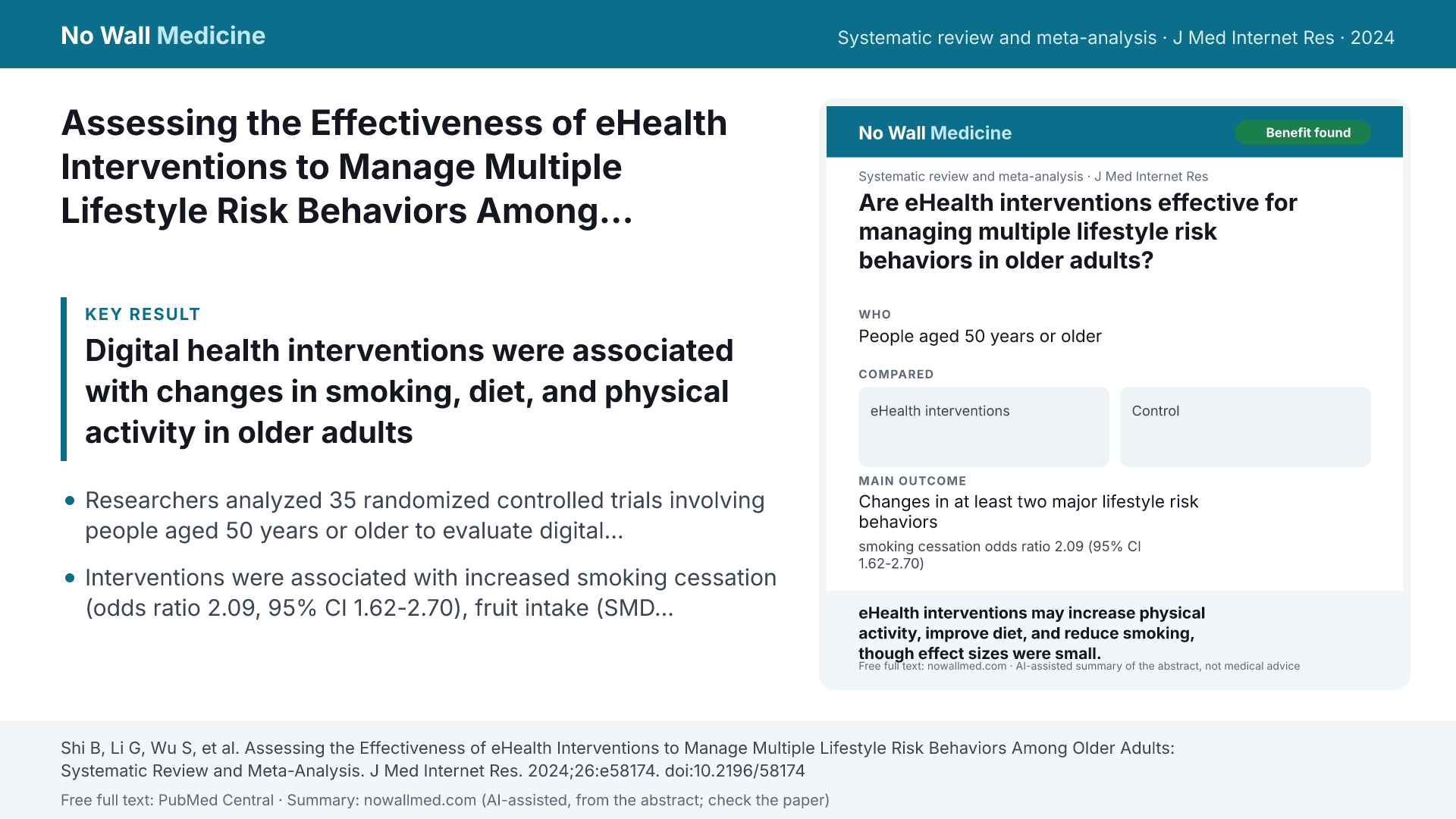
Digital health interventions were associated with changes in smoking, diet, and physical activity in older adults
Assessing the Effectiveness of eHealth Interventions to Manage Multiple Lifestyle Risk Behaviors Among Older Adults: Systematic Review and Meta-Analysis
Systematic review and meta-analysisBenefit found
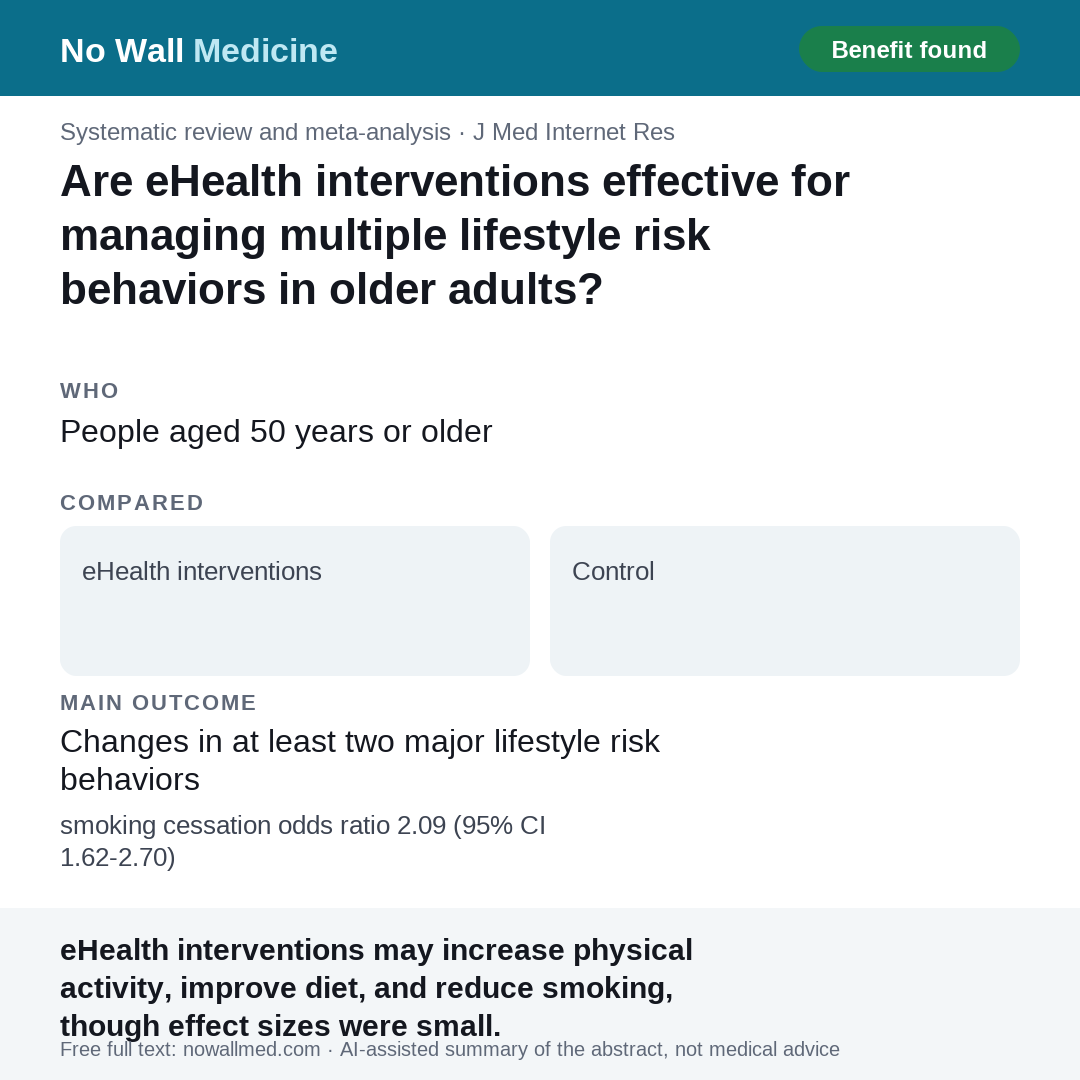
Are eHealth interventions effective for managing multiple lifestyle risk behaviors in older adults?
Who
People aged 50 years or older
Compared
eHealth interventions
Control
Main outcome
Changes in at least two major lifestyle risk behaviors
Result: smoking cessation odds ratio 2.09 (95% CI 1.62-2.70)
Bottom line: eHealth interventions may increase physical activity, improve diet, and reduce smoking, though effect sizes were small.
Limitation: The effect sizes were small.
J Med Internet Res · 2024-07-31Download image
Clinical question: Are eHealth interventions effective for managing multiple lifestyle risk behaviors in older adults?
Why it matters: Evidence is limited regarding how effective digital health-based multiple health behavior change interventions are for managing lifestyle risk behaviors in older populations.
Key points
- Researchers analyzed 35 randomized controlled trials involving people aged 50 years or older to evaluate digital health interventions targeting two or more lifestyle risk behaviors.
- Interventions were associated with increased smoking cessation (odds ratio 2.09, 95% CI 1.62-2.70), fruit intake (SMD 0.18, 95% CI 0.04-0.32), vegetable intake (SMD 0.17, 95% CI 0.05-0.28), and physical activity.
- Digital interventions were also associated with decreased fat intake (SMD -0.23, 95% CI -0.33 to -0.13), but showed no effects on alcohol use, sedentary behavior, or sleep.
Limitation the authors note: The effect sizes observed in the interventions were small.
Headline and key points written with AI from the paper’s abstract, with every number checked against it. Read the paper before relying on them.
Was this summary helpful?
Subject terms
Cite this article
Shi B, Li G, Wu S, Ge H, Zhang X, Chen S. Assessing the Effectiveness of eHealth Interventions to Manage Multiple Lifestyle Risk Behaviors Among Older Adults: Systematic Review and Meta-Analysis. J Med Internet Res. 2024. doi:10.2196/58174
Spotted a mistake? Suggest a correction
Top studies every Monday
The week’s key trials and guidelines in your specialties, plus any topics you follow. By email, free.
Get the weekly digest