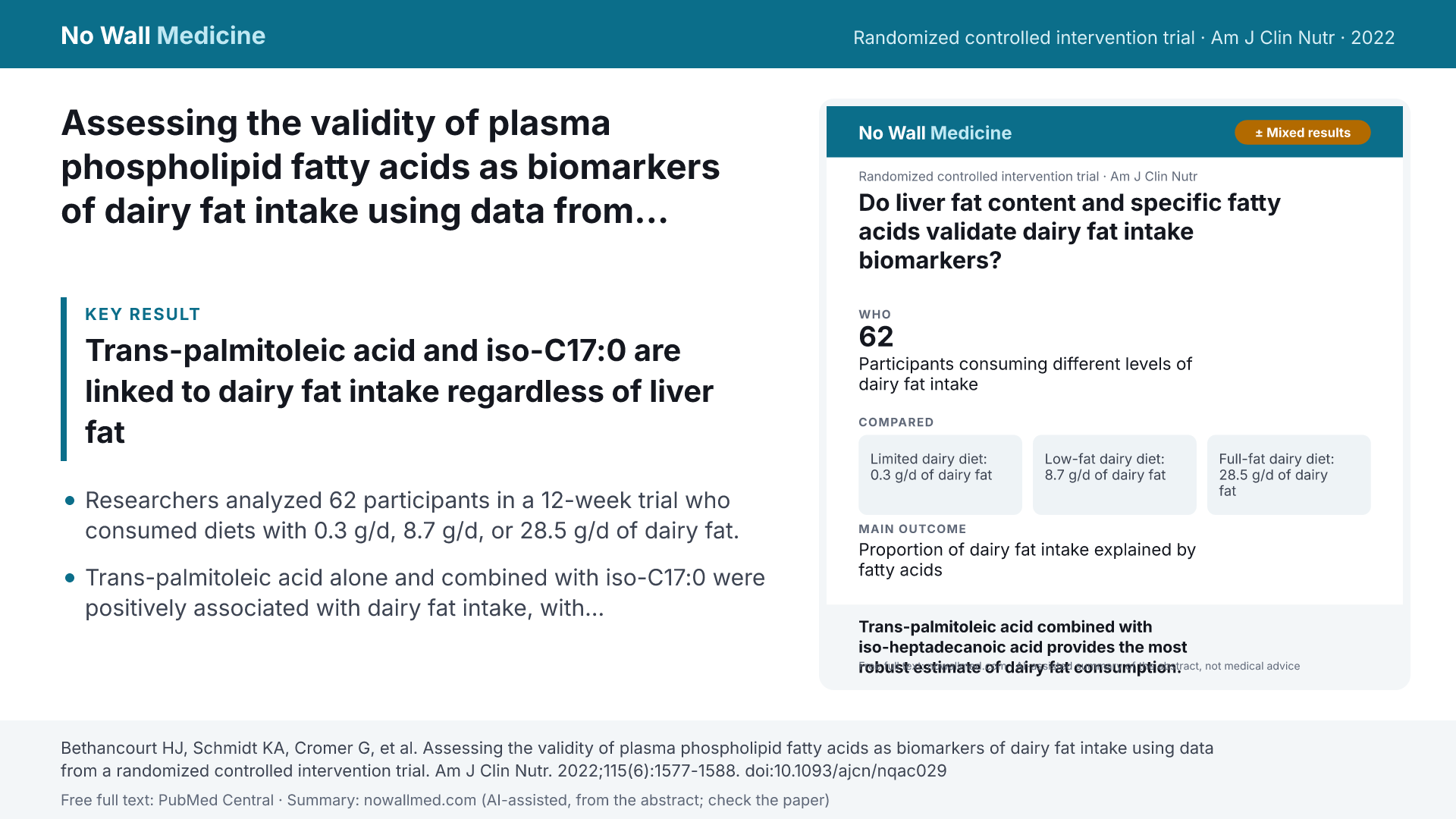
Trans-palmitoleic acid and iso-C17:0 are linked to dairy fat intake regardless of liver fat
Assessing the validity of plasma phospholipid fatty acids as biomarkers of dairy fat intake using data from a randomized controlled intervention trial
Randomized controlled intervention trialMixed results
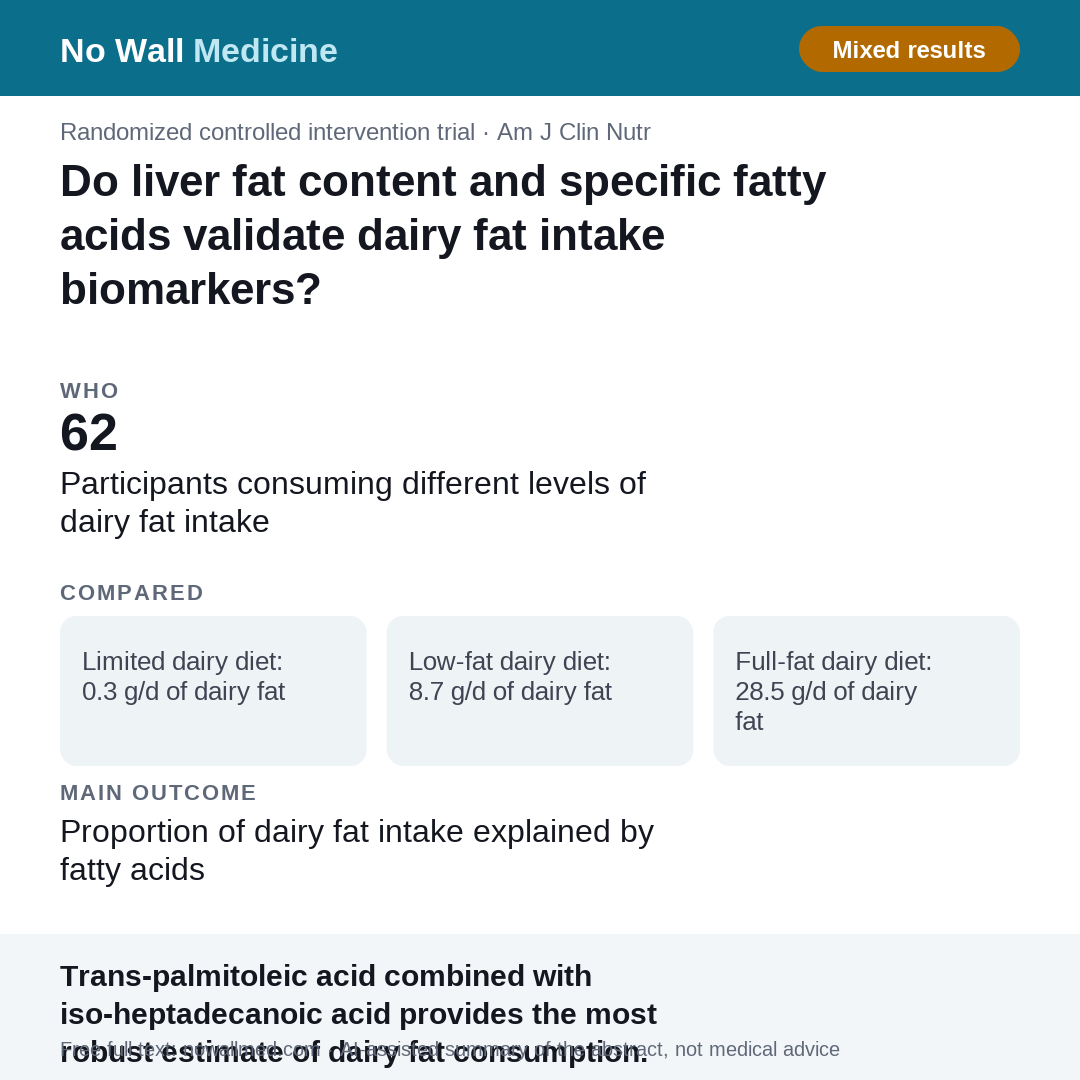
Do liver fat content and specific fatty acids validate dairy fat intake biomarkers?
Who
62
Participants consuming different levels of dairy fat intake
Compared
Limited dairy diet: 0.3 g/d of dairy fat
Low-fat dairy diet: 8.7 g/d of dairy fat
Full-fat dairy diet: 28.5 g/d of dairy fat
Main outcome
Proportion of dairy fat intake explained by fatty acids
Result: trans-C16:1n-7 combined with iso-C17:0 explained 35.4% of variation
Bottom line: Trans-palmitoleic acid combined with iso-heptadecanoic acid provides the most robust estimate of dairy fat consumption.
Am J Clin Nutr · 2022-02-09Download image
Clinical question: Do liver fat content and specific fatty acids validate dairy fat intake biomarkers?
Key points
- Researchers analyzed 62 participants in a 12-week trial who consumed diets with 0.3 g/d, 8.7 g/d, or 28.5 g/d of dairy fat.
- Trans-palmitoleic acid alone and combined with iso-C17:0 were positively associated with dairy fat intake, with the combination explaining 35.4% of the variation.
- Pentadecanoic acid and heptadecanoic acid were not associated with dairy fat intake after adjusting for liver fat content.
Headline and key points written with AI from the paper’s abstract, with every number checked against it. Read the paper before relying on them.
Was this summary helpful?
Subject terms
Cite this article
Bethancourt HJ, Schmidt KA, Cromer G, et al. Assessing the validity of plasma phospholipid fatty acids as biomarkers of dairy fat intake using data from a randomized controlled intervention trial. Am J Clin Nutr. 2022. doi:10.1093/ajcn/nqac029
Spotted a mistake? Suggest a correction