Blinding success in antidepressant trials was not associated with the size of treatment effects
Assessment of blinding in randomized controlled trials of antidepressants for depressive disorders 2000-2020: A systematic review and meta-analysis
Systematic review and meta-analysisNo clear difference
How successful is blinding in randomized controlled trials of antidepressants for depressive disorders?
Who
Double-blinded antidepressant randomized controlled trials · PubMed/Medline
Compared
0.21Patients (95% CI: 0.14 to 0.28)
0.17Assessors (95% CI: 0.05 to 0.30)
Main outcome
Degree of blinding successfulness measured as kappa statistics
Bottom line: Blinding success was not significantly associated with antidepressant effect size estimates.
Limitation: Less than 10% of the antidepressant randomized controlled trials reported blinding assessment.
eClinicalMedicine · 2022-07-01 · Save PNG
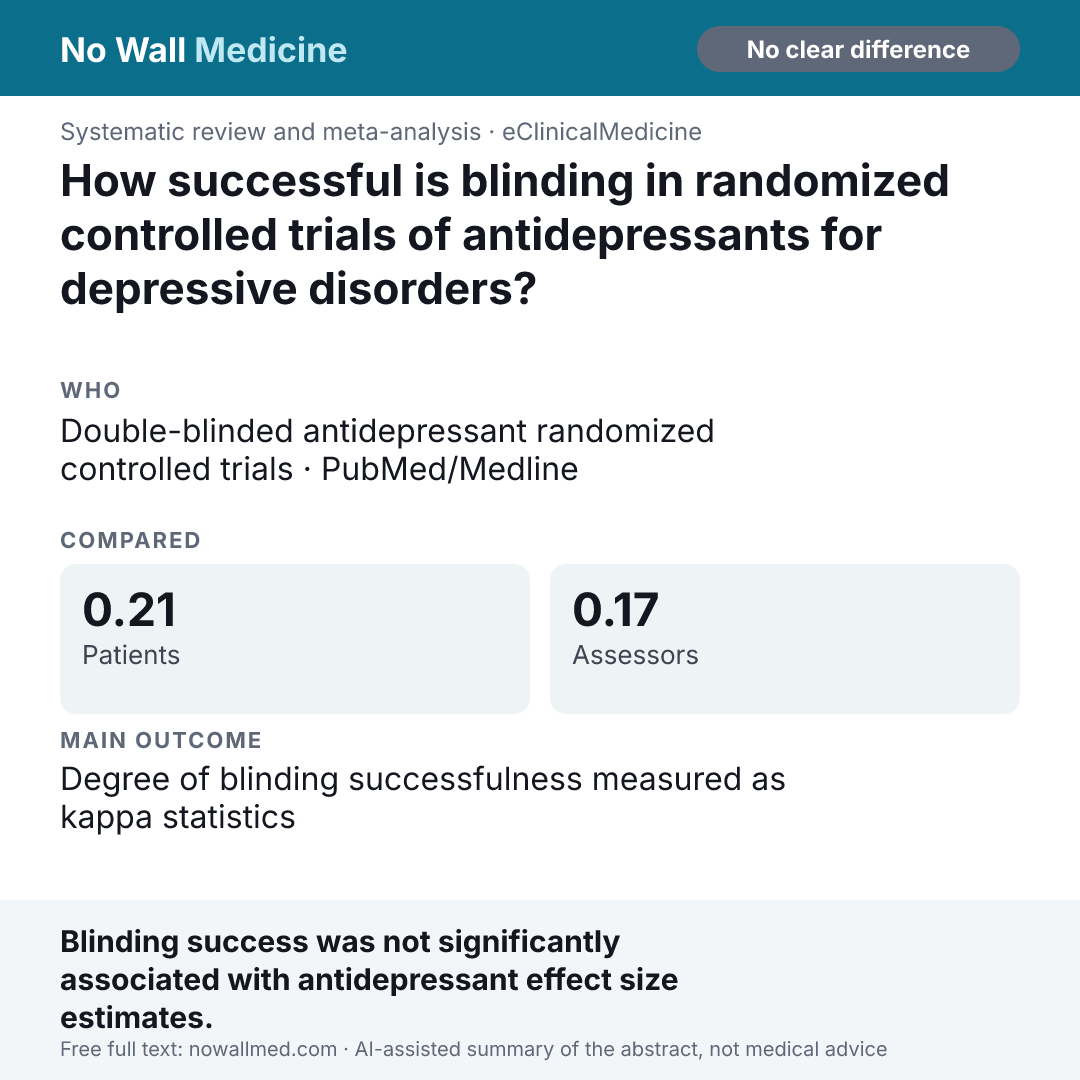
Clinical question: How successful is blinding in randomized controlled trials of antidepressants for depressive disorders?
Key points
- Researchers analyzed 154 eligible studies, including 16 studies that provided usable data on whether participants and researchers could correctly guess their treatment group.
- The summary agreement between guesses and actual treatment allocation was 0.21 (95% CI: 0.14 to 0.28) for patients and 0.17 (95% CI: 0.05 to 0.30) for assessors.
- Blinding success was not associated with effect size for patients (r = 0.37, p = 0.32) or assessors (r = 0.28, p = 0.72).
Headline and key points written with AI from the paper’s abstract, with every number checked against it. Read the paper before relying on them.
Was this summary helpful?
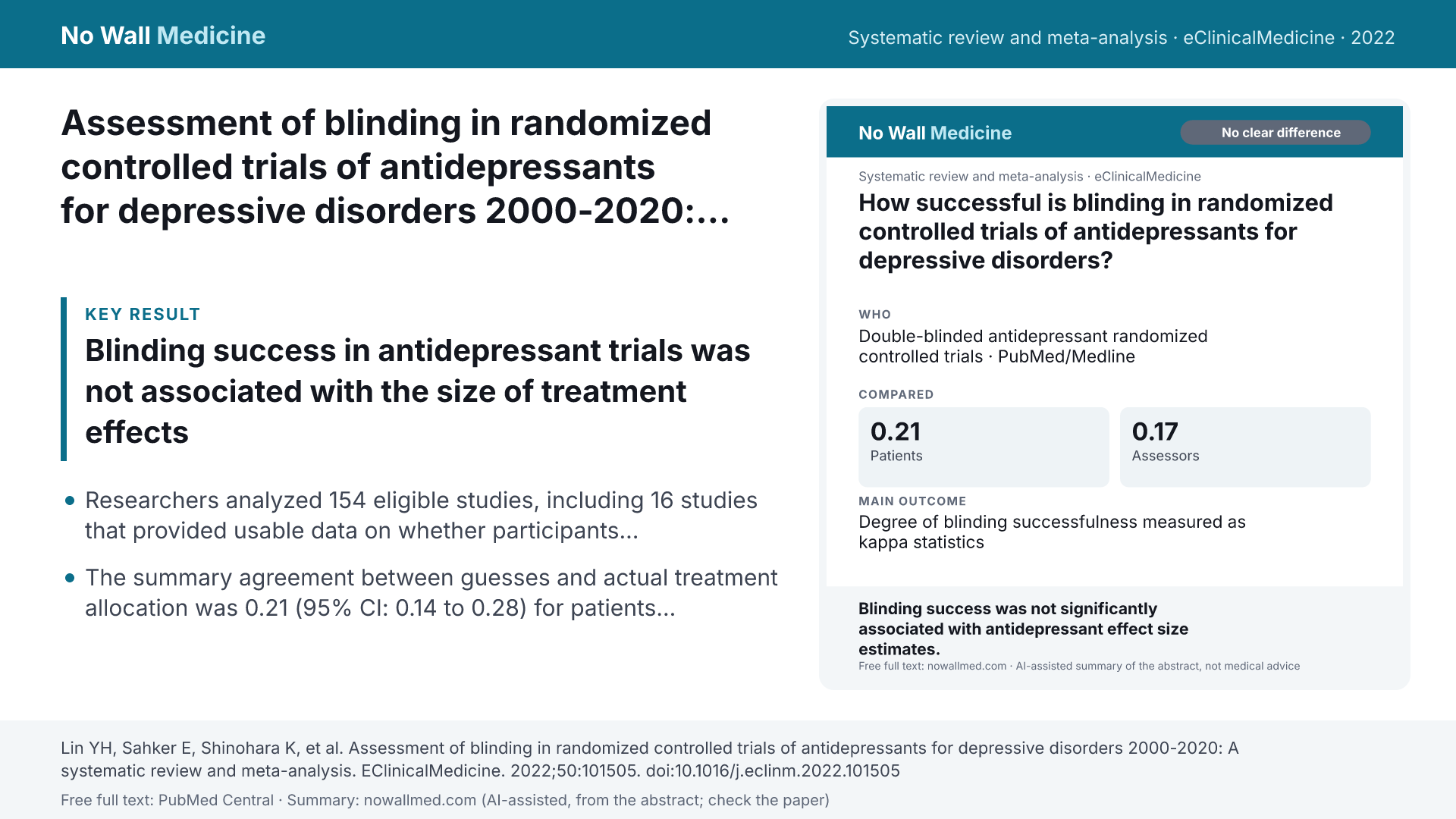
Headline, design, result, key points, caveat and citation as plain text.
Cite this article
Lin YH, Sahker E, Shinohara K, et al. Assessment of blinding in randomized controlled trials of antidepressants for depressive disorders 2000-2020: A systematic review and meta-analysis. EClinicalMedicine. 2022;50:101505. doi:10.1016/j.eclinm.2022.101505
Spotted a mistake? Suggest a correction