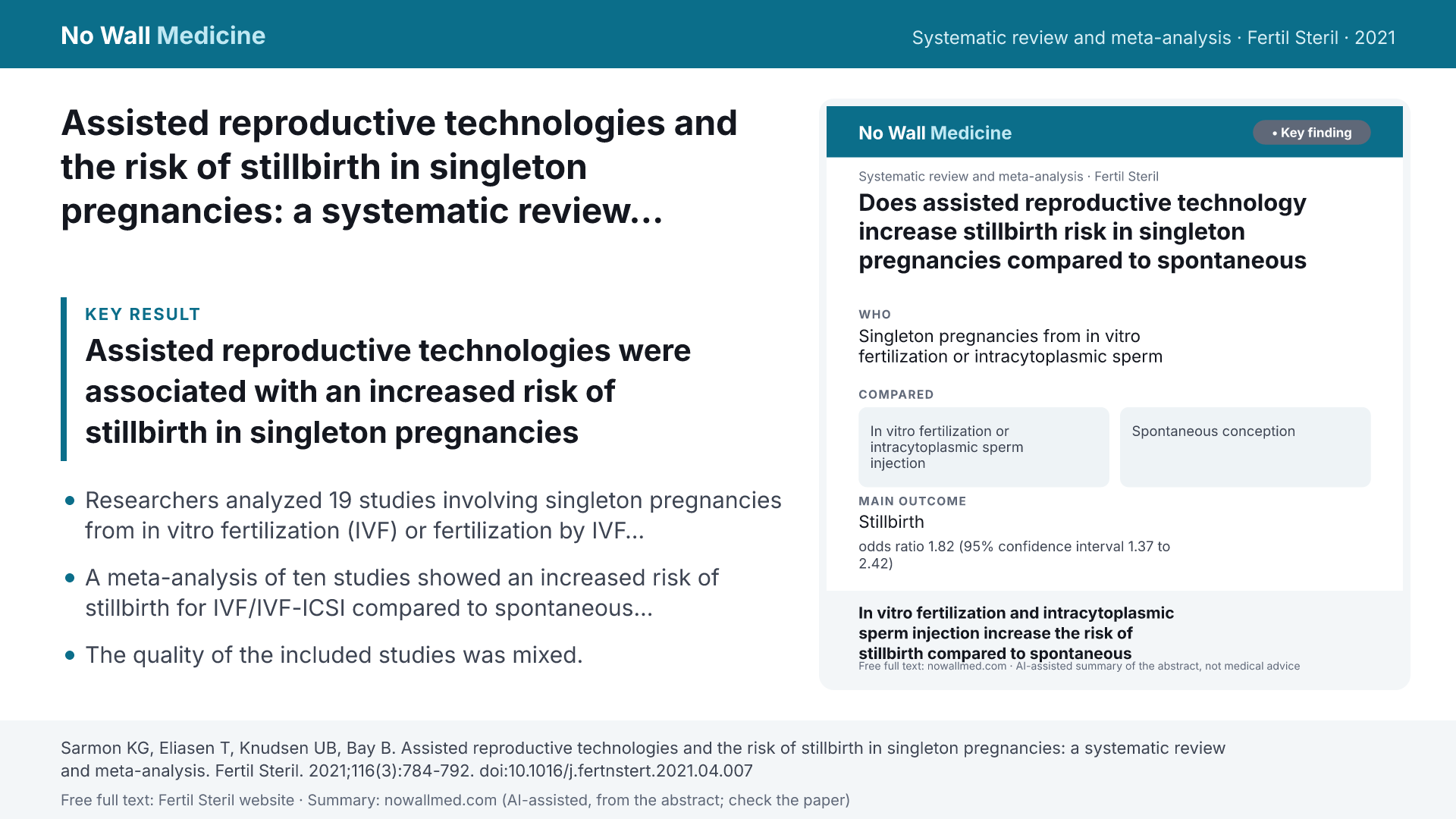
Assisted reproductive technologies and the risk of stillbirth in singleton pregnancies: a systematic review and meta-analysis
Key result: Assisted reproductive technologies were associated with an increased risk of stillbirth in singleton pregnancies
Key points
- Researchers analyzed 19 studies involving singleton pregnancies from in vitro fertilization (IVF) or fertilization by IVF and intracytoplasmic sperm injection (ICSI) compared to spontaneous conception.
- A meta-analysis of ten studies showed an increased risk of stillbirth for IVF/IVF-ICSI compared to spontaneous conception with an odds ratio of 1.82 (95% confidence interval: 1.37-2.42).
- The quality of the included studies was mixed.
Why it matters: The risk of stillbirth in singleton pregnancies resulting from in vitro fertilization or intracytoplasmic sperm injection compared to natural conception was not clearly established.
Limitation the authors note: The study quality was mixed.
Discussion prompts
- Would these patients look like yours? Who was left out?
- Is the main outcome one that matters to patients?
- Is the difference large enough to change what you do?
Cite: Sarmon KG, Eliasen T, Knudsen UB, Bay B. Assisted reproductive technologies and the risk of stillbirth in singleton pregnancies: a systematic review and meta-analysis. Fertil Steril. 2021;116(3):784-792. doi:10.1016/j.fertnstert.2021.04.007
Free full text: Fertil Steril website · Summary and visual abstract: nowallmed.com/a/assisted-reproductive-technologies-and-the-risk-of-stillbirth-in-eqekcm/ (AI-assisted from the abstract; check the paper before relying on it).