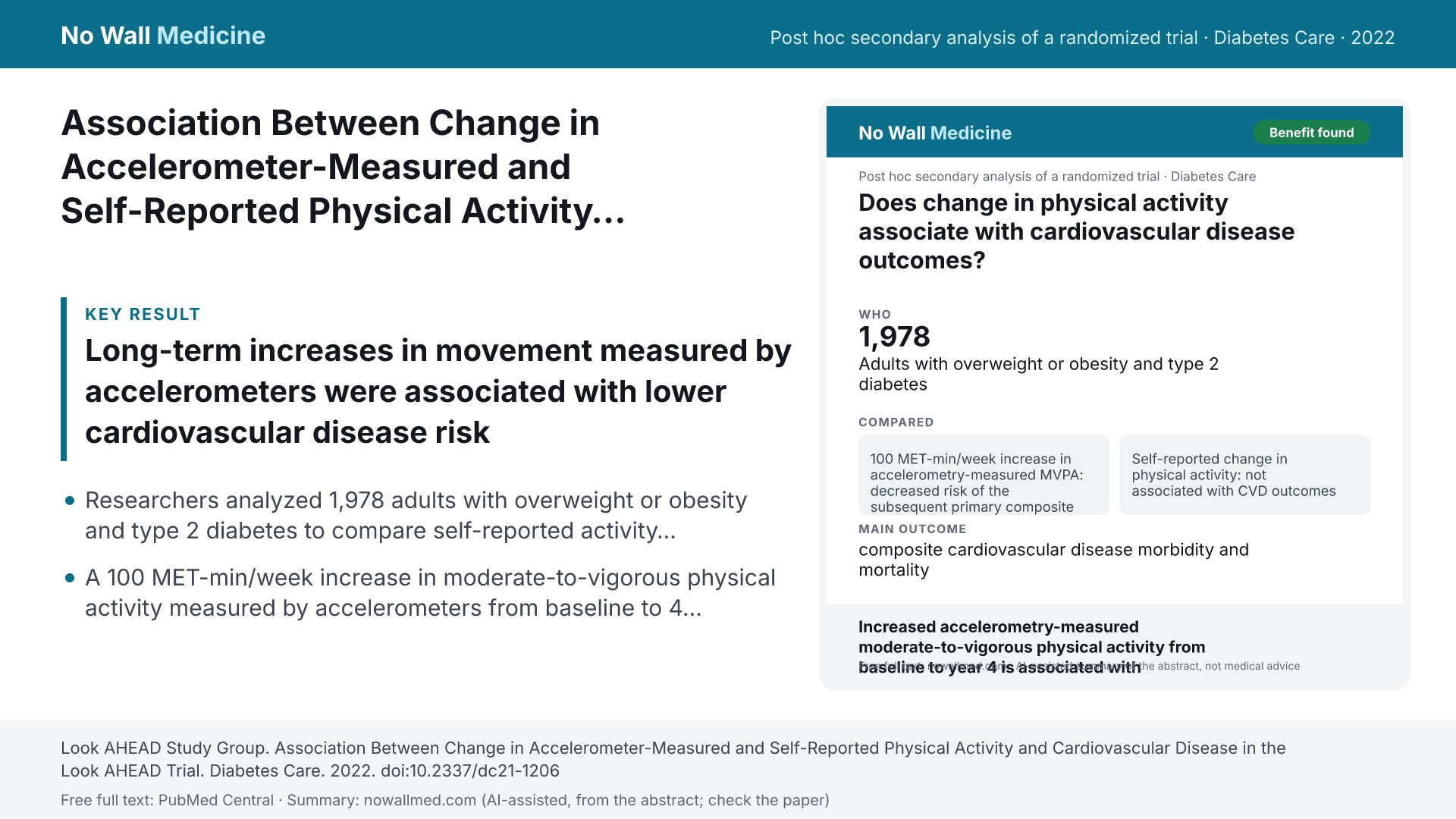
Long-term increases in movement measured by accelerometers were associated with lower cardiovascular disease risk
Association Between Change in Accelerometer-Measured and Self-Reported Physical Activity and Cardiovascular Disease in the Look AHEAD Trial
Post hoc secondary analysis of a randomized trialBenefit found
Does change in physical activity associate with cardiovascular disease outcomes?
Who
1,978
Adults with overweight or obesity and type 2 diabetes
Compared
100 MET-min/week increase in accelerometry-measured MVPA: decreased risk of the subsequent primary composite outcome of CVD
Self-reported change in physical activity: not associated with CVD outcomes
Main outcome
composite cardiovascular disease morbidity and mortality
Result: hazard ratio 0.97 (95% CI 0.95, 0.99)
Bottom line: Increased accelerometry-measured moderate-to-vigorous physical activity from baseline to year 4 is associated with decreased cardiovascular disease risk.
Diabetes Care · 2022-01-13Download image
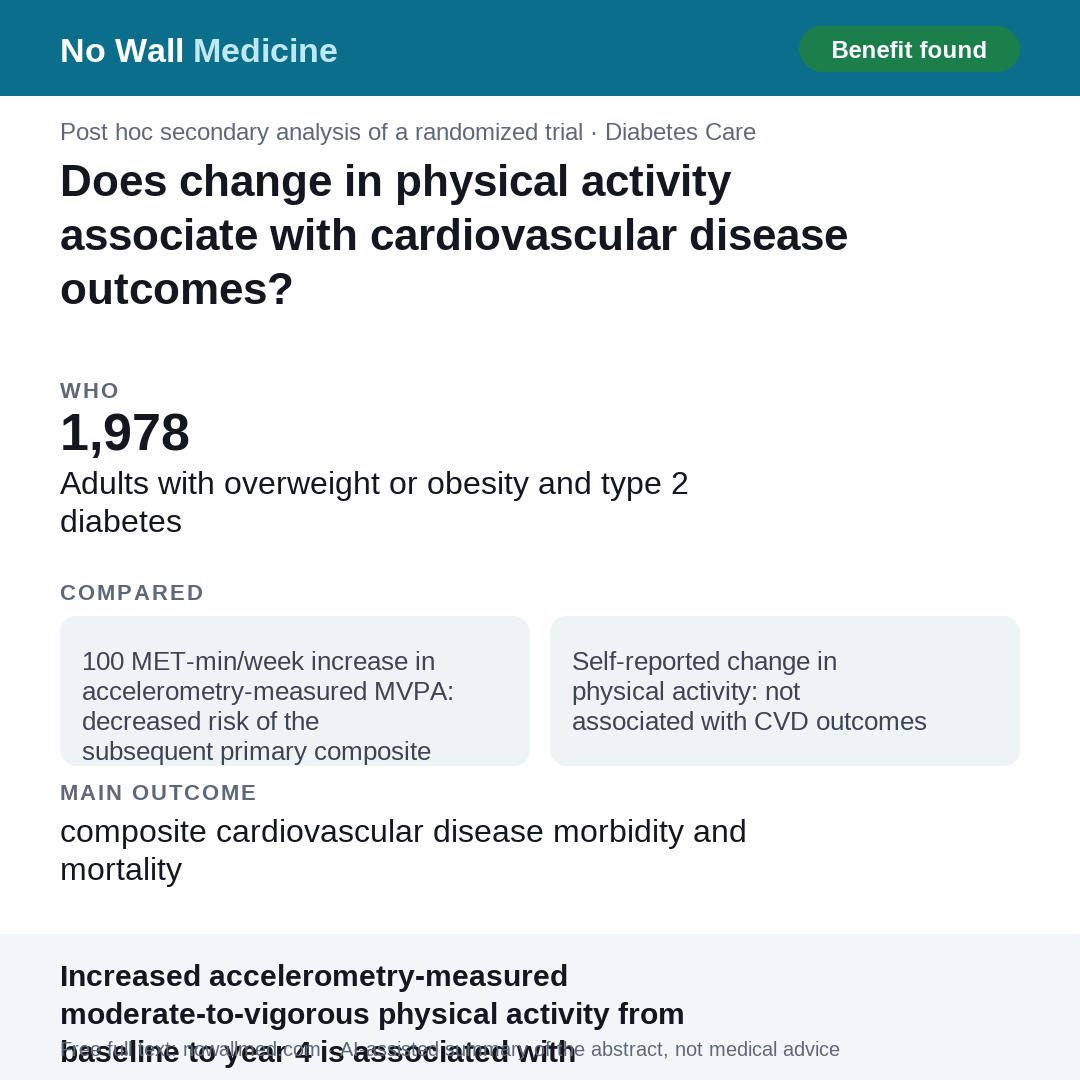
Clinical question: Does change in physical activity associate with cardiovascular disease outcomes?
Why it matters: It is unknown if changes in physical activity measured by self-reports or short-term accelerometer tracking are linked to cardiovascular disease outcomes in adults with type 2 diabetes.
Key points
- Researchers analyzed 1,978 adults with overweight or obesity and type 2 diabetes to compare self-reported activity and accelerometer-measured moderate-to-vigorous physical activity with cardiovascular disease outcomes.
- A 100 MET-min/week increase in moderate-to-vigorous physical activity measured by accelerometers from baseline to 4 years was associated with a lower risk of cardiovascular disease.
- Changes in activity measured at 1 year or self-reported changes in activity at 1 and 4 years were not associated with cardiovascular disease outcomes.
Headline and key points written with AI from the paper’s abstract, with every number checked against it. Read the paper before relying on them.
Was this summary helpful?
Subject terms
Cite this article
Look AHEAD Study Group. Association Between Change in Accelerometer-Measured and Self-Reported Physical Activity and Cardiovascular Disease in the Look AHEAD Trial. Diabetes Care. 2022. doi:10.2337/dc21-1206
Spotted a mistake? Suggest a correction