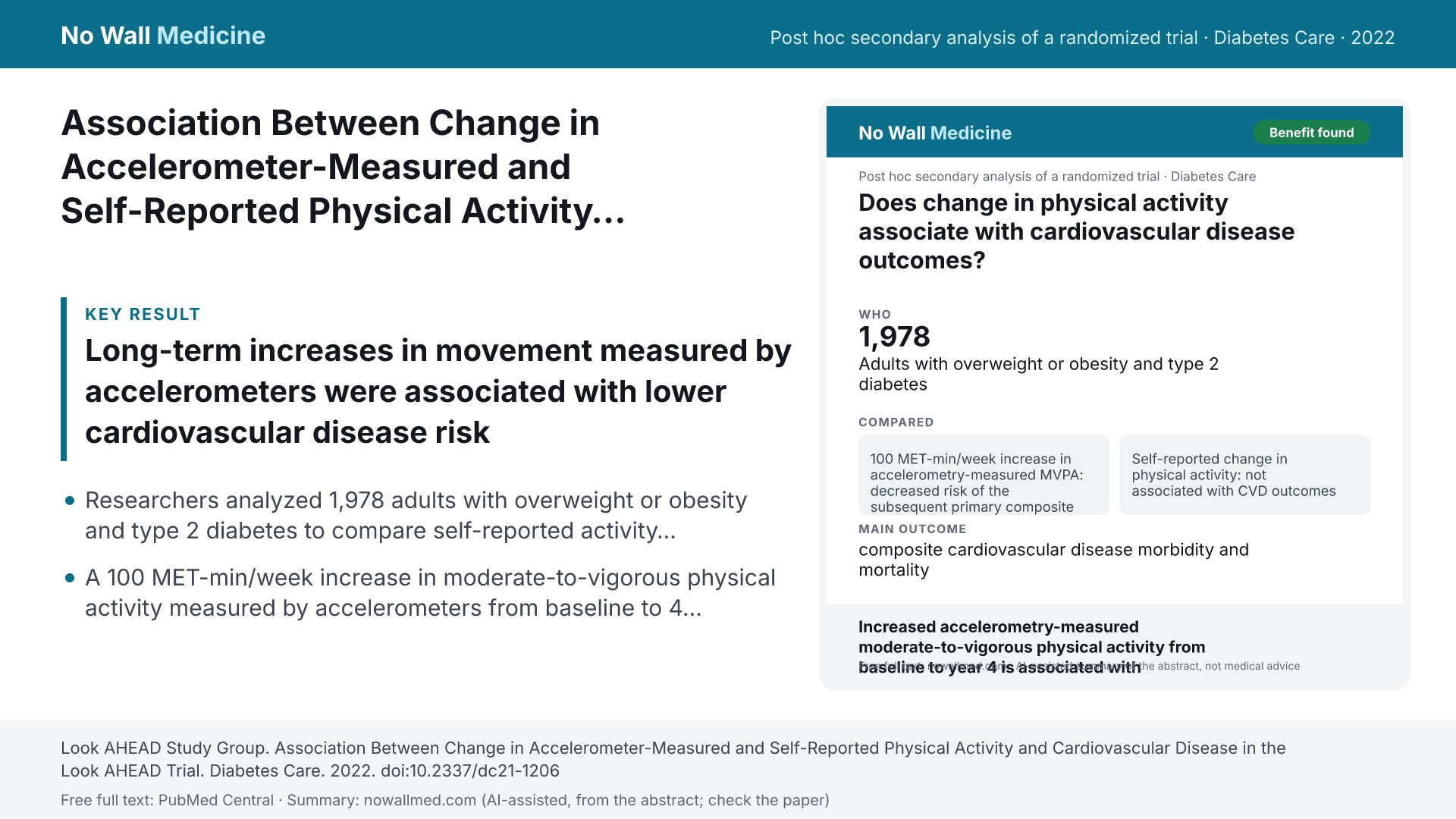
Association Between Change in Accelerometer-Measured and Self-Reported Physical Activity and Cardiovascular Disease in the Look AHEAD Trial
Key result: Long-term increases in movement measured by accelerometers were associated with lower cardiovascular disease risk
Key points
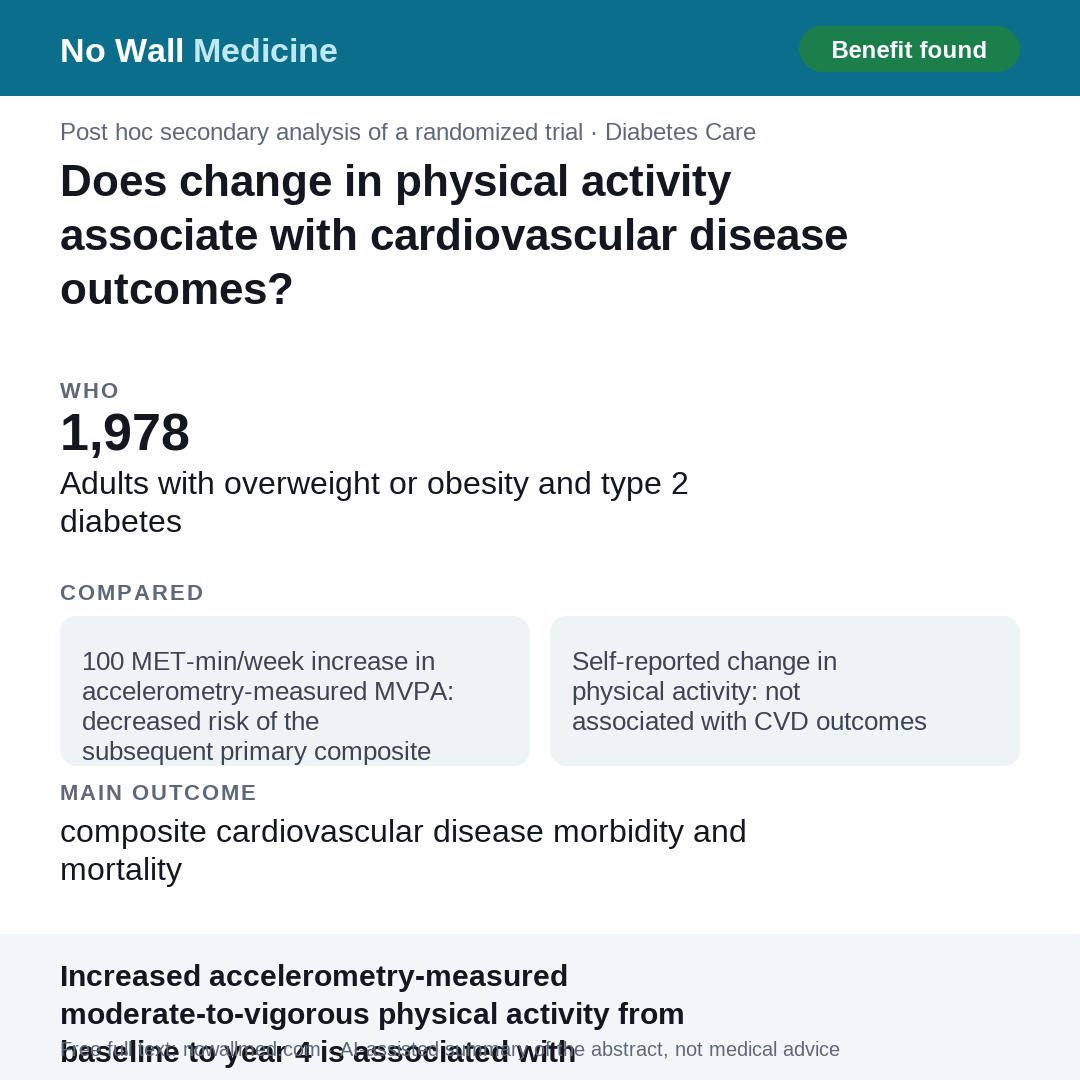
- Researchers analyzed 1,978 adults with overweight or obesity and type 2 diabetes to compare self-reported activity and accelerometer-measured moderate-to-vigorous physical activity with cardiovascular disease outcomes.
- A 100 MET-min/week increase in moderate-to-vigorous physical activity measured by accelerometers from baseline to 4 years was associated with a lower risk of cardiovascular disease.
- Changes in activity measured at 1 year or self-reported changes in activity at 1 and 4 years were not associated with cardiovascular disease outcomes.
Why it matters: It is unknown if changes in physical activity measured by self-reports or short-term accelerometer tracking are linked to cardiovascular disease outcomes in adults with type 2 diabetes.
Discussion prompts
- Would these patients look like yours? Who was left out?
- Is the main outcome one that matters to patients?
- Is the difference large enough to change what you do?
Cite: Look AHEAD Study Group. Association Between Change in Accelerometer-Measured and Self-Reported Physical Activity and Cardiovascular Disease in the Look AHEAD Trial. Diabetes Care. 2022. doi:10.2337/dc21-1206
Free full text: PubMed Central · Summary and visual abstract: nowallmed.com/a/association-between-change-in-accelerometer-measured-and-self-ch3a4e/ (AI-assisted from the abstract; check the paper before relying on it).