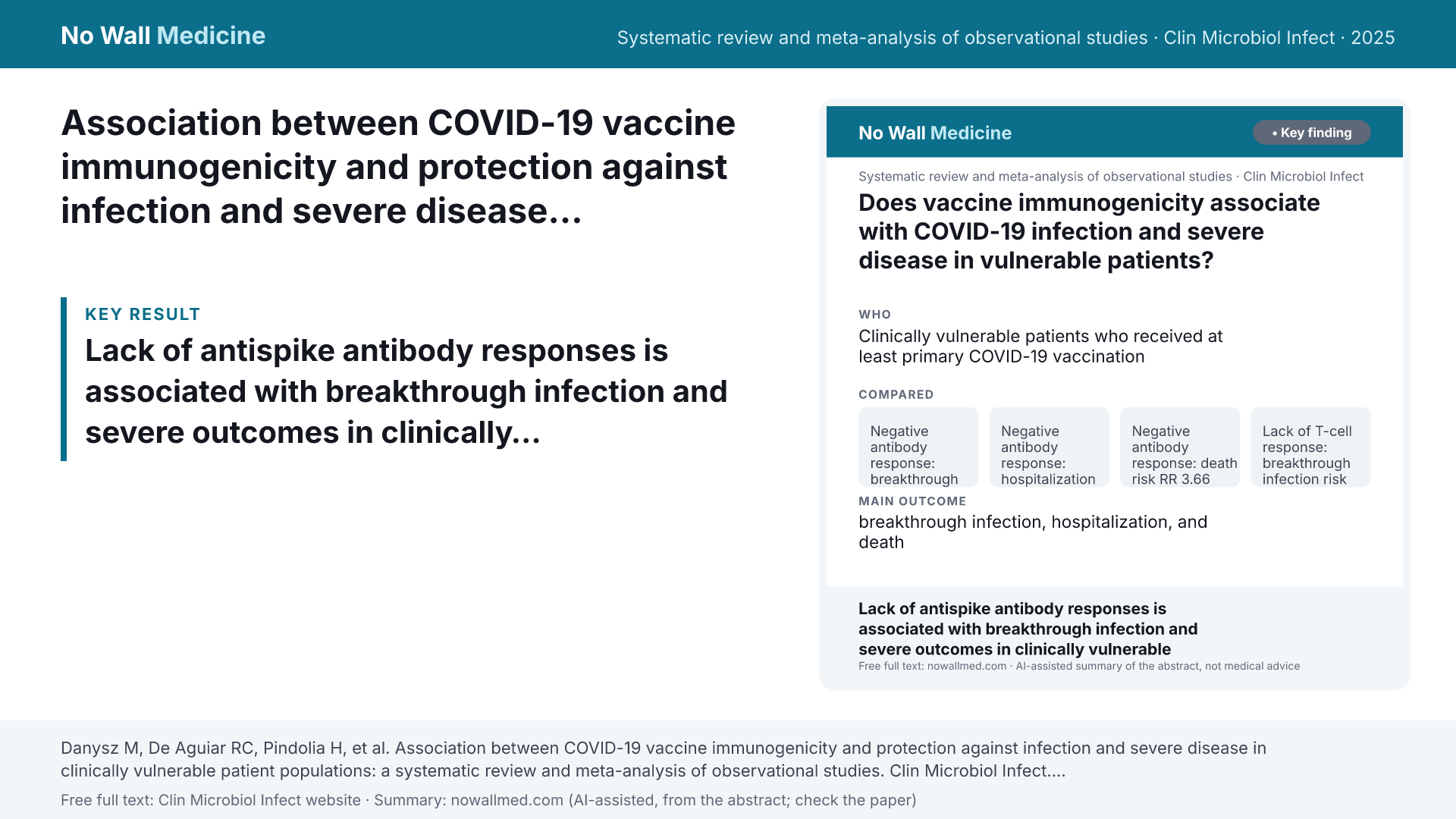
Association between COVID-19 vaccine immunogenicity and protection against infection and severe disease in clinically vulnerable patient populations: a systematic review and meta-analysis of observational studies
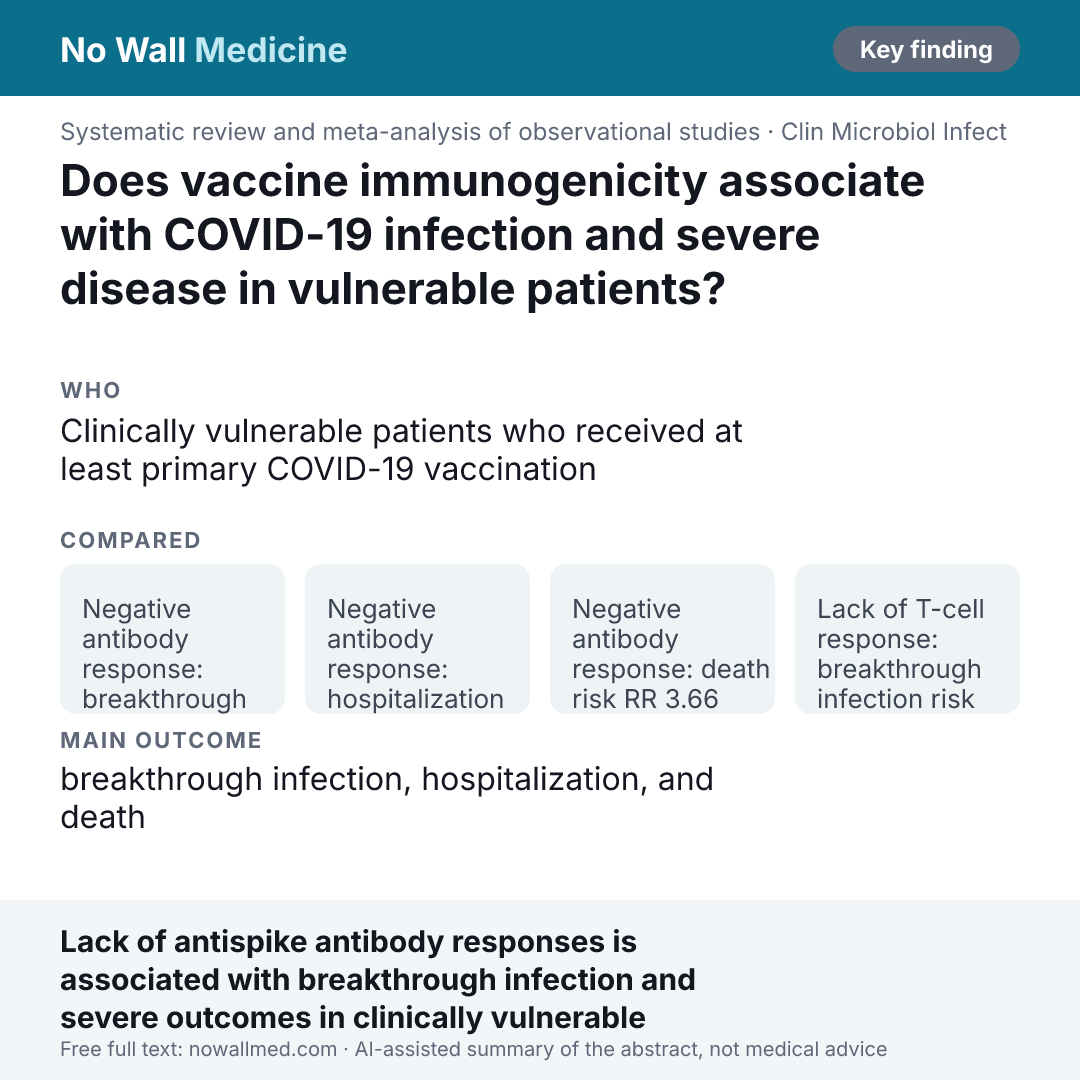
Systematic review and meta-analysis of observational studiesKey finding
Does vaccine immunogenicity associate with COVID-19 infection and severe disease in vulnerable patients?
Who
Clinically vulnerable patients who received at least primary COVID-19 vaccination
Compared
Negative antibody response: breakthrough infection risk RR 1.82 (1.45-2.29)
Negative antibody response: hospitalization risk RR 5.88 (4.08-8.47)
Negative antibody response: death risk RR 3.66 (1.87-7.15)
Lack of T-cell response: breakthrough infection risk RR 2.08 (1.08-4.04)
Main outcome
breakthrough infection, hospitalization, and death
Bottom line: Lack of antispike antibody responses is associated with breakthrough infection and severe outcomes in clinically vulnerable populations.
Limitation: Most included studies were of poor quality according to the Newcastle-Ottawa Quality Assessment Scale.
Clin Microbiol Infect · 2025-09-27 · Save PNG
Discussion prompts
- Would these patients look like yours? Who was left out?
- Is the main outcome one that matters to patients?
- Is the difference large enough to change what you do?
Cite: Danysz M, De Aguiar RC, Pindolia H, et al. Association between COVID-19 vaccine immunogenicity and protection against infection and severe disease in clinically vulnerable patient populations: a systematic review and meta-analysis of observational studies. Clin Microbiol Infect. 2026;32(1):41-55. doi:10.1016/j.cmi.2025.09.020
Free full text: Clin Microbiol Infect website · Summary and visual abstract: nowallmed.com/a/association-between-covid-19-vaccine-immunogenicity-and-protection-1cse3cy/ (AI-assisted from the abstract; check the paper before relying on it).