High-dose DHA supplementation was not linked to overall bronchopulmonary dysplasia risk
Association Between Enteral Supplementation With High-Dose Docosahexaenoic Acid and Risk of Bronchopulmonary Dysplasia in Preterm Infants: A Systematic Review and Meta-analysis
Meta-analysis of 4 randomized clinical trialsNo clear difference
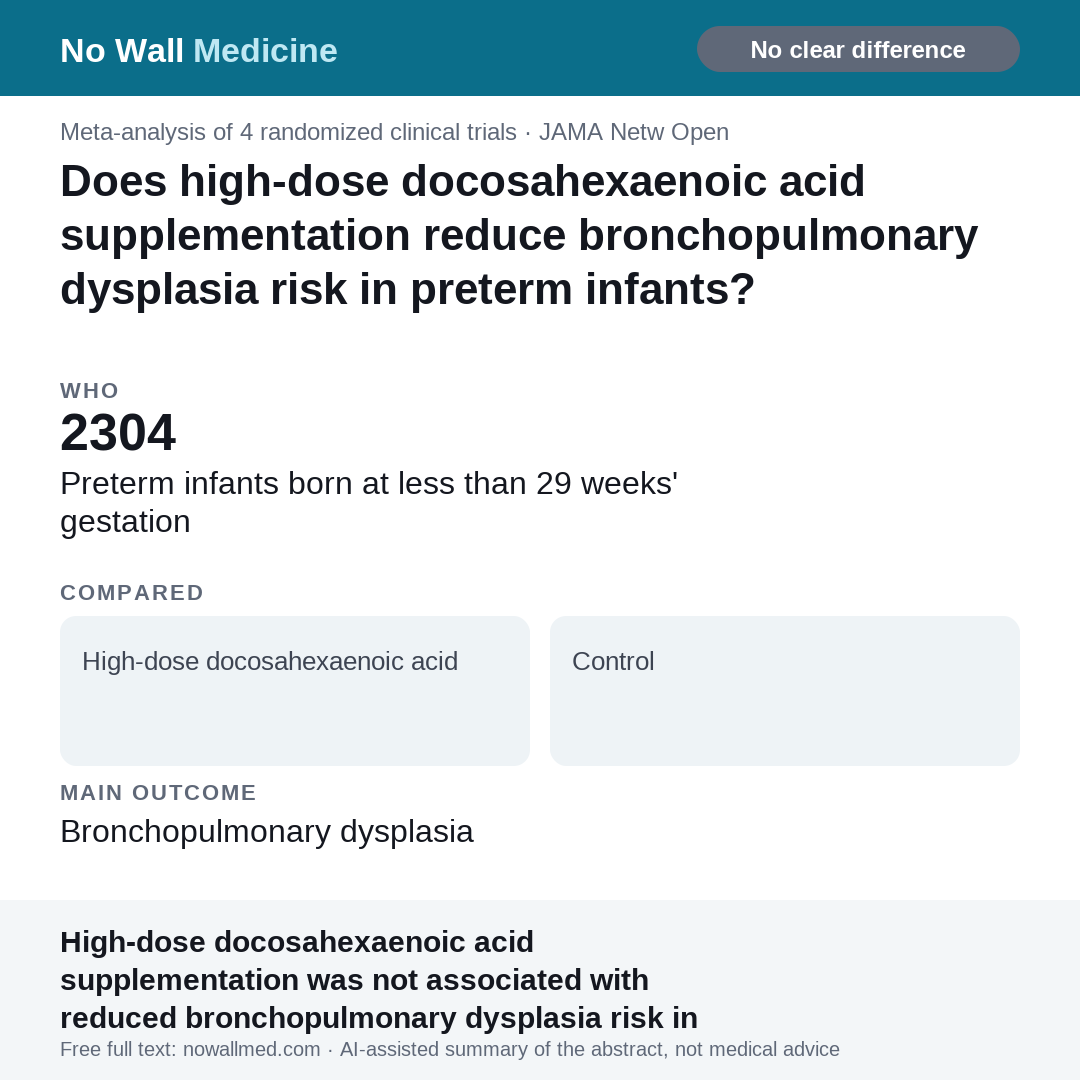
Does high-dose docosahexaenoic acid supplementation reduce bronchopulmonary dysplasia risk in preterm infants?
Who
2304
Preterm infants born at less than 29 weeks' gestation
Compared
High-dose docosahexaenoic acid
Control
Main outcome
Bronchopulmonary dysplasia
Result: risk ratio 1.07 (95% CI 0.86-1.34)
Bottom line: High-dose docosahexaenoic acid supplementation was not associated with reduced bronchopulmonary dysplasia risk in preterm infants.
Limitation: High heterogeneity was noted in the primary outcome analysis.
JAMA Netw Open · 2023-03-01Download image
Clinical question: Does high-dose docosahexaenoic acid supplementation reduce bronchopulmonary dysplasia risk in preterm infants?
Why it matters: Guidelines lack high-level evidence on whether high-dose DHA affects bronchopulmonary dysplasia risk in preterm infants
Key points
- 2304 preterm infants were studied in 4 randomized trials comparing high-dose DHA supplementation.
- High-dose DHA was not linked to bronchopulmonary dysplasia risk, with a risk ratio of 1.07.
- However, high-dose DHA was linked to less moderate-to-severe bronchopulmonary dysplasia, with a risk ratio of 1.16.
Limitation the authors note: The meta-analysis had a high degree of heterogeneity, with I2 values of 72% and 61% for some outcomes
Headline and key points written with AI from the paper’s abstract, with every number checked against it. Read the paper before relying on them.
Was this summary helpful?
Subject terms
Cite this article
Marc I, Boutin A, Pronovost E, Perez Herrera NM, Guillot M, Bergeron F. Association Between Enteral Supplementation With High-Dose Docosahexaenoic Acid and Risk of Bronchopulmonary Dysplasia in Preterm Infants: A Systematic Review and Meta-analysis. JAMA Netw Open. 2023. doi:10.1001/jamanetworkopen.2023.3934
Spotted a mistake? Suggest a correction
Top studies every Monday
The week’s key trials and guidelines in your specialties, plus any topics you follow. By email, free.
Get the weekly digest