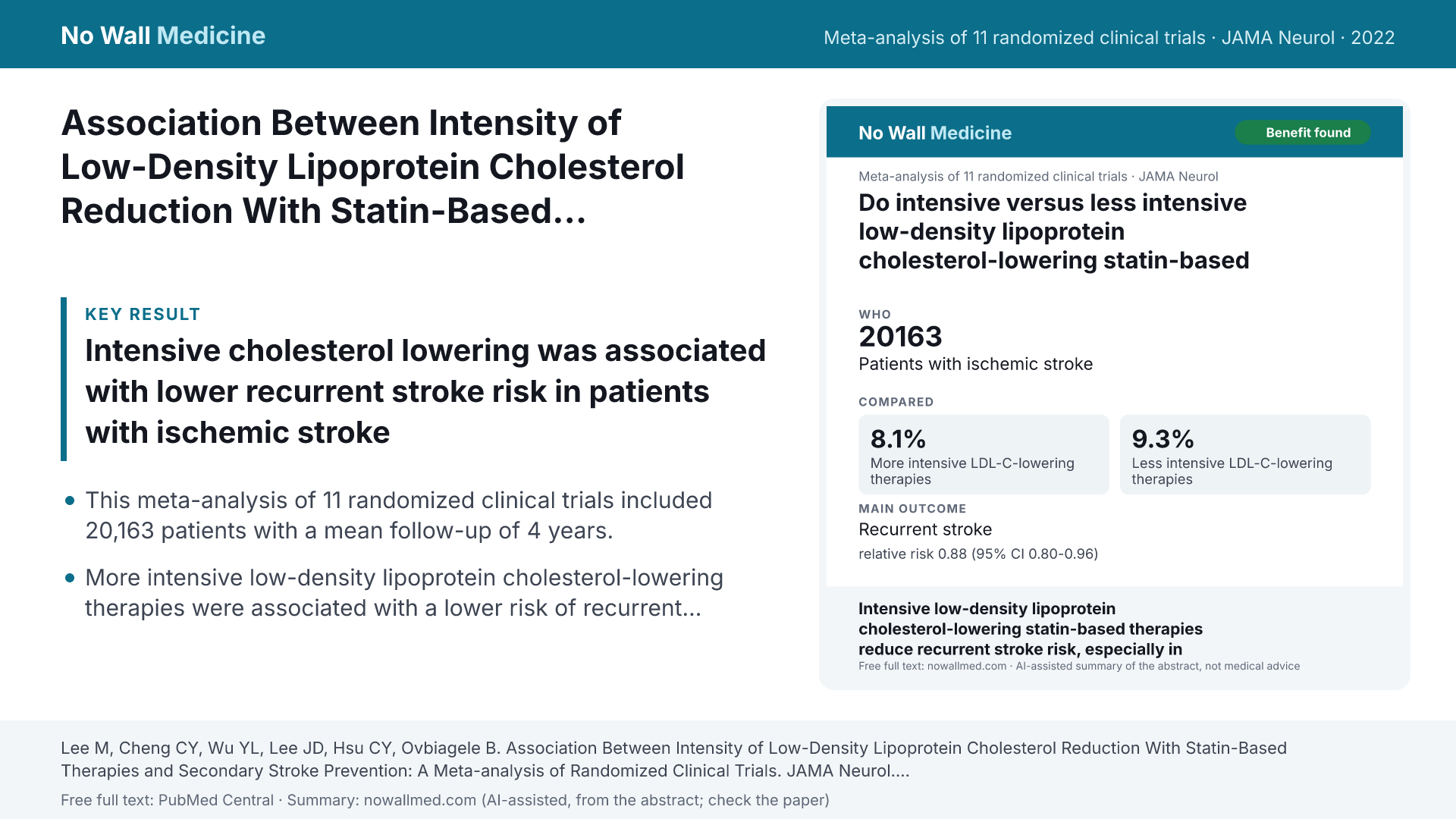
Intensive cholesterol lowering was associated with lower recurrent stroke risk in patients with ischemic stroke
Association Between Intensity of Low-Density Lipoprotein Cholesterol Reduction With Statin-Based Therapies and Secondary Stroke Prevention: A Meta-analysis of Randomized Clinical Trials
Meta-analysis of 11 randomized clinical trialsBenefit found
Do intensive versus less intensive low-density lipoprotein cholesterol-lowering statin-based therapies reduce recurrent stroke risk?
Who
20163
Patients with ischemic stroke
Compared
8.1%More intensive LDL-C-lowering therapies
9.3%Less intensive LDL-C-lowering therapies
Main outcome
Recurrent stroke
Result: relative risk 0.88 (95% CI 0.80-0.96)
Bottom line: Intensive low-density lipoprotein cholesterol-lowering statin-based therapies reduce recurrent stroke risk, especially in patients with evidence of atherosclerosis.
JAMA Neurol · 2022-02-22Download image
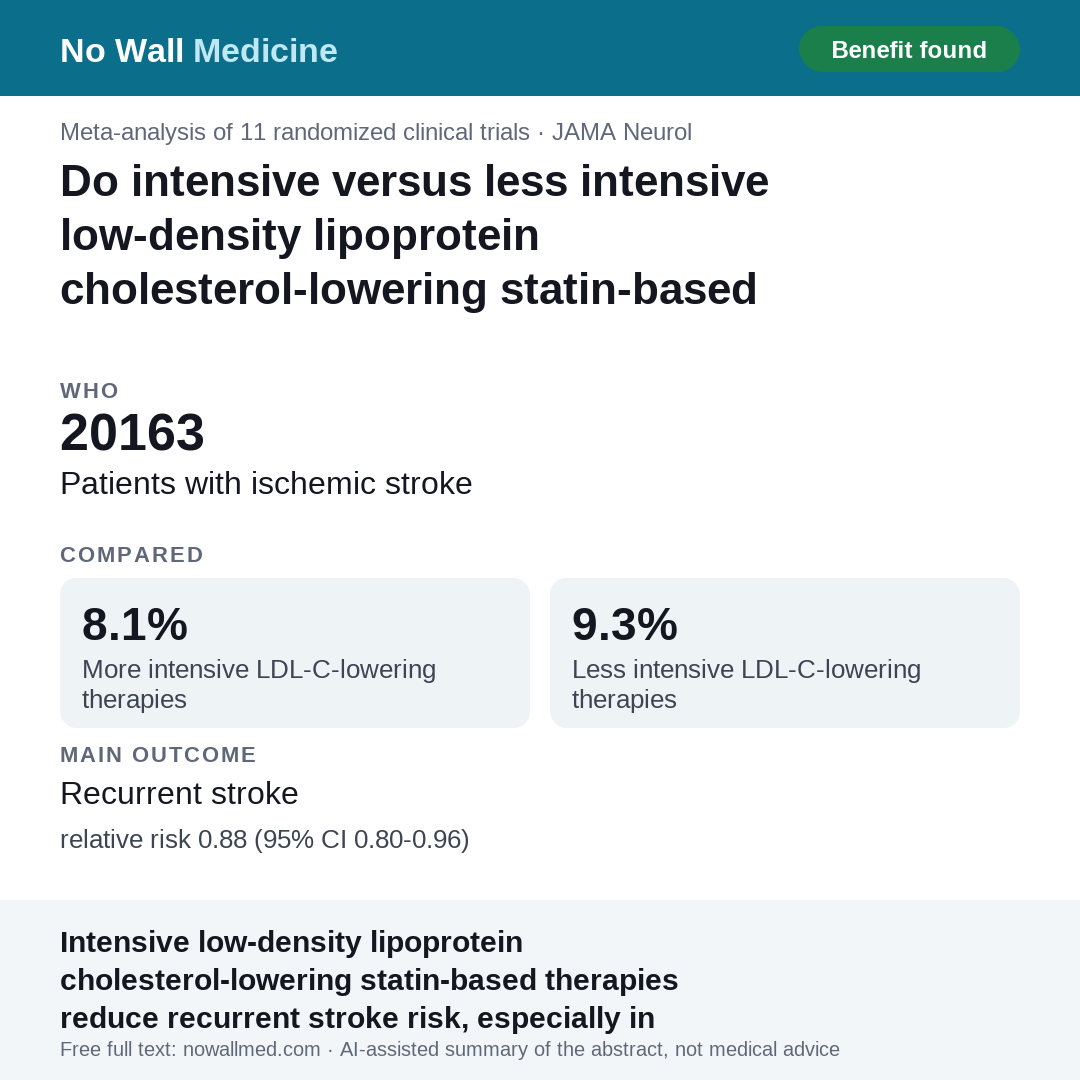
Clinical question: Do intensive versus less intensive low-density lipoprotein cholesterol-lowering statin-based therapies reduce recurrent stroke risk?
Why it matters: The benefits and risks of intensive low-density lipoprotein cholesterol-lowering statin-based therapies for reducing recurrent stroke risk have not been established.
Key points
- This meta-analysis of 11 randomized clinical trials included 20,163 patients with a mean follow-up of 4 years.
- More intensive low-density lipoprotein cholesterol-lowering therapies were associated with a lower risk of recurrent stroke (8.1% vs 9.3%; RR, 0.88; 95% CI, 0.80-0.96).
- Intensive therapies were associated with a lower risk of major cardiovascular events but an increased risk of hemorrhagic stroke, which is bleeding in the brain.
Headline and key points written with AI from the paper’s abstract, with every number checked against it. Read the paper before relying on them.
Was this summary helpful?
Subject terms
Cite this article
Lee M, Cheng CY, Wu YL, Lee JD, Hsu CY, Ovbiagele B. Association Between Intensity of Low-Density Lipoprotein Cholesterol Reduction With Statin-Based Therapies and Secondary Stroke Prevention: A Meta-analysis of Randomized Clinical Trials. JAMA Neurol. 2022. doi:10.1001/jamaneurol.2021.5578
Spotted a mistake? Suggest a correction