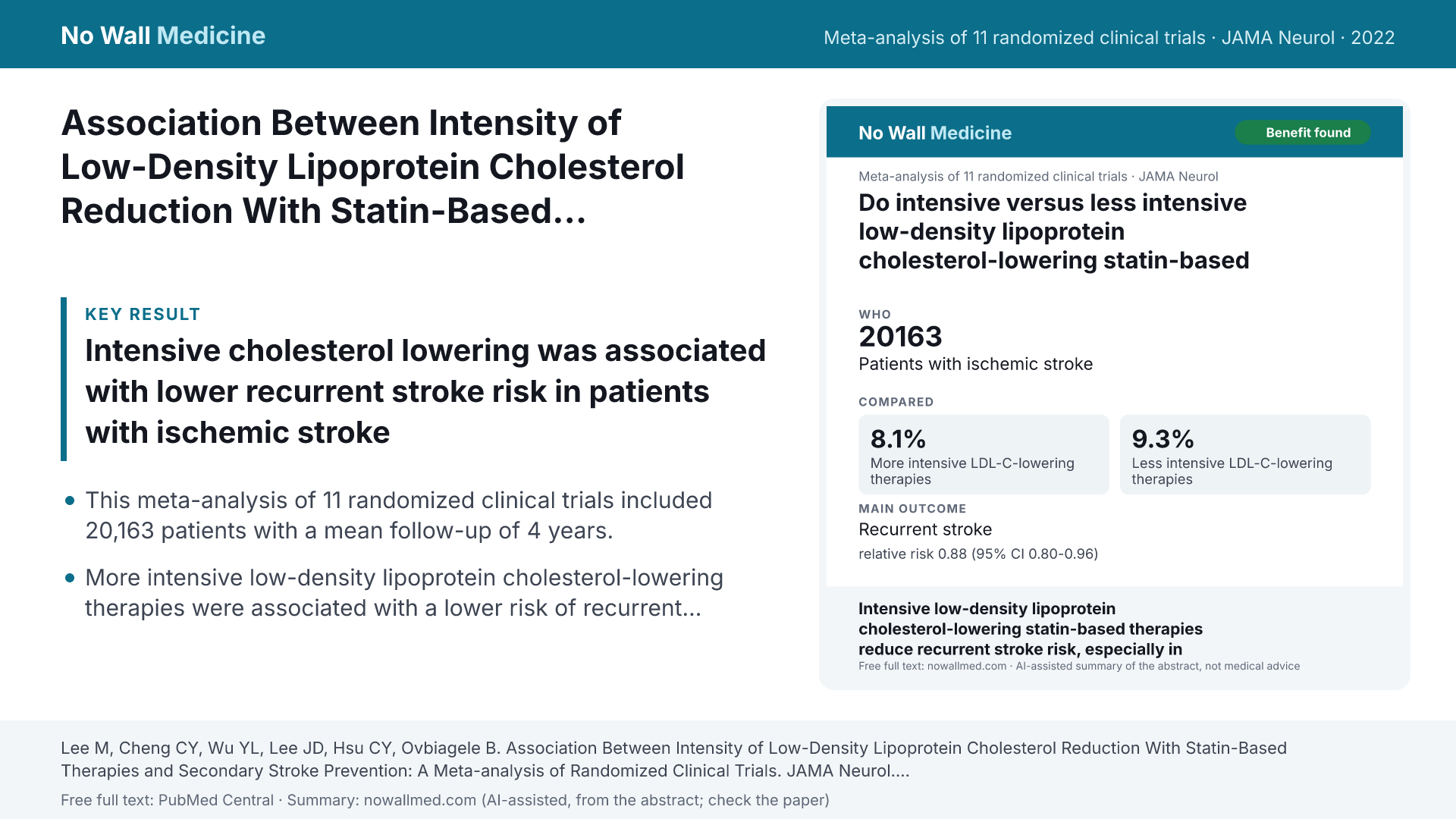
Association Between Intensity of Low-Density Lipoprotein Cholesterol Reduction With Statin-Based Therapies and Secondary Stroke Prevention: A Meta-analysis of Randomized Clinical Trials
Key result: Intensive cholesterol lowering was associated with lower recurrent stroke risk in patients with ischemic stroke
Key points
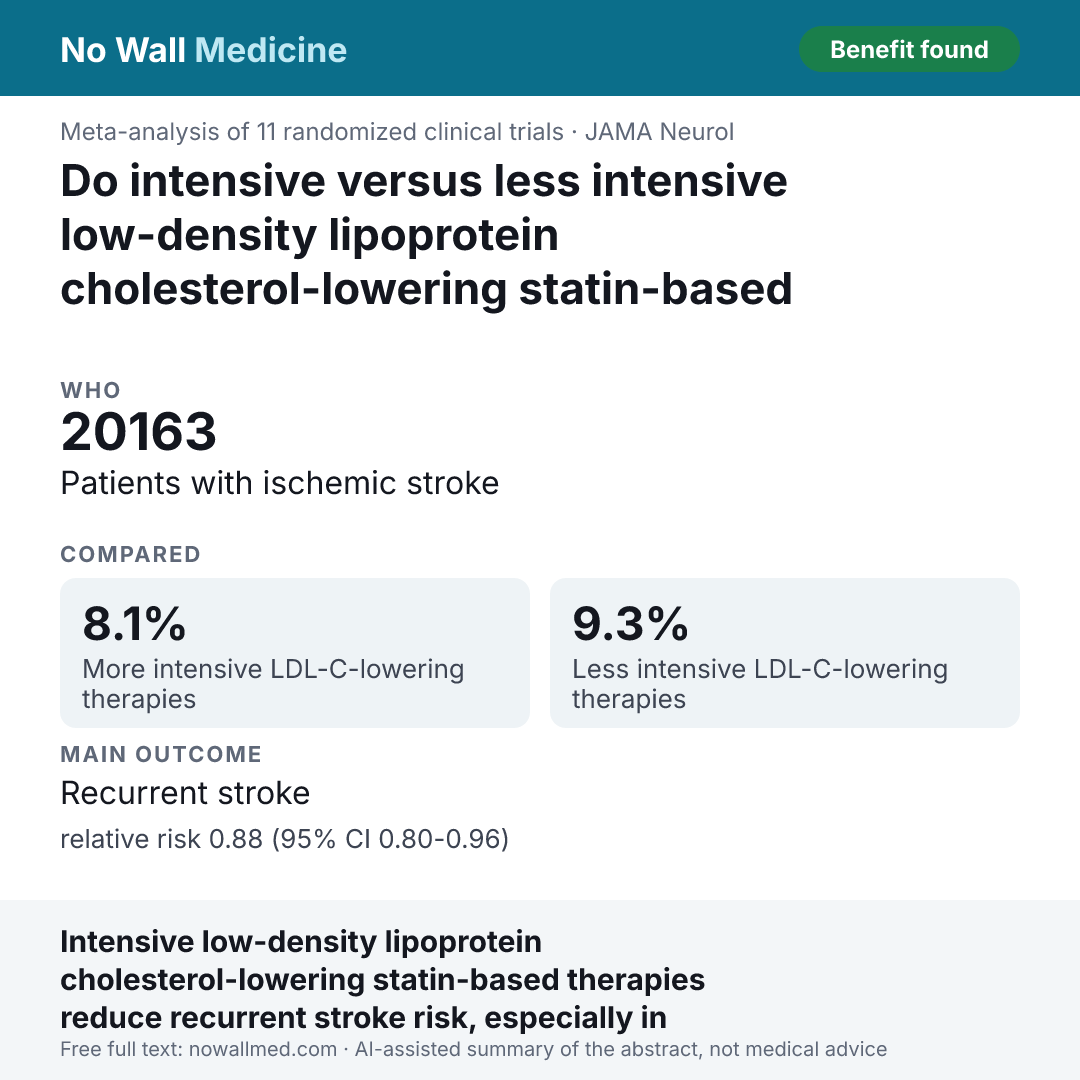
- This meta-analysis of 11 randomized clinical trials included 20,163 patients with a mean follow-up of 4 years.
- More intensive low-density lipoprotein cholesterol-lowering therapies were associated with a lower risk of recurrent stroke (8.1% vs 9.3%; RR, 0.88; 95% CI, 0.80-0.96).
- Intensive therapies were associated with a lower risk of major cardiovascular events but an increased risk of hemorrhagic stroke, which is bleeding in the brain.
Why it matters: The benefits and risks of intensive low-density lipoprotein cholesterol-lowering statin-based therapies for reducing recurrent stroke risk have not been established.
Discussion prompts
- Would these patients look like yours? Who was left out?
- Is the main outcome one that matters to patients?
- Is the difference large enough to change what you do?
Cite: Lee M, Cheng CY, Wu YL, Lee JD, Hsu CY, Ovbiagele B. Association Between Intensity of Low-Density Lipoprotein Cholesterol Reduction With Statin-Based Therapies and Secondary Stroke Prevention: A Meta-analysis of Randomized Clinical Trials. JAMA Neurol. 2022;79(4):349-358. doi:10.1001/jamaneurol.2021.5578
Free full text: PubMed Central · Summary and visual abstract: nowallmed.com/a/association-between-intensity-of-low-density-lipoprotein-cholesterol-1k9hxyr/ (AI-assisted from the abstract; check the paper before relying on it).