Antibiotic prophylaxis for Group B Streptococcus was associated with lower rates of clinical chorioamnionitis
Association between intrapartum antibiotic prophylaxis for Group B Streptococcus colonization and clinical chorioamnionitis among patients undergoing induction of labor at term
Exploratory secondary analysis of a randomized trialBenefit found
Does intrapartum antibiotic prophylaxis for Group B Streptococcus colonization reduce clinical chorioamnionitis risk?
Who
466
Patients undergoing term induction of labor at a tertiary care center · A tertiary care center
Compared
8.1%Group B Streptococcus positive with antibiotic prophylaxis
14.7%Group B Streptococcus negative without antibiotic prophylaxis
Main outcome
Diagnosis of clinical chorioamnionitis
Result: odds ratio, 0.51
Bottom line: Intrapartum antibiotic prophylaxis for Group B Streptococcus positivity is associated with lower rates of clinical chorioamnionitis and peripartum infectious morbidity.
AJOG · 2023-06-21Download image
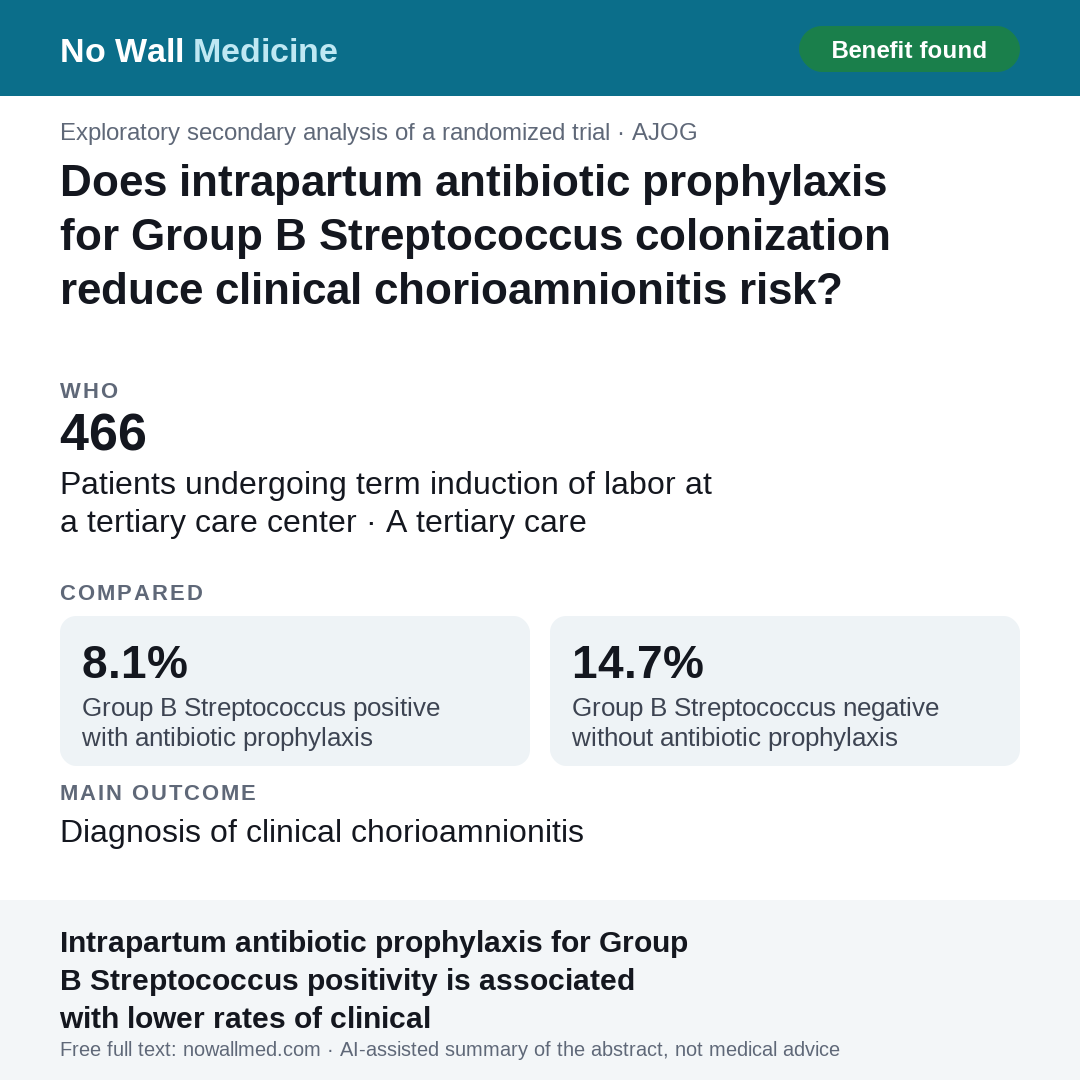
Clinical question: Does intrapartum antibiotic prophylaxis for Group B Streptococcus colonization reduce clinical chorioamnionitis risk?
Why it matters: It is unclear if the historical link between Group B Streptococcus colonization and infection risk has changed due to modern antibiotic use and labor management.
Key points
- Researchers analyzed 466 patients undergoing term induction of labor, comparing those receiving antibiotics for Group B Streptococcus to those who were negative and received no antibiotics.
- Group B Streptococcus positive patients receiving antibiotics had an 8.1% rate of clinical chorioamnionitis compared to 14.7% in the negative group.
- Infants born to Group B Streptococcus positive patients were less likely to be admitted to the neonatal intensive care unit at a rate of 3.4% versus 15.1%.
Headline and key points written with AI from the paper’s abstract, with every number checked against it. Read the paper before relying on them.
Topics
Cite this article
McCoy JA, Bromwich K, Gerson KD, Levine LD. Association between intrapartum antibiotic prophylaxis for Group B Streptococcus colonization and clinical chorioamnionitis among patients undergoing induction of labor at term. AJOG. 2023. doi:10.1016/j.ajog.2023.06.038
Spotted a mistake? Suggest a correction
Top studies every Monday
The week’s key trials and guidelines in your specialties, plus any topics you follow. By email, free.
Get the weekly digest