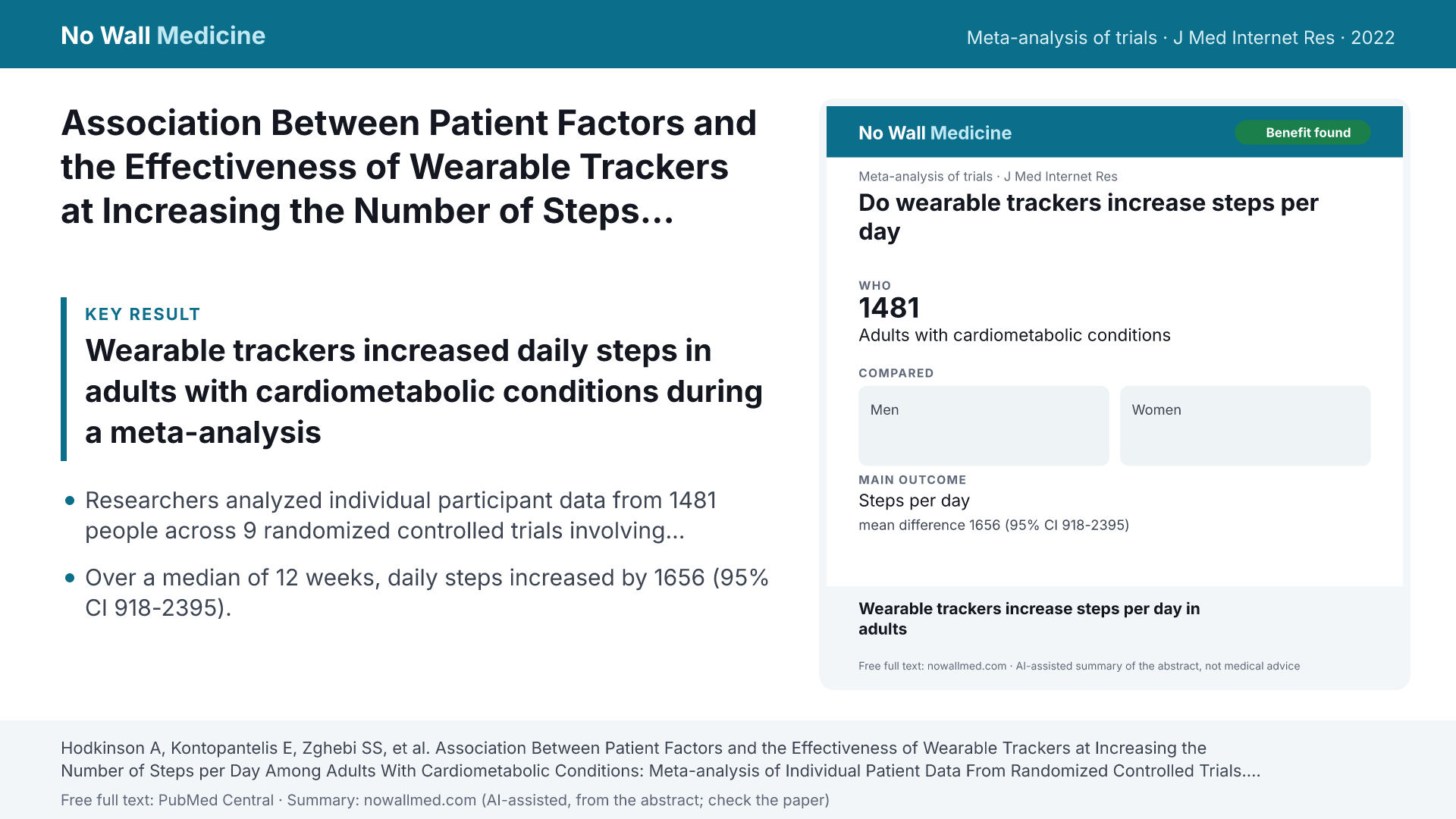
Wearable trackers increased daily steps in adults with cardiometabolic conditions during a meta-analysis
Association Between Patient Factors and the Effectiveness of Wearable Trackers at Increasing the Number of Steps per Day Among Adults With Cardiometabolic Conditions: Meta-analysis of Individual Patient Data From Randomized Controlled Trials
Meta-analysis of trialsBenefit found
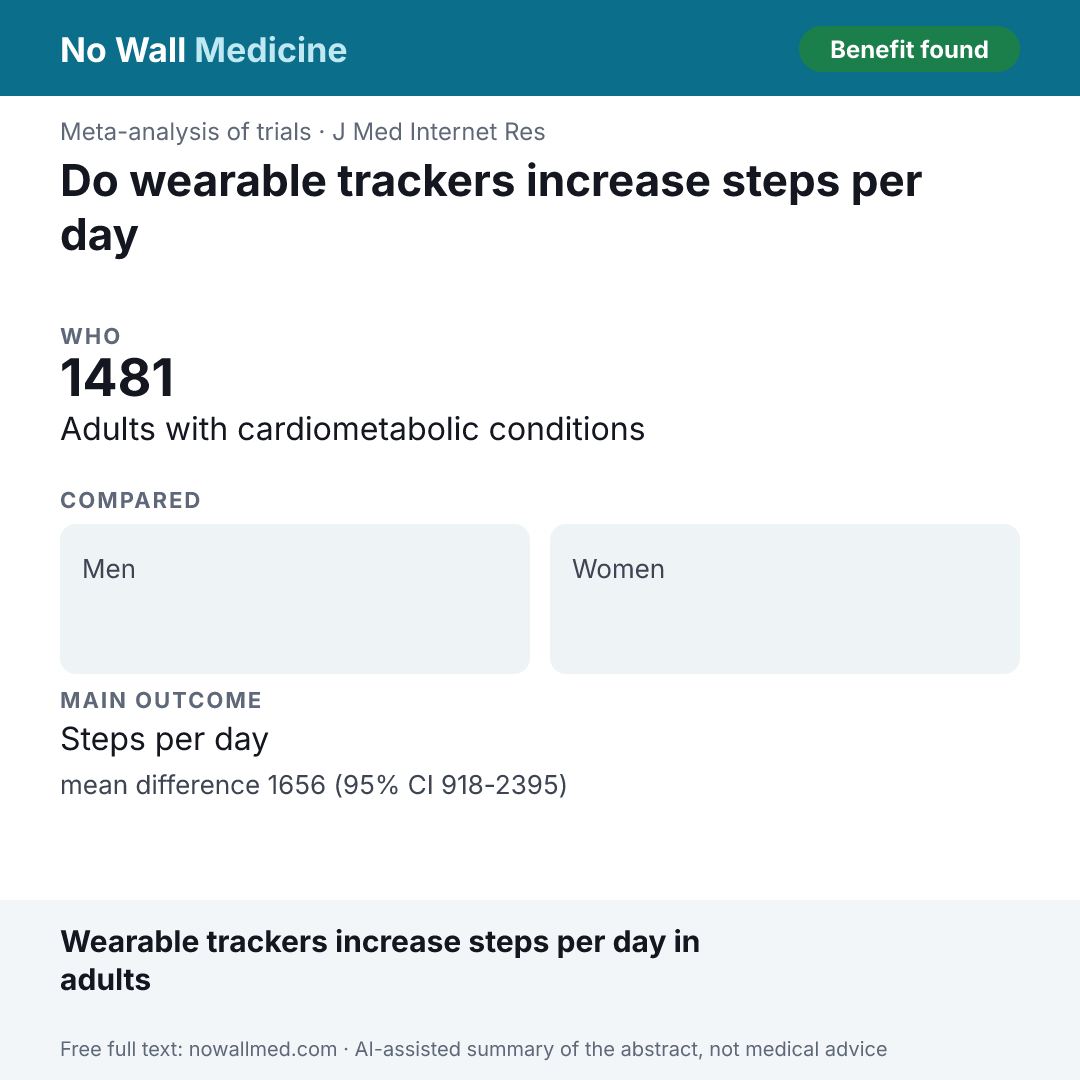
Do wearable trackers increase steps per day
Who
1481
Adults with cardiometabolic conditions
Compared
Men
Women
Main outcome
Steps per day
Result: mean difference 1656 (95% CI 918-2395)
Bottom line: Wearable trackers increase steps per day in adults
Limitation: heterogeneity across trials
J Med Internet Res · 2022-08-30 · Save PNG
Key points
- Researchers analyzed individual participant data from 1481 people across 9 randomized controlled trials involving patients with diabetes, obesity, or cardiovascular disease.
- Over a median of 12 weeks, daily steps increased by 1656 (95% CI 918-2395).
- Greater increases in steps were observed in men, White patients, patients over 50 years old, and those with fewer comorbidities.
Headline and key points written with AI from the paper’s abstract, with every number checked against it. Read the paper before relying on them.
Was this summary helpful?
Subject terms
Headline, design, result, key points, caveat and citation as plain text.
Cite this article
Hodkinson A, Kontopantelis E, Zghebi SS, et al. Association Between Patient Factors and the Effectiveness of Wearable Trackers at Increasing the Number of Steps per Day Among Adults With Cardiometabolic Conditions: Meta-analysis of Individual Patient Data From Randomized Controlled Trials. J Med Internet Res. 2022;24(8):e36337. doi:10.2196/36337
Spotted a mistake? Suggest a correction