Association of Bone Conduction Devices for Single-Sided Sensorineural Deafness With Quality of Life: A Systematic Review and Meta-analysis
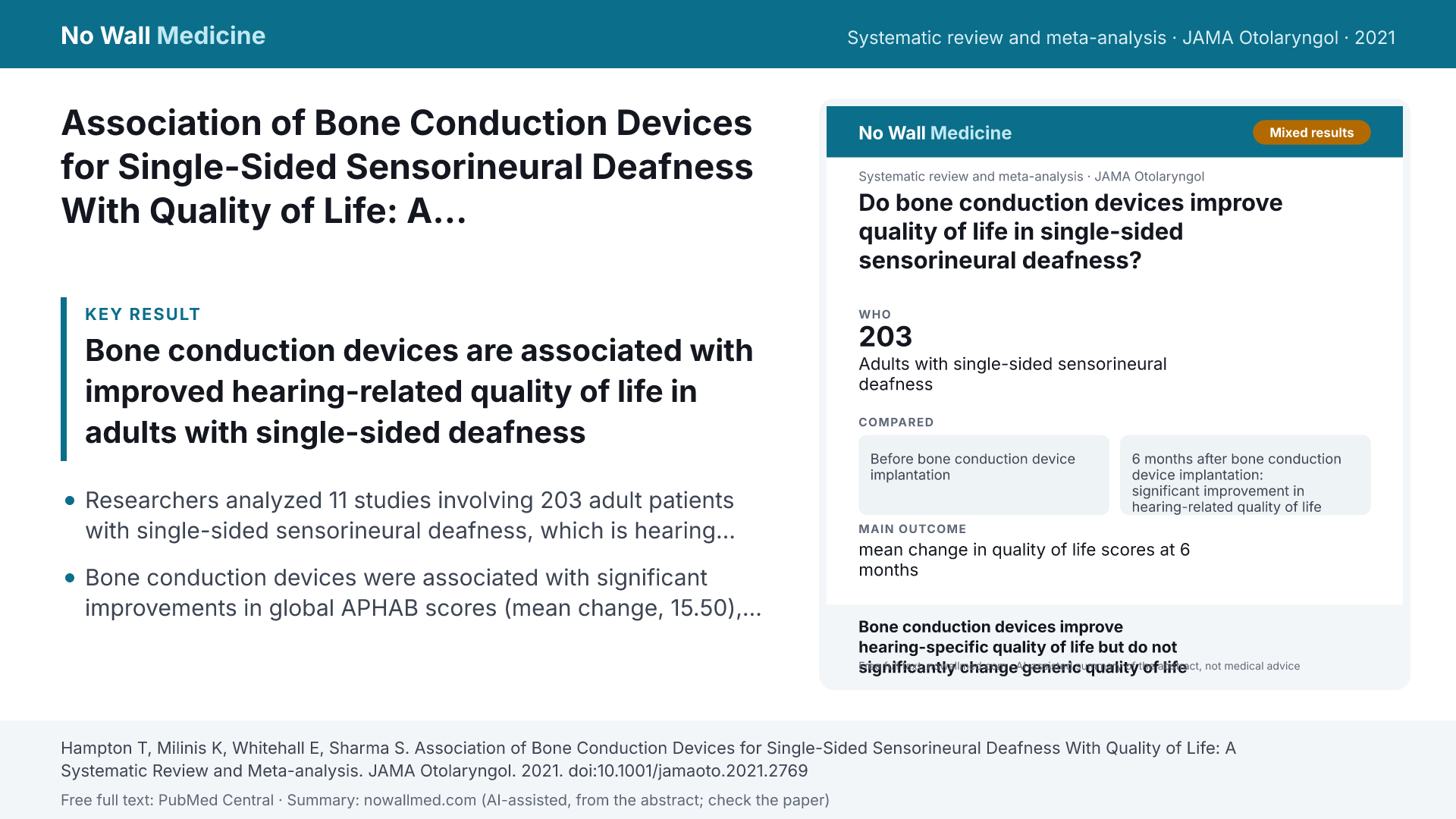
Key result: Bone conduction devices are associated with improved hearing-related quality of life in adults with single-sided deafness
Key points
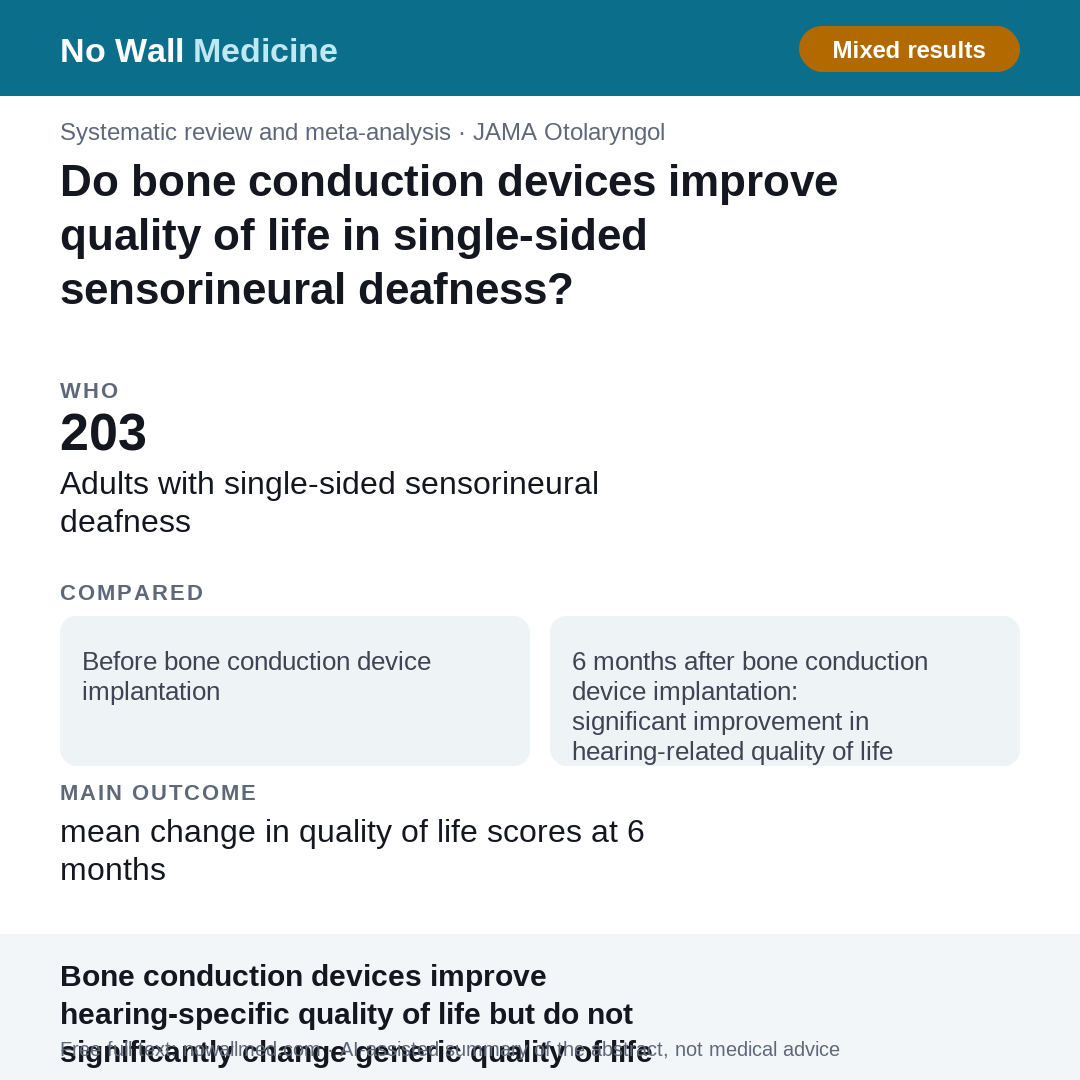
- Researchers analyzed 11 studies involving 203 adult patients with single-sided sensorineural deafness, which is hearing loss in one ear with a pure tone average greater than 70 dB.
- Bone conduction devices were associated with significant improvements in global APHAB scores (mean change, 15.50), SSQ hearing qualities (mean change, 1.19), speech (mean change, 2.03), and spatial hearing (mean change, 1.51).
- The devices were not associated with a significant change in generic quality of life measured by the HUI-3 scale (mean change, 0.03).
Why it matters: The effects of bone conduction devices on the quality of life for patients with single-sided sensorineural deafness are unclear.
Limitation the authors note: Ten of the 11 included studies were nonrandomized cohort studies.
Discussion prompts
- Would these patients look like yours? Who was left out?
- Is the main outcome one that matters to patients?
- Is the difference large enough to change what you do?
Cite: Hampton T, Milinis K, Whitehall E, Sharma S. Association of Bone Conduction Devices for Single-Sided Sensorineural Deafness With Quality of Life: A Systematic Review and Meta-analysis. JAMA Otolaryngol. 2021. doi:10.1001/jamaoto.2021.2769
Free full text: PubMed Central · Summary and visual abstract: nowallmed.com/a/association-of-bone-conduction-devices-for-single-sided-sensorineural-1eeqatx/ (AI-assisted from the abstract; check the paper before relying on it).