Genetic variations in CYP2C19 and CYP2D6 enzymes are associated with different antidepressant and antipsychotic drug exposure
Association of CYP2C19 and CYP2D6 Poor and Intermediate Metabolizer Status With Antidepressant and Antipsychotic Exposure: A Systematic Review and Meta-analysis
Systematic review and meta-analysisBenefit found
How do CYP2C19 and CYP2D6 metabolizer status affect antidepressant and antipsychotic exposure?
Who
8379
8379 unique individuals from 94 unique studies
Compared
Poor or intermediate metabolizers: varies by drug
Normal metabolizers
Main outcome
dose-normalized drug exposure
Bottom line: Genotype-based metabolizer status significantly affects exposure levels for several antipsychotic and antidepressant drugs.
Limitation: Some exposure differences were marginal, ambiguous, or based on less than 3 independent studies.
JAMA Psychiatry · 2020-11-26Download image
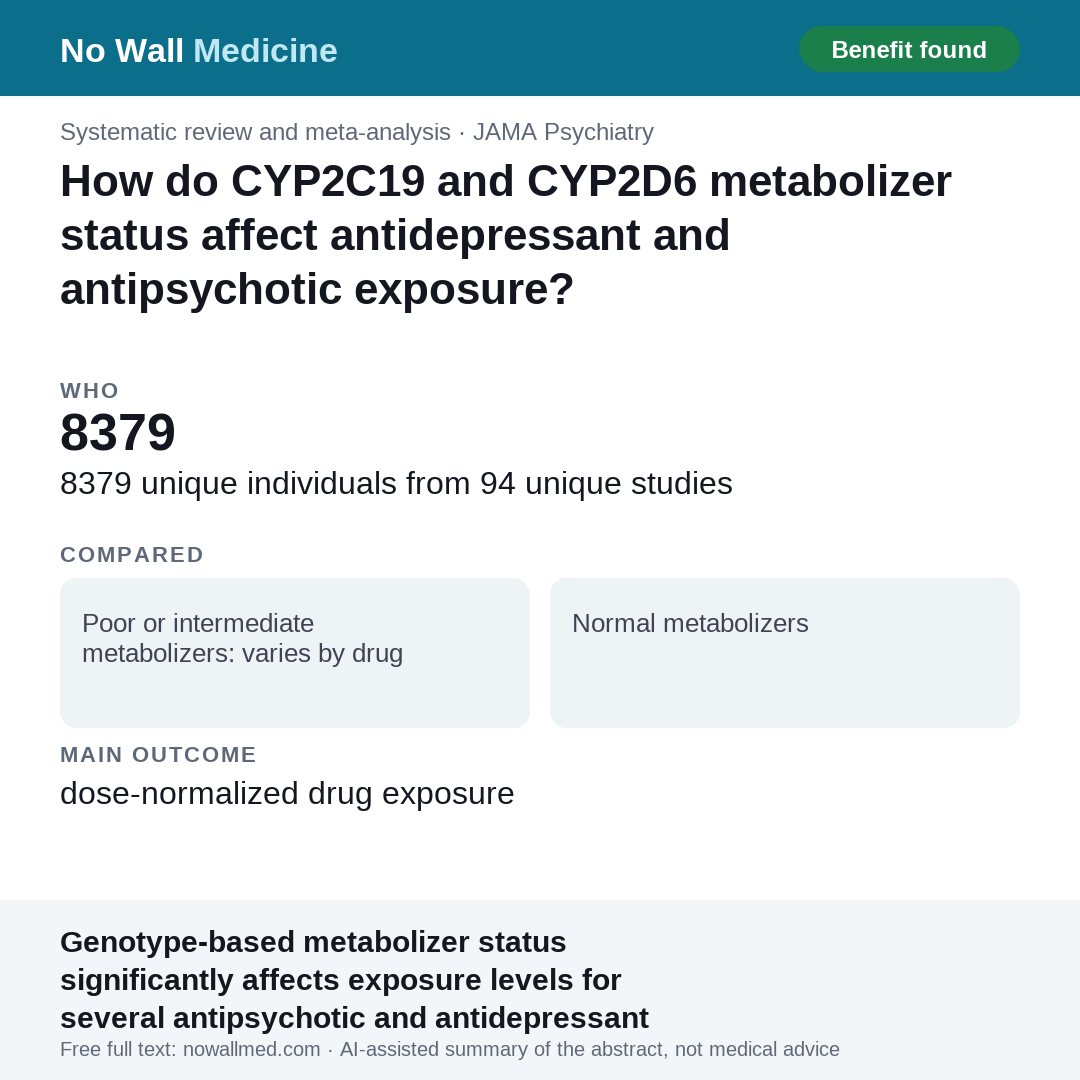
Clinical question: How do CYP2C19 and CYP2D6 metabolizer status affect antidepressant and antipsychotic exposure?
Why it matters: The exact difference in drug exposure levels among patients with different CYP2C19 and CYP2D6 genetic metabolizer statuses was not quantified.
Key points
- Researchers analyzed 94 studies involving 8379 individuals to compare drug exposure between normal, intermediate, and poor metabolizers of specific liver enzymes.
- The highest exposure ratio was seen in escitalopram oxalate for CYP2C19 poor metabolizers compared to normal metabolizers at 2.63.
- Other notable associations included haloperidol lactate at 1.68 for CYP2D6 poor metabolizers and aripiprazole at 1.48 for combined poor and intermediate metabolizers.
Headline and key points written with AI from the paper’s abstract, with every number checked against it. Read the paper before relying on them.
Was this summary helpful?
Subject terms
Cite this article
Milosavljevic F, Bukvic N, Pavlovic Z, Miljevic C, Pešic V, Molden E. Association of CYP2C19 and CYP2D6 Poor and Intermediate Metabolizer Status With Antidepressant and Antipsychotic Exposure: A Systematic Review and Meta-analysis. JAMA Psychiatry. 2020. doi:10.1001/jamapsychiatry.2020.3643
Spotted a mistake? Suggest a correction
Top studies every Monday
The week’s key trials and guidelines in your specialties, plus any topics you follow. By email, free.
Get the weekly digest