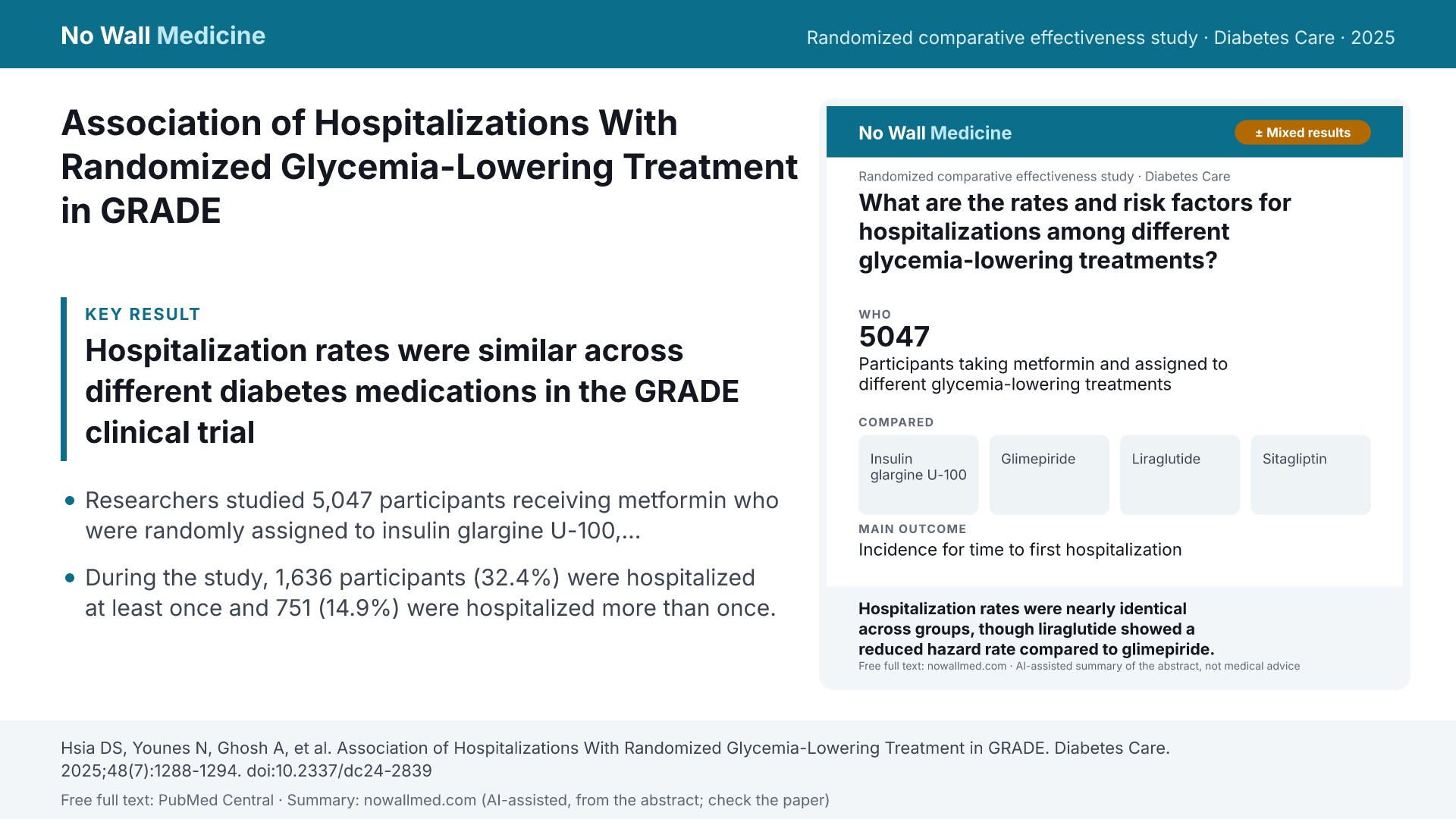
Hospitalization rates were similar across different diabetes medications in the GRADE clinical trial
Association of Hospitalizations With Randomized Glycemia-Lowering Treatment in GRADE
Randomized comparative effectiveness studyMixed results
What are the rates and risk factors for hospitalizations among different glycemia-lowering treatments?
Who
5047
Participants taking metformin and assigned to different glycemia-lowering treatments
Compared
Insulin glargine U-100
Glimepiride
Liraglutide
Sitagliptin
Main outcome
Incidence for time to first hospitalization
Result: hazard ratio 0.78 (95% CI 0.66, 0.92)
Bottom line: Hospitalization rates were nearly identical across groups, though liraglutide showed a reduced hazard rate compared to glimepiride.
Diabetes Care · 2025-05-27 · Save PNG
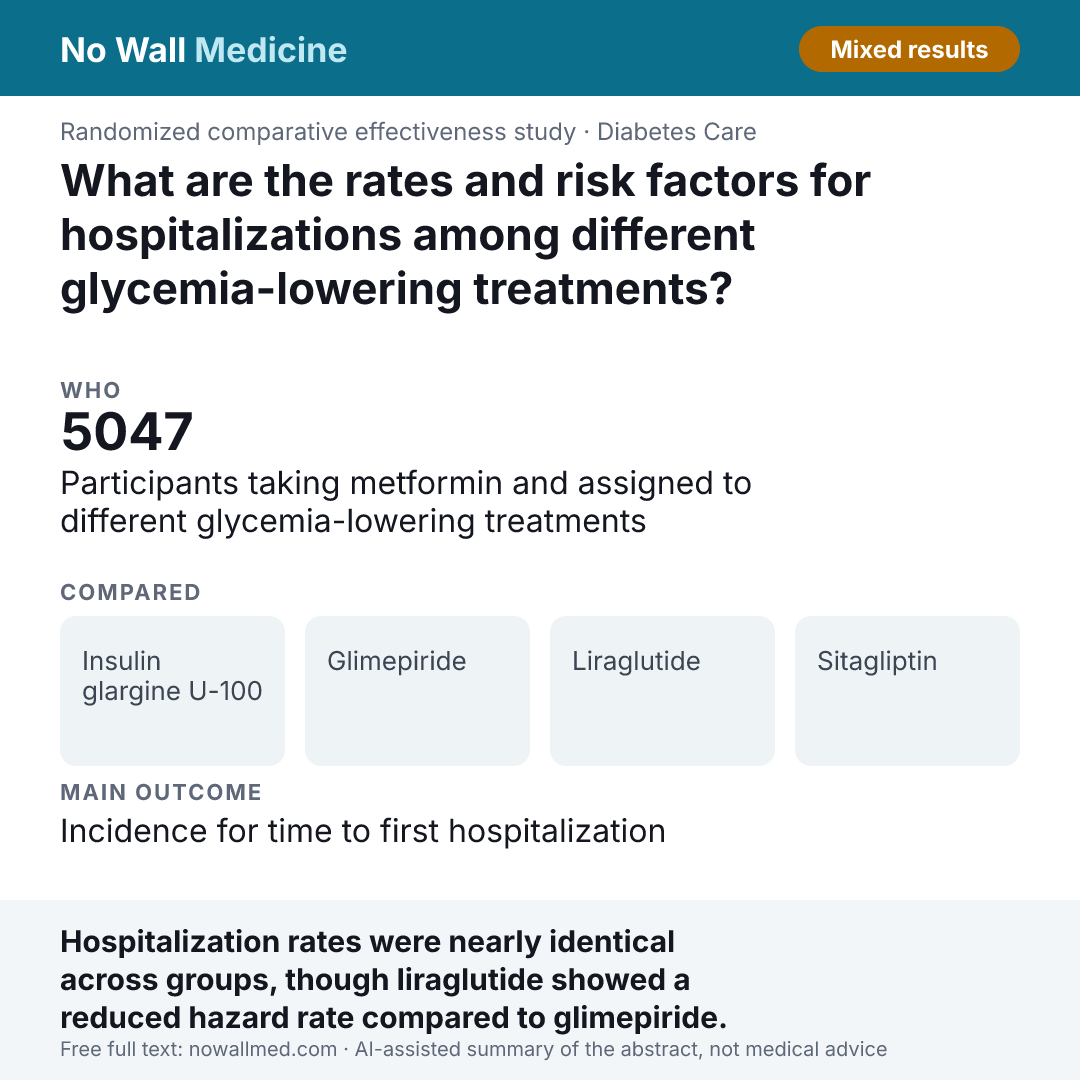
Clinical question: What are the rates and risk factors for hospitalizations among different glycemia-lowering treatments?
Key points
- Researchers studied 5,047 participants receiving metformin who were randomly assigned to insulin glargine U-100, glimepiride, liraglutide, or sitagliptin.
- During the study, 1,636 participants (32.4%) were hospitalized at least once and 751 (14.9%) were hospitalized more than once.
- In the on-assigned-treatment data set, liraglutide was associated with a lower hazard rate for first hospitalization compared to glimepiride (hazard ratio 0.78 [95% CI 0.66, 0.92]; P = 0.022).
Headline and key points written with AI from the paper’s abstract, with every number checked against it. Read the paper before relying on them.
Was this summary helpful?
Subject terms
Headline, design, result, key points, caveat and citation as plain text.
Cite this article
Hsia DS, Younes N, Ghosh A, et al. Association of Hospitalizations With Randomized Glycemia-Lowering Treatment in GRADE. Diabetes Care. 2025;48(7):1288-1294. doi:10.2337/dc24-2839
Spotted a mistake? Suggest a correction