High hypoxic burden was associated with cardiovascular and cerebrovascular events in adults with sleep apnea
Association of Hypoxic Burden With Cardiovascular Events: A Risk Stratification Analysis of the Randomized Intervention With CPAP in Coronary Artery Disease and Sleep Apnea Cohort
Randomized trial analysisKey finding
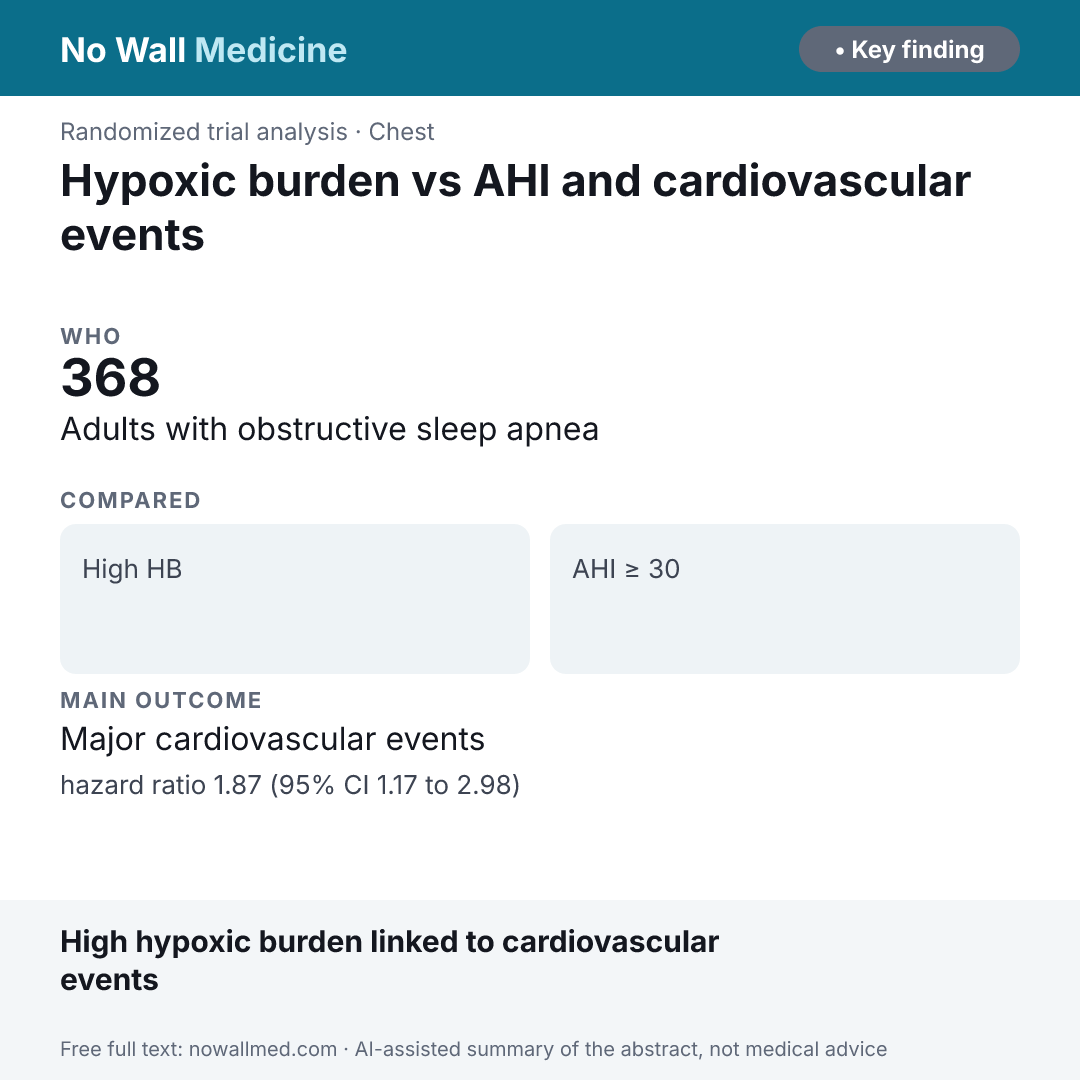
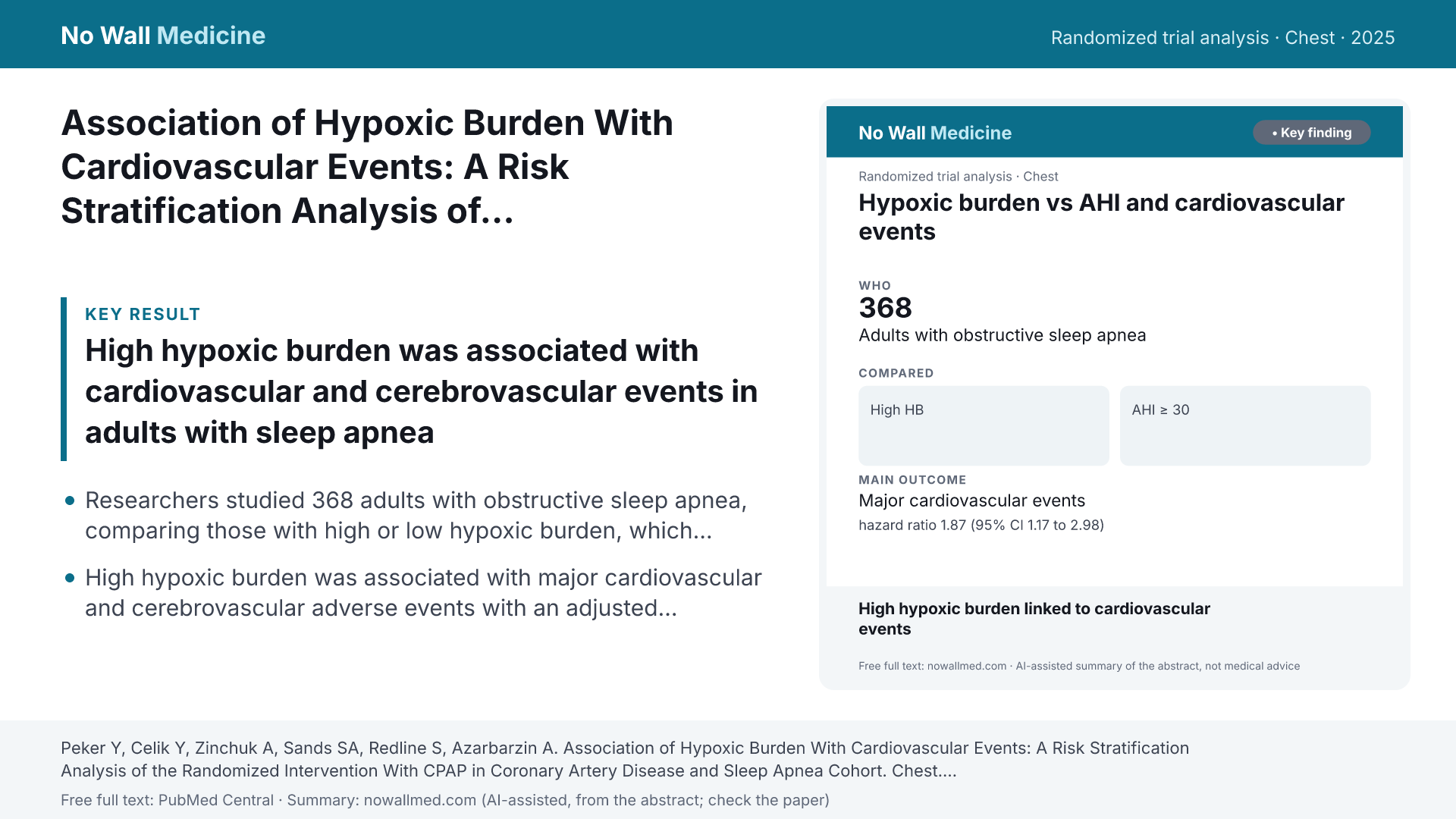
Hypoxic burden vs AHI and cardiovascular events
Who
368
Adults with obstructive sleep apnea
Compared
High HB
AHI ≥ 30
Main outcome
Major cardiovascular events
Result: hazard ratio 1.87 (95% CI 1.17 to 2.98)
Bottom line: High hypoxic burden linked to cardiovascular events
Chest · 2025-08-14 · Save PNG
Same trial (NCT00519597)
Papers we list that report this registered trial, oldest first. Read a secondary analysis alongside the main results.
- Secondary analysis Mixed results
Certain physiological traits were associated with lower long-term continuous positive airway pressure use in patients AJRCCM 2021-06 - Secondary analysis Key finding
This paper Chest 2025-08
Why it matters: The standard measure of sleep apnea severity, the apnea-hypopnea index, has limitations in reflecting disease severity and its relationship to cardiovascular and cerebrovascular events.
Key points
- Researchers studied 368 adults with obstructive sleep apnea, comparing those with high or low hypoxic burden, which measures the total area of oxygen desaturations during sleep.
- High hypoxic burden was associated with major cardiovascular and cerebrovascular adverse events with an adjusted hazard ratio of 1.87, while an apnea-hypopnea index of ≥ 30 events/h was not significantly associated with these events.
- The association between high hypoxic burden and adverse events was particularly noted among patients with excessive daytime sleepiness or those who were nonadherent to continuous positive airway pressure therapy.
Headline and key points written with AI from the paper’s abstract, with every number checked against it. Read the paper before relying on them.
Was this summary helpful?
Subject terms
Headline, design, result, key points, caveat and citation as plain text.
Cite this article
Peker Y, Celik Y, Zinchuk A, Sands SA, Redline S, Azarbarzin A. Association of Hypoxic Burden With Cardiovascular Events: A Risk Stratification Analysis of the Randomized Intervention With CPAP in Coronary Artery Disease and Sleep Apnea Cohort. Chest. 2025;168(6):1481-1493. doi:10.1016/j.chest.2025.07.4081
Spotted a mistake? Suggest a correction